
Wedding and graduation season in HOF

Quick facts
- Core rule
- Procedure with time to settle and be reviewed before the event
- Who sets the timeline
- The professional, case by case, after assessment
- Risk
- Event urgency pressuring the patient to decide poorly
- Planning
- Schedule with slack, waitlist and advance communication
Certain months of the year concentrate a type of patient who comes with a deadline: the bride, the bridesmaid, the graduate, the graduate's mother, the guest who wants to look their best at the party. For the orofacial harmonization (HOF) clinic, wedding and graduation season is a predictable opportunity, but also an ethics test: the event creates urgency, and urgency is the enemy of prudent clinical decisions.
This guide shows how to plan the schedule in advance, how to organize the flow for those with a set date, how to talk about expectations and what the clinic can or cannot promote. It does not provide clinical timelines or volumes, which are the professional's decision after assessment. For the view of the whole year, see HOF clinic seasonality.
Why is this season different?
Almost all HOF demand is "for me". In this season, it is "for that day". The difference changes patient behavior in three ways: they want to decide quickly, they tend to ask for more than necessary and they are less tolerant of temporary effects, such as swelling or small asymmetries during the settling phase.
This requires the clinic to treat the event as a planning variable, not as a reason to rush. The best service is one that factors in the date without submitting to it. A staged plan that finishes with slack before the event serves the patient far better than a single session the day before.
Plan the schedule before the demand
Predictability is the big advantage. Weddings and graduations have a seasonality that repeats and that you can check in the clinic's history.
A schedule built in three layers usually works: early assessment (weeks or months ahead), procedure on a date set by the professional and review with slack before the event. The review block is the most neglected and the one that prevents the most problems.
For the schedule routine itself, see the HOF clinic schedule, and for the capacity side, the occupancy rate.
The bride's and graduate's timeline
A simple structure helps the conversation. The intervals below are illustrative: the real timeline belongs to the professional, after assessment.
Note that the days-before phase is for not doing anything. A new procedure very close to the date, with no time for adjustment, is the main source of regret. The professional can decline firmly and explain the reason, without embarrassment.
The expectation conversation
A patient with a fixed date needs a more careful conversation than usual. Three points deserve a written record, in the informed consent or in the plan.
- Results vary from person to person and are not guaranteed for the date.
- The product takes time to settle, and temporary effects may last a few days.
- The professional may recommend less than the patient asked for, or postpone, for a clinical reason.
The individual-result acknowledgment form helps document this conversation; see the individual result acknowledgment template and the staged plan acknowledgment form.
Showing the plan without promising the event
The illustrative simulation helps the patient understand what is being discussed, but it needs extra care with someone who has a date. The risk is that the person takes the image as the result on the day. In Harmy, the projection generated from the front-facing photo is an illustration, shown in a Before/After slider, and the app keeps the illustrative simulation caption. Reinforce verbally that it serves to discuss the plan, not to predict how they will look at the event.
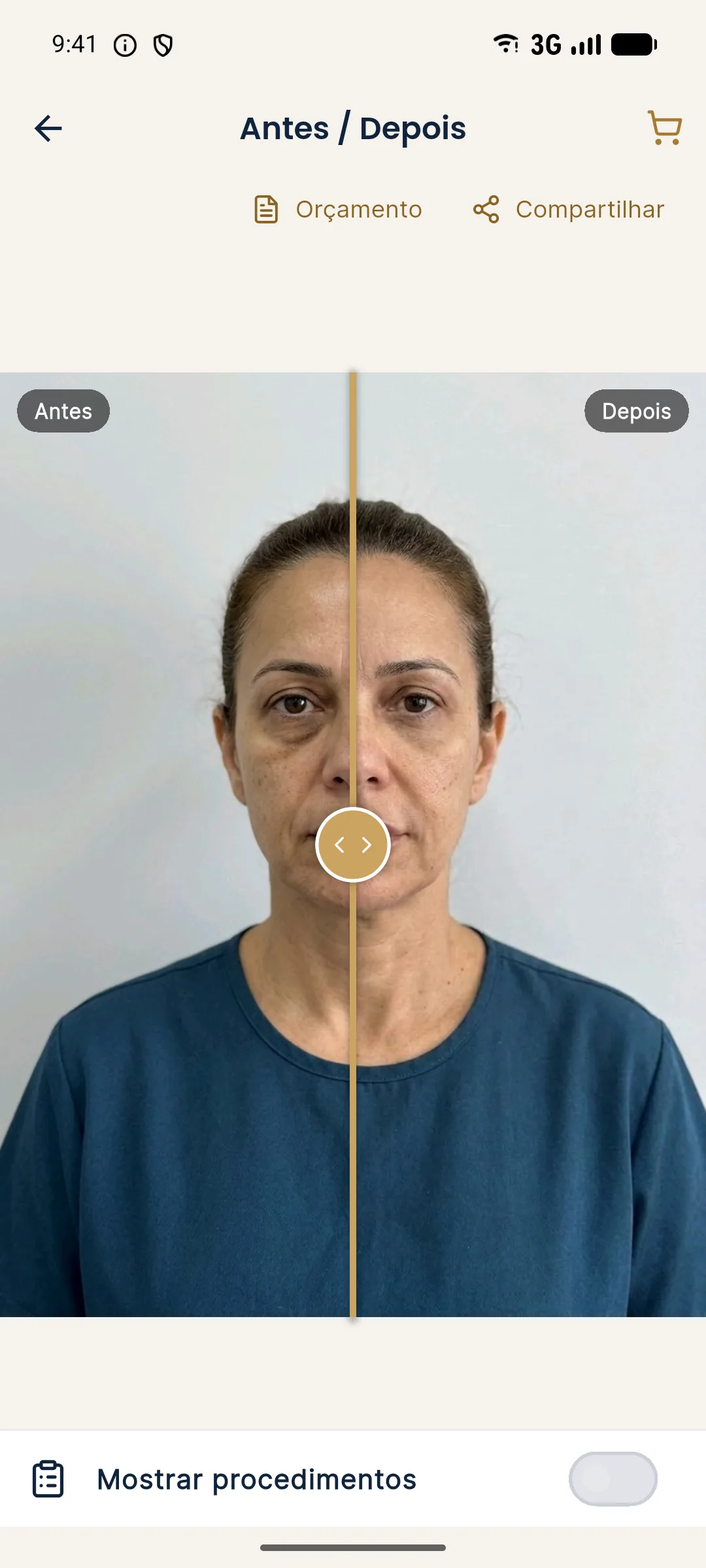
The staged plan can be designed on the same planning screen, with ml per area and sessions spread out. See the staged plan and the limits of visual simulation in the consultation.
What the clinic can promote
The temptation is to launch a campaign "ready for your wedding". Be careful: advertising in healthcare has limits, and promising a result for a date is exactly what the rules aim to prevent.
| Type of content | Generally safer | Riskier |
|---|---|---|
| Educational | "How to get organized before an event" | "Arrive perfect at your wedding" |
| Timeline | Advise seeking an assessment early | Promise a result by the date |
| Price | Talk about assessment and plan | "Bride" promotional package with a discount |
| Image | Diagrams and illustrations | Patient photos without authorization and without compliance |
| Urgency | Calendar of assessment openings | "Last spots for your event" |
Rules vary by professional board. Consult what you can advertise (CFO and CONAR), which refers to Brazil's Federal Dental Council and CONAR (Brazil's advertising self-regulation body), advertising in HOF and ethical captions before any campaign. Aggressive promotions also run into misleading advertising in aesthetics.
Group events and partnerships
Weddings and graduations generate group demand: bride and bridesmaids, graduates from the same class. Partnerships with event planners, salons and photographers can make sense if they are transparent and respect the rules. See partnering with salons and shops for HOF. Avoid commissions or arrangements that compromise the clinical recommendation, and never offer a benefit in exchange for publicizing results.
Event photography and privacy
Patients often want to post photos from the event and tag the clinic. That is their decision; the clinic should not encourage it or repost the image as proof of results without assessing the rules and consent. The distinction between what the patient posts and what the clinic publishes is discussed in professional confidentiality on social media.
Quiz: what would you do?
After the season
Once the season is over, do a simple review: how many patients came for an event, how many arrived with adequate lead time, how many came back and what adjustments the schedule required. The data feeds the following year. Patients who came for an event are also a good door to a long-term relationship, through return visits and loyalty and patient recall, always respecting each person's wishes.
Frequently asked questions
How far in advance should I have facial harmonization before a wedding?
There is no single timeline. The professional defines it based on the procedure and the patient's response, leaving room for the product to settle and for a possible review. The earlier the assessment, the more options exist.
Can I accept a patient who wants to do everything the week of the event?
It is a clinical decision. Procedures done very close to an event may not have time to settle or be adjusted. The professional may propose a more conservative plan or decline.
Can I run a campaign for weddings and graduations?
There can be educational content about planning, as long as it respects your professional board's advertising rules. Avoid promises of results for the event, aggressive promotions and the use of patient images without authorization.
How do I handle a patient who wants a result by a specific date?
Align expectations in writing: results vary, the product takes time to settle and the professional may recommend a more gradual plan. The event date does not replace the clinical assessment.