
Treatment planning form template by area for harmonization

Planning by area means turning the assessment into written decisions: where to act, why, at what planned volume and in what order. Without that record, the plan lives in memory and changes from one visit to the next, which gets in the way of the conversation with the patient, the quote and the comparison at follow-up.
This template is a planning form by area. It starts from the facial assessment form and can feed into the harmonization quote and the written treatment plan.
What does the planning form organize?
| Field | Question it answers |
|---|---|
| Area | Where we will act |
| Goal | What we want to improve, in the patient's own words |
| Product/approach | What kind of procedure, at the professional's discretion |
| Planned ml | Estimated volume, as a range |
| Desired intensity | How noticeable the patient expects it to be |
| Order and session | At which stage it comes in |
| Precautions | Specific risks and preparation of the area |
Form template
How do you decide the order?
A practical rule is to start where the concern and the supporting structure call for it, and leave refinements for later. Many professionals prefer to treat support (such as cheekbone and chin) before contour details, and to reassess before expanding. The professional decides, case by case.
Staged plans tend to favor a natural look and give the patient time to adapt. For the alignment conversation, see the staged plan acknowledgment template.
Planning in Harmy
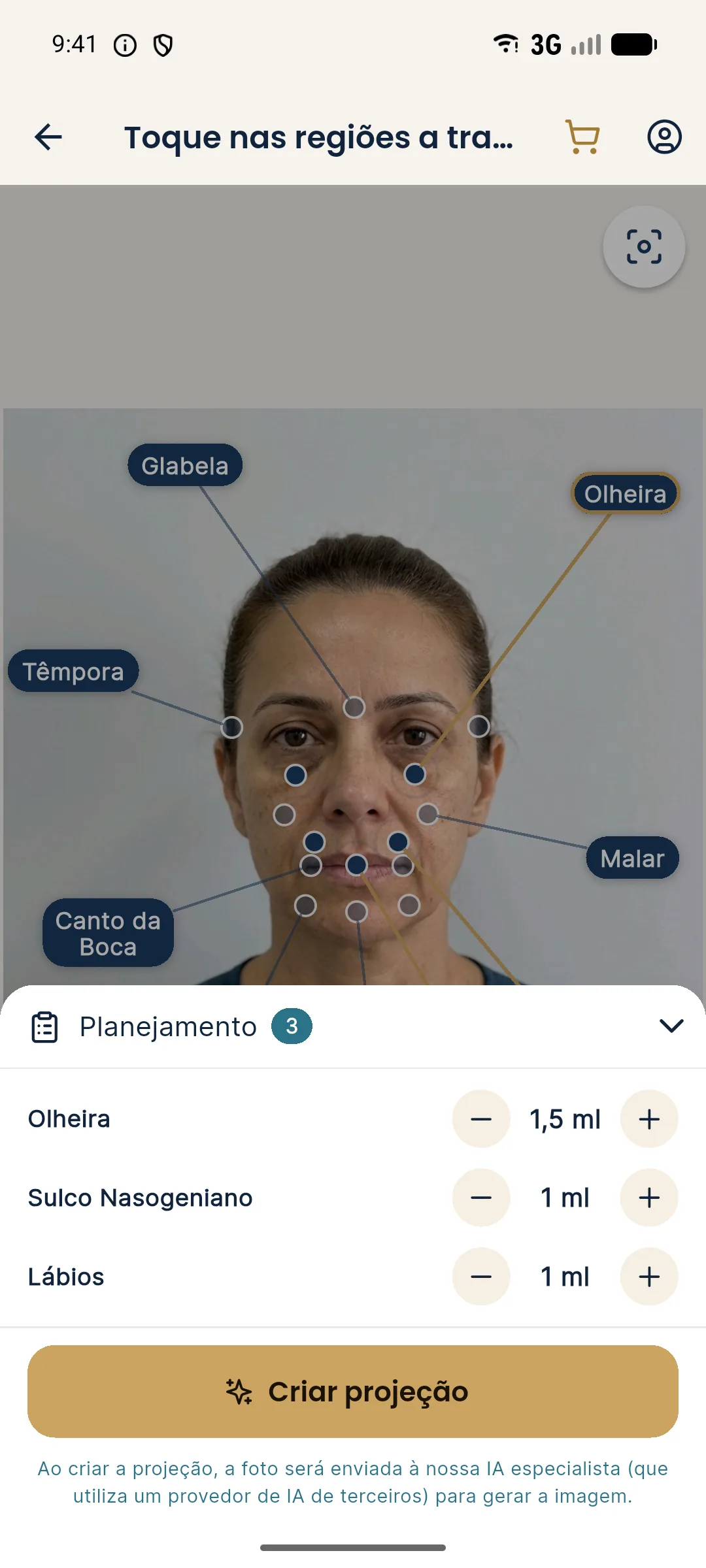
The resulting projection is illustrative. It helps the patient visualize, but the clinical plan on the form may include areas, products and stages that the app does not simulate. Use both together and make the difference between them clear, as in the entry on illustrative simulation.
Records and documents
File the form in the patient record and update it when the plan changes, with the date. The informed consent should reflect the procedures and risks of the plan. If the plan changes significantly, talk again and update the document.
Measurements in ml are ranges and depend on the product, the area and the response. Avoid writing a "closed" number for the patient: prefer "around" and explain that the final adjustment happens at the session.
Follow-up
At review, compare what was planned with what was done: what was done, how much, in what order, and what the patient noticed. This cycle improves your next plans and shows the patient that follow-up is part of the treatment.
Frequently asked questions
What is the difference between the assessment form and the planning form?
The assessment records what was observed on the face. Planning turns that into a plan: which areas, with what goal, at what planned volume and in what order. One feeds the other.
Is the planned ml in the plan final?
No. It is an estimate recorded beforehand and may change during the procedure, at the professional's discretion, depending on the patient's response and safety.
Can I split the plan into several sessions?
You can, and it is common, especially when aiming for a natural look. The form helps record the order and the interval, and the patient understands that the result is built in stages.
How does Harmy's planning relate to this form?
In Harmy, you set the ml per area (from 0.5 to 5 ml) and the intensity (Subtle, Moderate or Pronounced) to generate the projection. The form records the full clinical plan, which may differ from the simulation.