
How to explain expected swelling to the patient

Quick facts
- Core message
- Some swelling is expected, and the patient needs to know what to watch for
- Common
- Swelling, bruising and tenderness in the first few days
- Requires contact
- Severe pain, skin color change, vision loss or fever
- Record
- Written instructions and a contact channel
The question "is this normal?" arrives by message the night after the procedure, and the answer depends on a conversation that should have happened during the consultation. A patient who was not prepared for swelling reads any change as a mistake; a well-informed one knows what is common, what to watch for and when to talk to you. This page shows how to give that guidance.
What does the patient need to understand?
Two things: that some swelling is expected and that some signs are not. Without the second, the first becomes false reassurance.
What is usually expected?
In patient-friendly language, and at the professional's discretion after assessment:
| Sign | How to explain it | Usually |
|---|---|---|
| Edema | Swelling of the area | Expected, more evident in the first few days |
| Ecchymosis or hematoma | Bruising | Common, changes color over the days |
| Tenderness | Mild pain to the touch | Expected, improves with time |
| Small red dots | Needle or cannula marks | Expected, fade within a few days |
| Transient asymmetry | One side more swollen | May happen, improves as the swelling goes down |
| Feeling of firmness | "Hard" area | May occur and usually settles |
The table is not exhaustive. The point is to name what is common so the patient can recognize it. See also aligning expectations about swelling and bruising.
What to watch for and when to get in touch?
This is the part that protects the patient. The signs below should not be treated as "expected":
The guidance must be given in writing and with a clear contact channel. Saying only "call me if anything happens" is not enough: define a phone number, a schedule and what to do outside it. Management of a visual complication is covered in visual complication after filler.
How to show the timeline?
A timeline gives predictability, and predictability lowers anxiety. Hand it over on paper or by message.
Timeframes vary by area, product and patient. Lips and under-eye areas, for example, tend to swell more. The text about the under-eye area is in aftercare for tear trough filler.
What aftercare can be recommended?
Aftercare varies by procedure and by professional. In general, measures such as avoiding intense heat, heavy exercise and alcohol in the first few days, sleeping with the head elevated and not touching the area are recommended. What to advise and for how long is the decision of whoever performed the treatment, and it should be given in writing. For the patient's common questions, see alcohol after facial harmonization and working out after facial harmonization.
How does Harmy fit into this conversation?
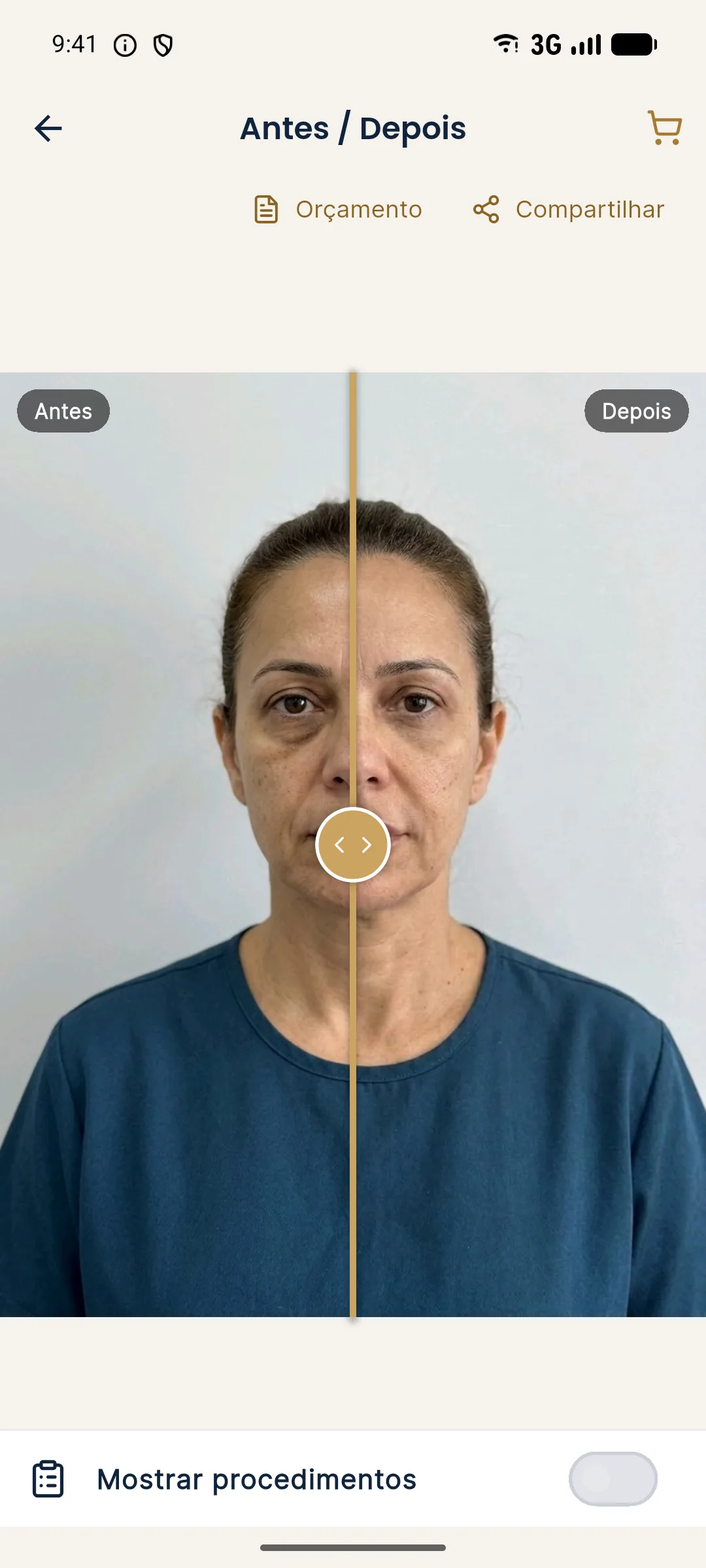
Harmy does not simulate swelling: the projection shows the settled face, without edema. This matters for aligning expectations. If the patient sees the simulation and then faces a swollen face, they may get frightened. Beforehand, say that the image represents the settled result, not the next day.
What if the patient works or has an event right afterward?
Ask, before scheduling, whether there is an event, trip, shoot or important commitment in the following days. Swelling and bruising can last longer than the patient imagines, and the schedule should respect that. Suggest booking with plenty of margin and explain that it is not possible to guarantee the absence of marks. For someone with an unmovable commitment, the honest conversation may be to postpone the procedure or choose an area less prone to swelling. Record the guidance given.
What questions to expect?
What to record?
Note in the patient record that the instructions were given in writing, the contact channel, the follow-up date and the warning signs explained. If the patient reaches out outside business hours, record the reason and the action taken. This protects both the patient and the professional.
A patient who knows what to expect is calmer when everything is normal, and acts faster when it is not.
Frequently asked questions
What is expected swelling after facial harmonization?
It is the edema that usually appears in the first few days after the injection, caused by the needle or cannula, the product and the tissue's reaction. It generally decreases gradually, at an individual pace.
How long does the swelling last?
It varies with the area, the product and the patient. It usually goes down over a few days, and the settled result is assessed at about two weeks, at the professional's discretion.
Which signs require contacting the professional?
Severe and worsening pain, skin color change, purplish or whitish patches that spread, vision changes, fever or redness that gets worse. The patient should report them immediately.
Is bruising part of the expected swelling?
Bruising is common, but it is not mandatory and it is not the same for everyone. It can appear and change color over the days, and the patient should know this is usually expected.
Harmy images are illustrative simulations generated by AI from the patient's photo to support the conversation between practitioner and patient. They are not a promise of results. Indication, technique, product and volume are solely the decision of the licensed practitioner. This content is for information only and does not replace a clinical assessment.