
Separate Consent to Publish a Patient's Image
Quick facts
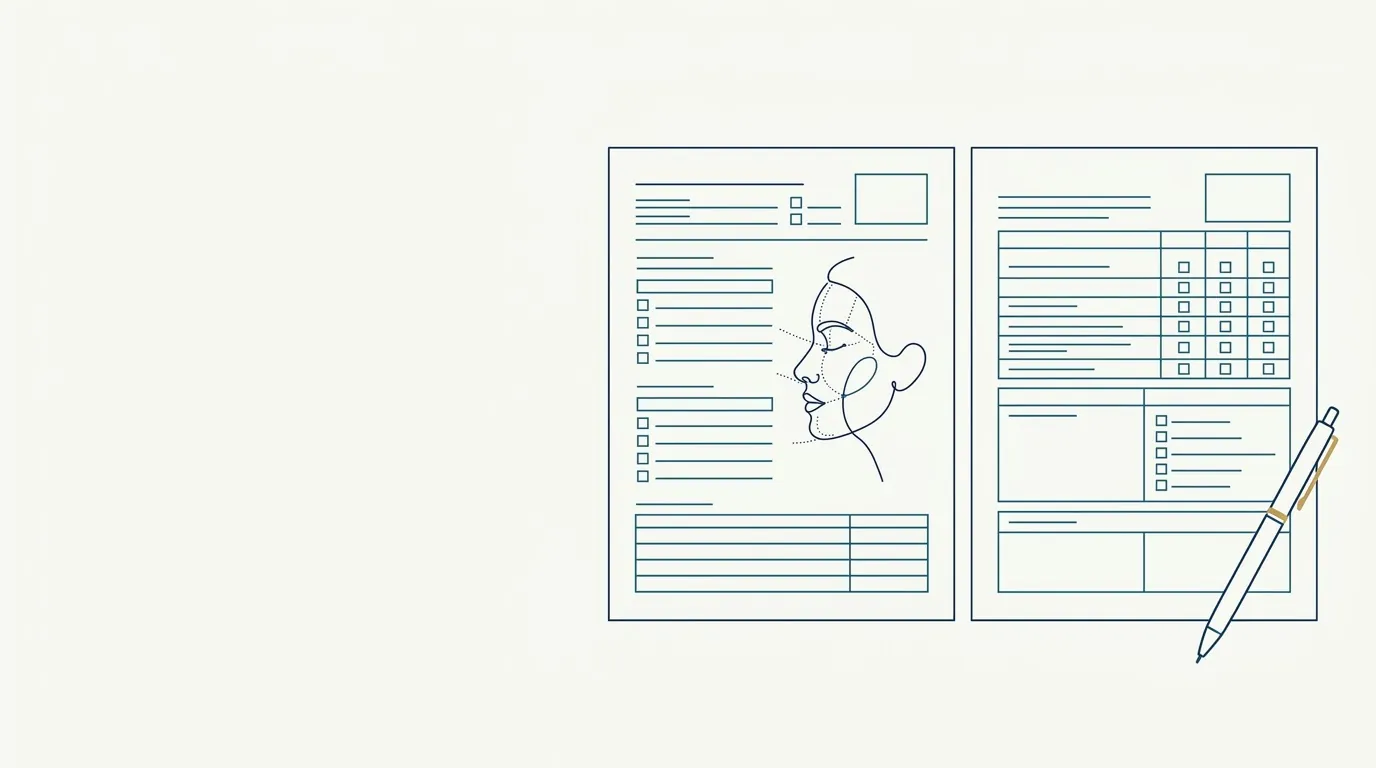
- Two forms
- One for treatment and the chart; another, separate, for any publication of images.
- Free
- The patient must be able to accept treatment and refuse publicity, with no penalty.
- Specific
- States where, how and for how long the image will be used.
- Revocable
- The patient can withdraw the authorization; the clinic must have a process for this.
Many clinics have a single form: the patient signs once and that is it, covering procedure, photos, publicity and everything else. It seems practical, but it is one of the practices that most weakens consent. When everything is on the same sheet of paper, the patient cannot accept one thing and refuse another, and the consent stops being free.
This page explains why to separate the forms, what each should say and how to handle revocation.
Why separate the forms?
The LGPD (Brazil's General Data Protection Law) requires consent to be free, informed and specific to the purpose. That has three practical consequences:
- Free: the patient must be able to say no to publicity and still be treated.
- Informed: the patient must know where the image will appear, for how long and in what format.
- Specific: the consent applies to the purpose described, not to any future use.
A single form with a generic clause ("I authorize the use of my image") does not meet these conditions. A separate form makes the choice clear.
| Aspect | Treatment form | Publicity form |
|---|---|---|
| Purpose | Procedure, chart, clinical photos | Website, social media, materials, lectures |
| Refusal | Affects treatment | Should not affect treatment |
| Revocation | Limited by chart retention | Broad for future uses |
| Content | Risks, benefits, alternatives, clinical photos | Channels, format, term, anonymity, rights |
| Timing | Before the procedure | At another time or in another document, without pressure |
What should the publicity form contain?
A good publicity form is short, clear and honest. The core points:
- Which images: photo, video, before and after, cropped area.
- Where they will be used: clinic website, social media, printed material, lecture, conference.
- Whether the patient will be identified: face visible, crop without the face, name or only initials.
- For how long: term of use, which may be limited.
- No compensation, or the conditions, if any.
- Right to revoke: how and to whom the patient communicates the withdrawal.
- Notice: the patient may refuse with no effect on treatment.
Can the patient be pressured?
The risk exists. A patient lying on the treatment table, about to start the procedure, has little freedom to say no to the professional. To reduce the pressure:
- present the publicity form at a separate time, not together with the procedure form;
- explain that refusal does not change the treatment;
- avoid offering discounts or benefits in exchange for the image, which weaken the freedom of consent and may have implications under advertising rules;
- accept the "no" without insisting.
What about revocation?
The authorization can be withdrawn. For this to work in practice, the clinic needs a simple process.
The deadlines above are an example of internal organization, not a legal rule. What matters is having a defined process. More details in patient wants to revoke image authorization.
How do you organize files to make revocation easier?
Keep images with publicity authorization in a folder separate from chart images. That way, on revocation, you know exactly what to delete, and the chart photo stays intact. See storing patient photos.
What about advertising rules?
The patient's consent is necessary but not sufficient. Publishing before-and-after images must also respect your professional council's norms and health advertising rules. Read what you may advertise: CFO and CONAR and never publish Harmy's projection as if it were an actual result.
Summary for your routine
Use two forms, leave the choice free, describe channels and term, organize files by purpose and have a revocation process. Publicity only starts after the patient's specific "yes" and stays within your professional council's norms. For the big picture, see consent and LGPD in patient photos.
Frequently asked questions
Why should publicity consent be separate?
Because the purposes are different. The treatment form authorizes the clinical record; publicity exposes the patient to the public. Mixing the two weakens the consent, which must be free, informed and specific.
Can the patient withdraw the authorization later?
Generally yes, and the clinic should have a process for it. The withdrawal applies to future uses, and the professional should do what is possible to remove published content, depending on the case and applicable rules.
Does the patient need to know where the image will appear?
Yes. The form should state which channels (website, social media, printed material), for how long and in what format, so the consent is truly informed.
Can I make treatment conditional on authorizing publicity?
It is not good practice. Consent must be free, and conditioning treatment on publicity compromises that freedom. Consult a legal professional and your professional council's norms.
Harmy images are illustrative simulations generated by AI from the patient's photo to support the conversation between practitioner and patient. They are not a promise of results. Indication, technique, product and volume are solely the decision of the licensed practitioner. This content is for information only and does not replace a clinical assessment.