
Dizziness or fainting during facial harmonization: why
Quick facts
- Question
- Why a person feels unwell or faints during facial harmonization
- Most common cause
- Vasovagal reaction from pain, fear, needles, fasting, or heat
- Immediate action
- Lay the patient down, raise the legs, check vital signs, and reassure
- Who decides
- The professional present, who also rules out other causes
Almost every professional who has been injecting for a while has seen it: the patient goes pale, the gaze drifts off, a cold sweat appears, the voice fades. Within seconds, they faint or nearly do. It is frightening for the patient and the team, and most of the time it is benign. This page explains the mechanism, how to act in the moment, and how to prevent it next session, without mistaking a vasovagal reaction for something more serious.
What is a vasovagal reaction?
It is a reflex response of the autonomic nervous system: stimuli such as pain, fear, the sight of blood or a needle, heat, and fasting cause a sudden drop in heart rate and blood pressure. The brain gets less blood for a few moments, and the person feels dizzy and nauseated, with darkening vision and a cold sweat, and may lose consciousness for a few seconds. Laying the patient down usually solves it.
Factors that raise the chance: fasting, poor sleep, anxiety, a hot room, standing for a long time, dehydration, a first experience with needles, a history of fainting, and certain medications. General guidance for the office is in vasovagal syncope in the office.
How do you recognize the early signs?
| Sign | What the patient usually says |
|---|---|
| Pallor and cold sweat | "I feel strange" |
| Dizziness, blurred or darkening vision | "Everything is going dark" |
| Nausea | "I think I'm going to throw up" |
| Ringing or muffled sound | "It feels like I'm far away" |
| Yawning, rapid breathing | "I'm nervous" |
| Weak legs | "My legs feel like jelly" |
If you notice these signs early, stop, move the needle away, and act before the faint. Many episodes can be avoided by this recognition.
What to do in the moment?
This is a summary of first aid, and it should be adapted to your clinic's emergency protocol:
- Stop the procedure and remove anything in the patient's hand or near the face.
- Lay the patient down, with the legs raised. If they are on a reclining table, lower the backrest.
- Loosen tight clothing, ventilate the room, and offer a cold cloth for the forehead.
- Watch breathing and pulse, and speak in a calm voice to check the response.
- Do not offer fluids until the patient is fully conscious and free of nausea.
- Measure blood pressure and, if available, blood glucose, to rule out other causes.
- Document what happened in the patient record: time, duration, signs, and action taken.
When a severe allergic reaction is suspected, the approach is different, and the office must be prepared. See syncope or anaphylaxis and anaphylaxis in the office. When there is intense pain and a change in skin color at the site, think of vascular occlusion.
How to prevent it next session
Prevention is simple and it works:
- Advise a light meal beforehand, avoiding a long fast, and good hydration.
- Ask in the medical history about fainting, fear of needles, and previous experiences.
- Inject with the patient reclined from the start, when there is a history.
- Keep the room cool and ventilated, with short pauses.
- Use topical anesthetic as needed, and explain each step before doing it.
- Avoid showing the needle and lead the conversation calmly, without rushing.
- Reserve time afterward, so the patient can get up slowly and does not leave right after the procedure.
What if the patient does not want to come back out of embarrassment?
It is common for someone who fainted to feel embarrassed. Responding naturally makes a difference. Explain that it is common, that the body reacted to a stimulus, and that the plan for next time will be adapted.
How Harmy helps reduce anxiety
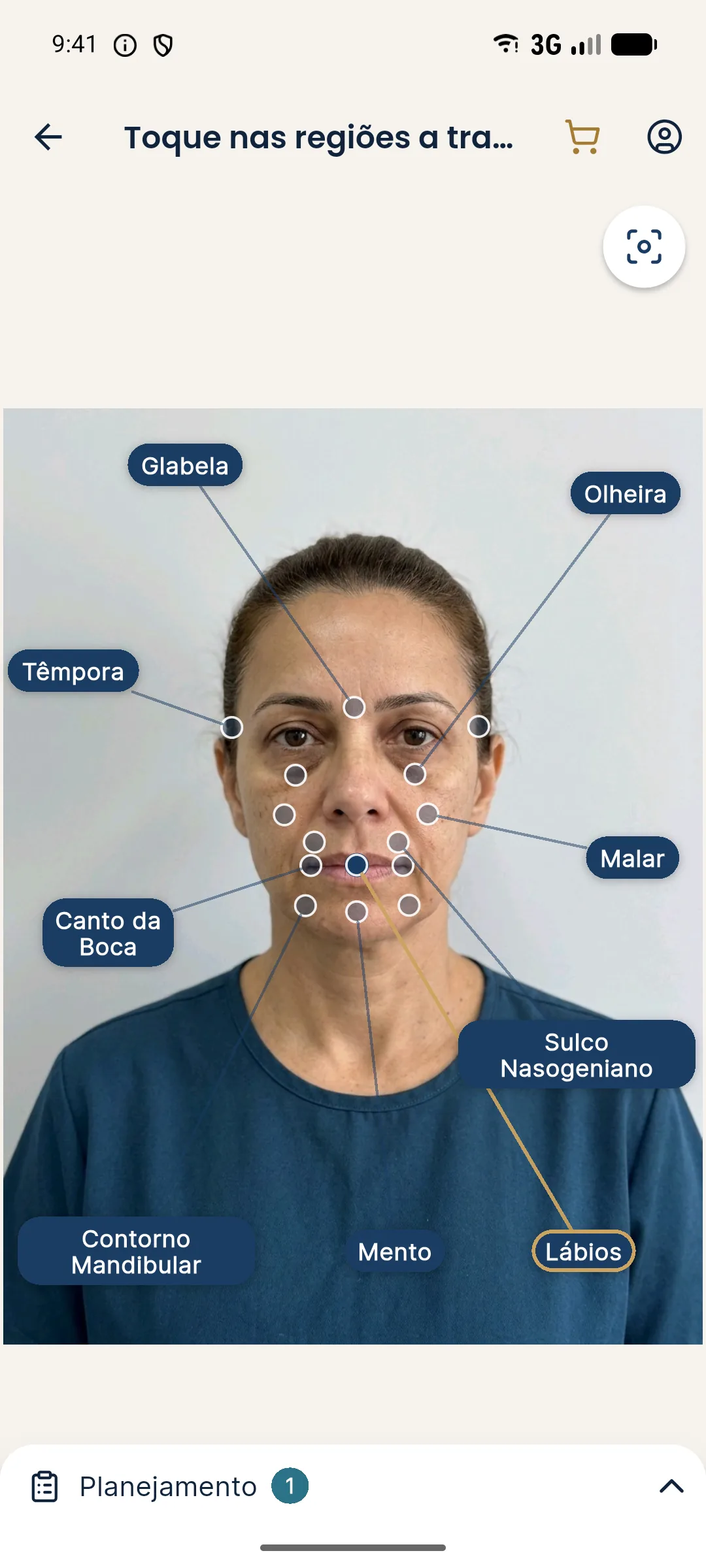
Part of the discomfort comes from uncertainty. Showing the projection before the injection, with the marked point, the volume in ml, and the intensity (Subtle, Moderate, or Pronounced), helps the patient know what is going to happen and feel part of the decision. Harmy does not assess health or prevent reactions, and the projection is an illustrative simulation, not a promise of results.
Frequently asked questions
Why do some people faint during botox or filler?
The most common cause is a vasovagal reaction, a temporary drop in blood pressure and heart rate triggered by fear, pain, the sight of a needle, fasting, or heat. It usually passes with the patient lying down.
Is dizziness during the procedure dangerous?
Most of the time it is benign and temporary, but the professional should check vital signs and rule out other causes, such as an allergic reaction or a vascular complication.
Can I have the procedure on an empty stomach?
Going in after a long fast is not recommended. A light meal beforehand usually lowers the chance of a blood pressure drop.
What should I do if I felt unwell in a previous session?
Tell the professional beforehand. They can adapt the room, lay you down from the start, use pauses, and go about it more calmly.
Harmy images are illustrative simulations generated by AI from the patient's photo to support the conversation between practitioner and patient. They are not a promise of results. Indication, technique, product and volume are solely the decision of the licensed practitioner. This content is for information only and does not replace a clinical assessment.