
Vaccine and facial filler: the interval

Quick facts
- Question
- What is the interval between a vaccine and facial filler
- Situation
- No universal interval; precautionary practices vary among services
- Points of attention
- Delayed swelling, immune reaction, health status on the day
- Who decides
- The qualified professional, with the approach documented
If a patient asks "what is the right interval between a vaccine and filler?", the short answer is: there is no single, official number. This page brings together what usually weighs on the decision, so you can build your own criterion, consistent and documented, instead of repeating an interval that circulates in professional groups without a source.
Why did the topic come up?
With the expansion of vaccination campaigns and the popularization of facial fillers, there have been reports of patients with swelling in treated areas after vaccines or infections. The literature describes delayed inflammatory reactions to hyaluronic acid in people with an activated immune system, and the phenomenon is uncommon, generally reversible, and treatable. As a result, many services began asking about vaccines in the medical history and considering intervals.
The important thing is to distinguish three ideas: the vaccine does not "melt" or ruin the filler; it may, in a few people, coincide with a local inflammatory picture; and a temporal coincidence does not prove cause. The plain-language explanation for the patient is in vaccine after filler.
How to build a service criterion
Some elements that usually go into the decision, at the discretion of the qualified professional, following the rules of their professional council in Brazil:
| Element | Helpful question |
|---|---|
| Type of situation | Is the filler recent (days) or old (months or years) |
| Need for the vaccine | Is it mandatory, campaign-based, for travel, or elective |
| Reaction to the vaccine | Was there fever, malaise, or a significant local reaction |
| Patient history | Any prior delayed swelling, autoimmune disease, immunosuppression |
| Treated area | Lips and under-eyes swell more and are more concerning |
| Urgency of the procedure | Is there an event, trip, or deadline pressing |
From these elements, the service can set a standard, for example "we ask about vaccines; if there is a vaccine in the next few days, we offer a new date; in case of a recent vaccine with a reaction, we wait for recovery". The standard should be simple, repeatable, and explained.
Filler before or after the vaccine?
There are two distinct situations, and the table below helps separate them.
| Scenario | Main concern | Common approach |
|---|---|---|
| Filler done, vaccine right after | Initial filler swelling and vaccine reaction adding up | If the vaccine is necessary, get it; tell the vaccination service |
| Vaccine done, filler right after | Vaccine malaise and confusing reading of symptoms | Wait for the reaction to pass before injecting |
| Old filler, vaccine now | Little concern | Advise reporting any new swelling |
| Frequent booster vaccine | Planning window | Plan the year's calendar |
For comparison with toxin, see vaccine after botox.
How to interpret swelling that appears afterward
When the patient reports swelling in a filled area after a vaccine, the reasoning should include differential diagnoses: residual swelling from the procedure, delayed inflammatory reaction, infection, hypersensitivity, or another systemic cause. The exam, the history, and photos help. In cases suspicious for infection, the management is different, as in infection and biofilm after filler, and delayed swelling has its own approach.
What to record in the patient record
Always record: the date and type of the last vaccine, the filler date, complaints after the vaccine, the guidance given, and the patient's response. The record protects the patient and you, and lets you learn from the service's cases. Include in the consent form the information that, rarely, delayed swelling can occur in situations of immune activation.
How to talk to someone in a hurry
A patient who has an event and has already had a vaccine wants to know if it is "okay". Avoid saying "yes" or "no" bluntly. Explain the criterion.
Where Harmy comes in
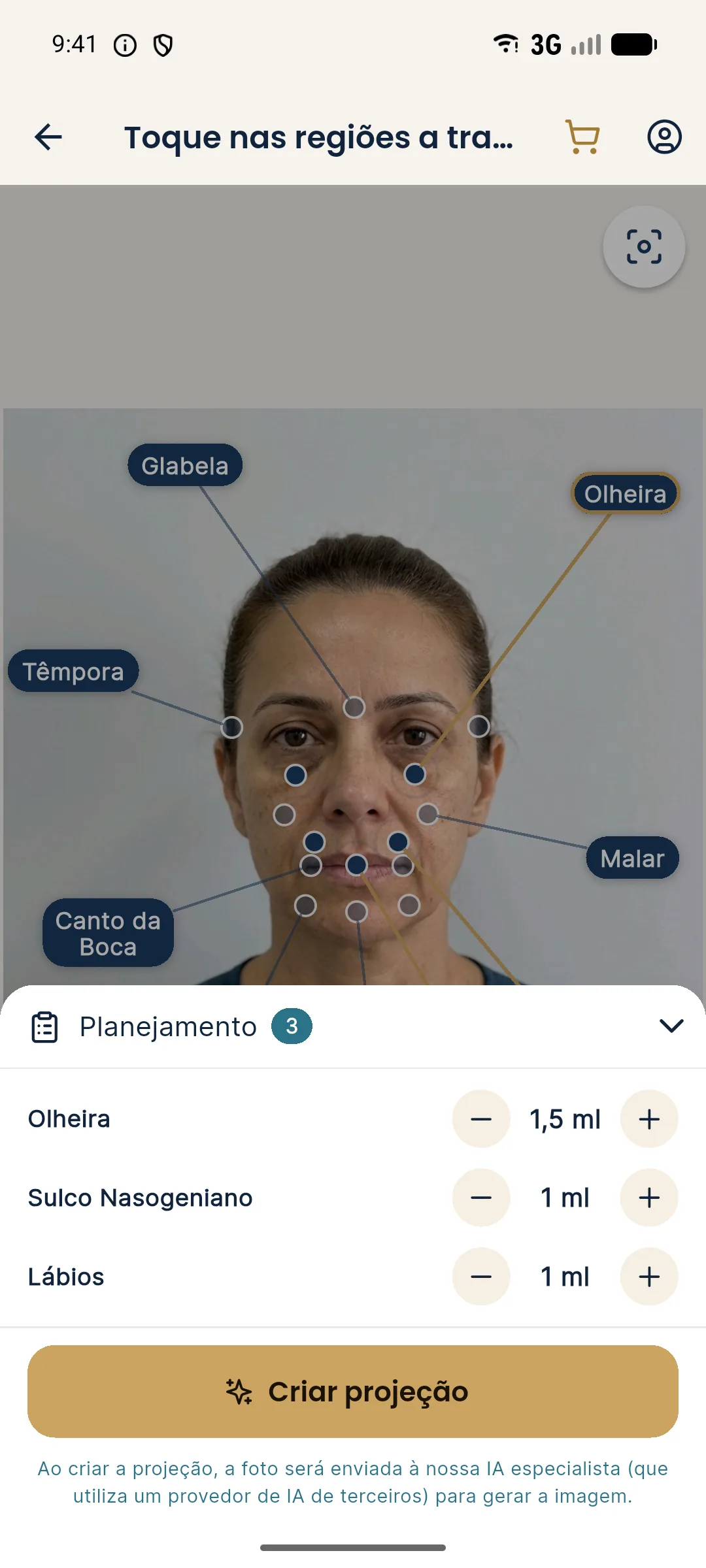
Harmy helps keep the plan alive while the calendar is reorganized. The session with the areas, the volumes in ml, and the projection stays saved in the history per patient, and you pick it back up after the vaccine without redoing the conversation from scratch. The projection is an illustrative simulation, not a promise of results, and it does not predict swelling or reactions.
Frequently asked questions
Is there an official interval between a vaccine and facial filler?
There is no single, established interval to cite. Services adopt precautionary intervals that vary, and the decision is individual and should be documented.
Can I have filler right before getting a vaccine?
In general it is possible, but many prefer to wait for the initial swelling to go down. If the vaccine is necessary and cannot be postponed, it takes priority.
Do the flu vaccine and the covid vaccine have different rules?
There is no established rule that differentiates vaccines. What is discussed is the general inflammatory state and isolated reports of swelling, so the caution is similar.
Do I need to tell the professional that I got a vaccine?
Yes. The information helps interpret any swelling and choose the best date for the procedure.
Harmy images are illustrative simulations generated by AI from the patient's photo to support the conversation between practitioner and patient. They are not a promise of results. Indication, technique, product and volume are solely the decision of the licensed practitioner. This content is for information only and does not replace a clinical assessment.