
Vaccine after filler: why some ask you to wait

Quick facts
- Question
- Why some ask you to wait between a vaccine and filler
- Simple explanation
- The vaccine activates the immune system, and filler is a foreign body in the tissue
- Usual approach
- Space them out as a precaution, with no universal interval, and never postpone a necessary vaccine
- Who decides
- The professional, in conversation with the patient
Almost everyone gets some vaccine every year, and a good share of HOF patients have filler in the face. Hence the natural question: does one interfere with the other? The most honest answer is that, in most people, nothing happens, but there are reports of delayed swelling in filled areas in some cases, and that is why many professionals take precautions. This page explains the reasoning in simple language, for you to use in the conversation with the patient.
What is "delayed swelling" and how does the vaccine fit in?
Hyaluronic acid is a biocompatible gel, but it is still a material injected into the tissue. The immune system lives with it without trouble most of the time. In some people, in situations where the immune system is "activated" (infections, vaccines, illness), an inflammatory response can appear in the filler area: swelling, hardening, redness, or nodules, sometimes months or years after the injection.
This phenomenon is discussed in the literature as a delayed inflammatory reaction. The triggers described include viral and bacterial infections, dental procedures, and, in reports, vaccines. There is a temporal relationship in some cases, but that does not prove cause and effect, and the phenomenon is uncommon. The broader discussion is in delayed swelling after filler.
Simple language for the patient
Many patients understand better with an analogy. One that tends to work: the immune system is like a guard; the vaccine puts the guard on alert; the filler is a visitor who already lives in the face and whom the guard normally ignores. In some cases, with the guard on alert, it gets agitated near the visitor, and the area swells. In most cases it passes, and there is treatment.
How to organize the dates
| Situation | Common reasoning |
|---|---|
| Necessary vaccine, recent filler | Do not postpone the vaccine; tell the service and monitor the swelling |
| Elective vaccine, recent filler | Wait for the initial swelling to pass, when possible |
| Planned filler, recent vaccine | Wait for the vaccine reaction to pass before injecting |
| Old filler, vaccine now | Generally no restriction; ask the patient to report any swelling |
| History of delayed swelling | More caution with dates and follow-up |
| Person with autoimmune disease or immunosuppressed | Talk to the treating physician |
There is no number of days that fits everyone. Some services adopt intervals of one to two weeks as a precaution, others assess case by case. Transparency matters more than the exact interval: explain the reason, document the conversation, and follow up.
For the parallel with toxin, see vaccine after botox, and for a broader view of the interval, vaccine and facial filler.
And the initial swelling from filler?
There is another reason to space them out, much more mundane: the sore arm and low fever that some vaccines cause take the patient out of the best condition for the procedure. If the filler was just done, the initial swelling already leaves the area sensitive, and malaise from the vaccine can confuse what is what. Planning with an interval makes the symptoms easier to read.
What to do if the area swells after a vaccine
The picture calls for clinical assessment, and treatment depends on how it looks. In broad terms, the professional may consider:
- Observing and documenting with standardized photos, to track the course.
- Ruling out infection, which calls for a different approach. See infection and biofilm after filler.
- Considering medication prescribed by the professional, such as anti-inflammatories or corticosteroids, depending on the assessment.
- Using hyaluronidase when the decision is to remove the product, at the professional's discretion.
- Following the resolution, which is usually gradual.
When the person has a history of reaction
If the patient has already had delayed swelling after a vaccine, infection, or dental procedure, it is worth noting this in the patient record and on the medical history form. The most prudent approach for new injections, at the professional's discretion, may include longer intervals and a follow-up plan. The topic of hypersensitivity reaction helps in understanding the difference between an immediate and a delayed reaction.
Patients with autoimmune diseases or on immunosuppressive treatment deserve a specific conversation, with the treating physician when necessary.
Harmy helps with planning
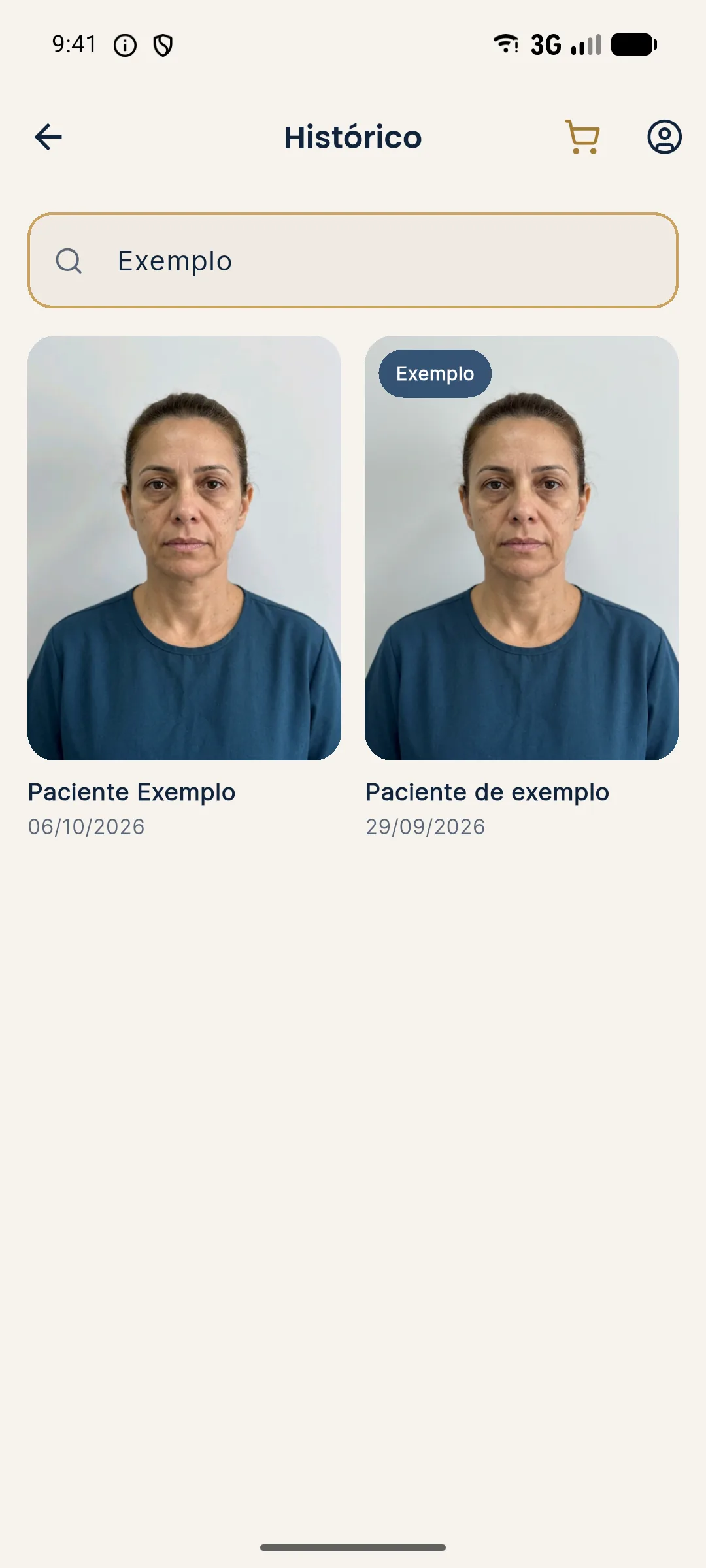
Harmy helps show the plan and organize the calendar calmly: mark the area, set the volume in ml, and generate the projection, as an illustrative simulation, not a promise of results. If the patient needs to postpone because of a vaccine, the sessions stay saved in the history, and the plan is picked back up on the new date with the same photo.
Frequently asked questions
Why do some professionals ask for an interval between a vaccine and filler?
Because the vaccine activates the immune system, and there have been reports of delayed swelling in the filler area in some people after vaccines or infections. As a precaution, many space the two apart.
If I got the vaccine, will my filler swell?
In most people, nothing happens. Delayed swelling is uncommon and usually responds to treatment guided by the professional, but the patient should report it.
Can I get a vaccine right after filler?
A necessary vaccine should not be postponed. If you can choose, many prefer to wait until the initial swelling from the filler has gone down, but there is no single interval.
What should I do if my filler swells after the vaccine?
Tell the professional, send photos, and do not massage or use products on your own. The assessment decides the approach, which may include medication or hyaluronidase.
Harmy images are illustrative simulations generated by AI from the patient's photo to support the conversation between practitioner and patient. They are not a promise of results. Indication, technique, product and volume are solely the decision of the licensed practitioner. This content is for information only and does not replace a clinical assessment.