
Aligning Expectations About Asymmetry: No Face Is Symmetrical

Almost every patient who asks for "symmetry" is asking for something the human face does not have. The two sides differ in bone, muscle, fat, eyebrow position and even in how the smile opens. When the consultation does not make this clear, the asymmetry that was already there comes to be seen, after the procedure, as the professional's mistake.
This page shows how to align that expectation using the patient's own photo, how to speak without offending and what to document. The topic of facial asymmetry belongs to the glossary; here the focus is the conversation.
Why does the patient expect symmetry?
Because images of perfectly balanced faces circulate on social media, in filters and in retouching, and create a standard nobody has. At the same time, when people look in the mirror, the brain "corrects" part of the differences. In a photo, which is mirrored the opposite way from what they see every day, the differences suddenly show up, and become a concern.
You do not need to dismiss the wish for symmetry, only reposition it: the realistic goal is more balance, not sameness.
How do you use the photo in the conversation?
The front-facing photo, taken in good light with the face relaxed, is the best tool. Follow a simple sequence:
- Show before you point out. Ask: "What do you see when you look at this photo?" Let the patient speak first.
- Confirm what they already notice. If they mention the left side of the smile, validate it.
- Carefully add what they did not notice, only if it is relevant to the plan. Do not list flaws for sport.
- Show that it is normal. One way is to mentally split the photo in half and compare, or to flip the image to show how it would look in the mirror. Avoid mirrored-face composites as proof, because they can be alarming.
What can and cannot the procedure do?
| Type of asymmetry | What usually happens with injectables | What to explain |
|---|---|---|
| Volume (one side with less filler) | Can be softened with volume adjustments | It can be balanced, not matched |
| Bone position | Not corrected by injectables | Can be partly disguised, never eliminated |
| Dynamic (movement of the smile or eyebrow) | Toxin can modulate it, at the professional's discretion | May become less noticeable, not disappear |
| Skin or texture | Beyond the reach of filler | Other approaches, or none |
The decision about how much to inject and where belongs to the qualified professional, after assessment. The point here is communication: you need to say, before starting, that the goal is balance and that some difference will remain.
What do you say about the asymmetry that will remain?
Be direct and kind. Say which difference you observed, what the plan can do about it and what it cannot. If the patient insists on total symmetry, go back to the original question: what exactly bothers them? Often it is one specific area, such as the corner of the mouth or a lower eyebrow, and it can be treated with a realistic goal.
For pointing out asymmetry without embarrassing the patient, see how to point out asymmetry to the patient without offending. For asymmetry that appears after the procedure, see communicating post-procedure asymmetry.
Does the simulation belong in this conversation?
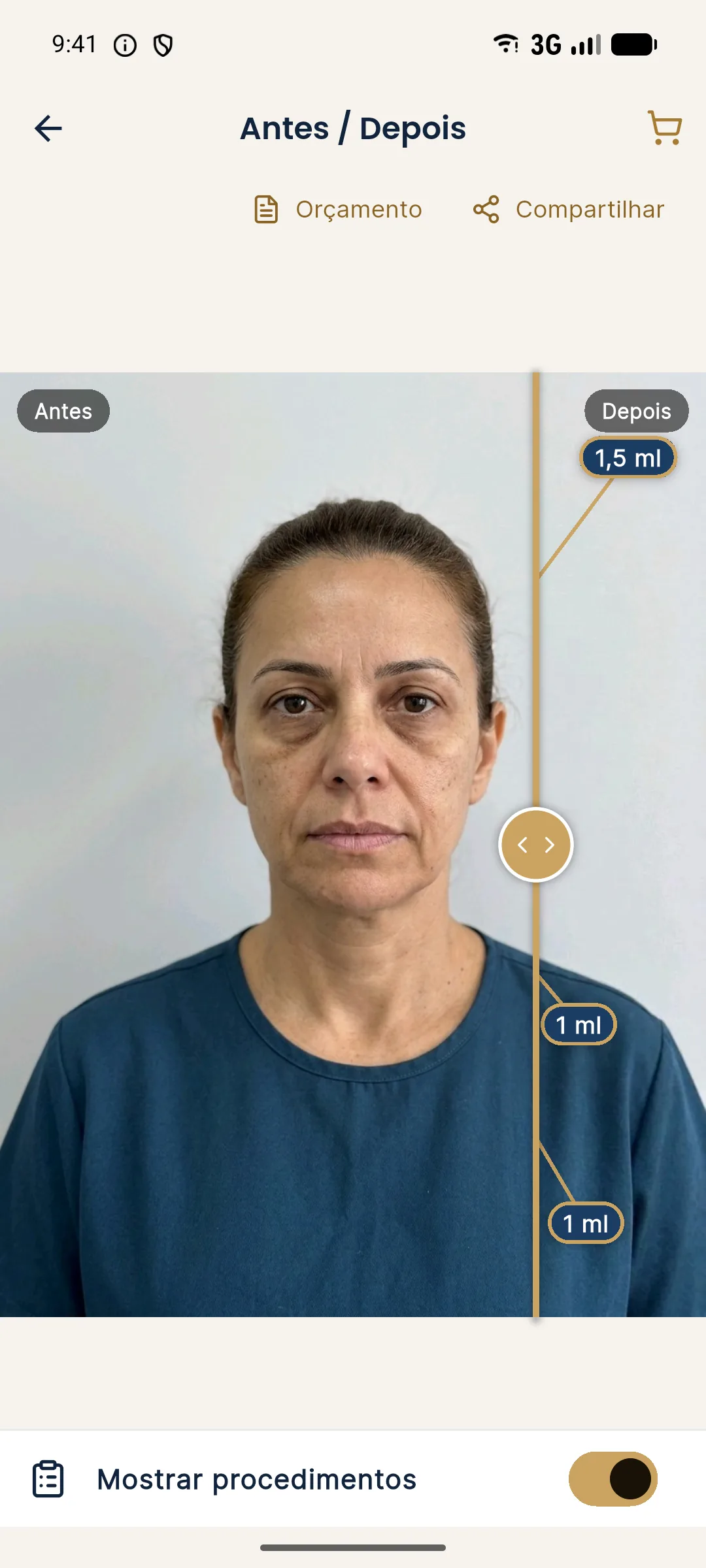
Yes, with a caveat. The projection starts from a front-facing photo and changes the marked areas, with volumes you define. It can help show the effect of balancing, but it can also suggest a symmetry the real face will not have. So say that the illustrative simulation shows a direction, not the exact result.
How do you handle a patient who is obsessed with symmetry?
Some patients pursue symmetry persistently, measure their face, compare photos and are never satisfied. When the concern seems out of proportion to the real difference, or when there is intense distress, the prudent course is not to proceed with the procedure and to talk about other health assessments. See saying no to a patient with dysmorphia and body dysmorphic disorder in facial harmonization.
What should go in the patient record?
- The asymmetry observed before the procedure, in a description and a standardized photo.
- What the patient notices and what they did not notice.
- What was explained: balance, not sameness; expected residual difference.
- The approach chosen and the reason.
- That the patient understood and agreed.
The patient record is the proof that the asymmetry existed beforehand. This is especially useful if, weeks later, the patient attributes to the procedure a difference that was already there. The informed consent should mention that some asymmetry may persist. See sample phrases in aligning expectations in writing.
When is asymmetry a reason not to proceed?
When the patient expects exact symmetry and will not accept another goal, when the asymmetry is bony or functional and an injectable does not solve it, or when the concern seems out of proportion. In these cases, a respectful, well-founded refusal is part of good care. The structure is in how to say no to a patient in facial harmonization.
Frequently asked questions
Can the face become completely symmetrical with facial harmonization?
No. No face is perfectly symmetrical, and facial harmonization usually softens differences rather than eliminating them. Clarifying this beforehand avoids the frustration of someone expecting exact symmetry.
How do I show the patient that their face is naturally asymmetrical?
With a front-facing photo in good light, showing the differences between the sides gently and without exaggeration. Often the patient has never looked at their own face this way, so tone matters.
Should I always correct the patient's asymmetry?
No. Only when there is an indication and a concern from the patient. Treating an asymmetry the patient does not notice can create a dissatisfaction they did not have.
Do I need to record the asymmetry that existed before the procedure?
Yes. A standardized photo and a description in the patient record protect both sides and make it possible to separate what already existed from what changed afterward.
Harmy images are illustrative simulations generated by AI from the patient's photo to support the conversation between practitioner and patient. They are not a promise of results. Indication, technique, product and volume are solely the decision of the licensed practitioner. This content is for information only and does not replace a clinical assessment.