
Getting your HOF clinic ready for summer

For those who work in orofacial harmonization, summer is not a single season: it is three timelines that overlap. The timeline of demand (patients who want to get things done before trips, parties and vacations), the timeline of care (sun, heat and a beach or pool routine that change the instructions) and the timeline of the schedule (staff vacations, long holiday weekends and year-end). The clinic that organizes all three before December serves patients better and loses fewer slots.
This page is a preparation roadmap focused on content and schedule, the two points that depend most on lead time. The full annual calendar is in seasonality of the HOF clinic. Here the idea is to turn summer into an eight-week plan, with tasks, messages and ethical limits. The clinical decision to indicate, postpone or advise is always up to the qualified professional, according to the rules of their professional board.
What changes in the clinic as summer approaches?
Three movements often appear in clinics' accounts, and it is worth confirming them in your own numbers:
- Requests with a deadline. Patients come to the clinic with a date set for a trip, wedding or graduation. The deadline becomes the central factor in the conversation.
- Questions about sun and heat. Questions come up such as "can I go to the beach?" and "can I work out?", which deserve a standard answer.
- Irregular schedule. Patient and staff vacations create gaps and peaks that need to be anticipated.
Eight-week plan
Each week has one task only. If the clinic is small, combine two weeks. What cannot be missing is the order: numbers first, then schedule, then content, then invitation.
How to organize the summer content calendar
Summer content at an HOF clinic tends to fall into traps: beach photos, exposed bodies, "summer without marks" and other phrases that run into advertising rules. The safe path is educational and care content.
| Axis | Sample topics | Ethical caution |
|---|---|---|
| Sun and skin | Daily sun protection, what changes after procedures | Do not promise protection of the result |
| Summer routine | Pool, beach, physical activity and travel after a procedure | General guidance, individualized at the consultation |
| Event planning | Why the deadline matters and how follow-up works | Without using the event as sales pressure |
| Behind the scenes at the clinic | Team, environment, biosafety | Without exposing patients. See behind the scenes without exposing patients |
| Frequently asked questions | Answers to common questions | No diagnosis by message. See clinical questions in comments |
To spread the content across the week, use the logic of content pillars and the monthly editorial calendar. For captions, ethical captions for HOF.
How to advise the patient about sun and heat
The clinic's instructions template needs a specific section on sun and heat. It should be defined by the professional for each procedure. The text below is a skeleton for you to adapt, not ready-made instructions.
Combine this section with the post-filler instructions template and the post-toxin instructions template. The pages flying after filler and flying after botox cover a classic question of this season, and gym after harmonization covers another.
Schedule: what to adjust before the peak
The summer schedule has three risks: filling up in December, emptying out in January and producing no-shows because of trips. A few simple adjustments:
- Reserve review slots in the weeks after procedure peaks, so a review does not compete for a slot with a new consultation.
- Define the minimum interval before events and record it: the patient who arrives right before the date needs to hear the rule clearly.
- Reinforce appointment confirmation on long holiday weekends. See no-shows at the HOF clinic and automatic reminders.
- Plan staff vacations with notice of at least a few weeks, and communicate who handles follow-ups in that period.
- Open a waiting list for last-minute cancellations. The waiting list script template helps.
For the view of the schedule across the whole year, see HOF clinic schedule and year-end schedule.
How to use Harmy in the deadline conversation
The patient who arrives with a date set wants to see what is possible. Harmy serves that planning conversation: with a frontal photo, the app detects the face on the device, you mark the areas, enter the ml and generate a projection in a Before/After slider. The simulation is illustrative and does not promise results, but it helps the patient understand what is being planned and in how many stages.
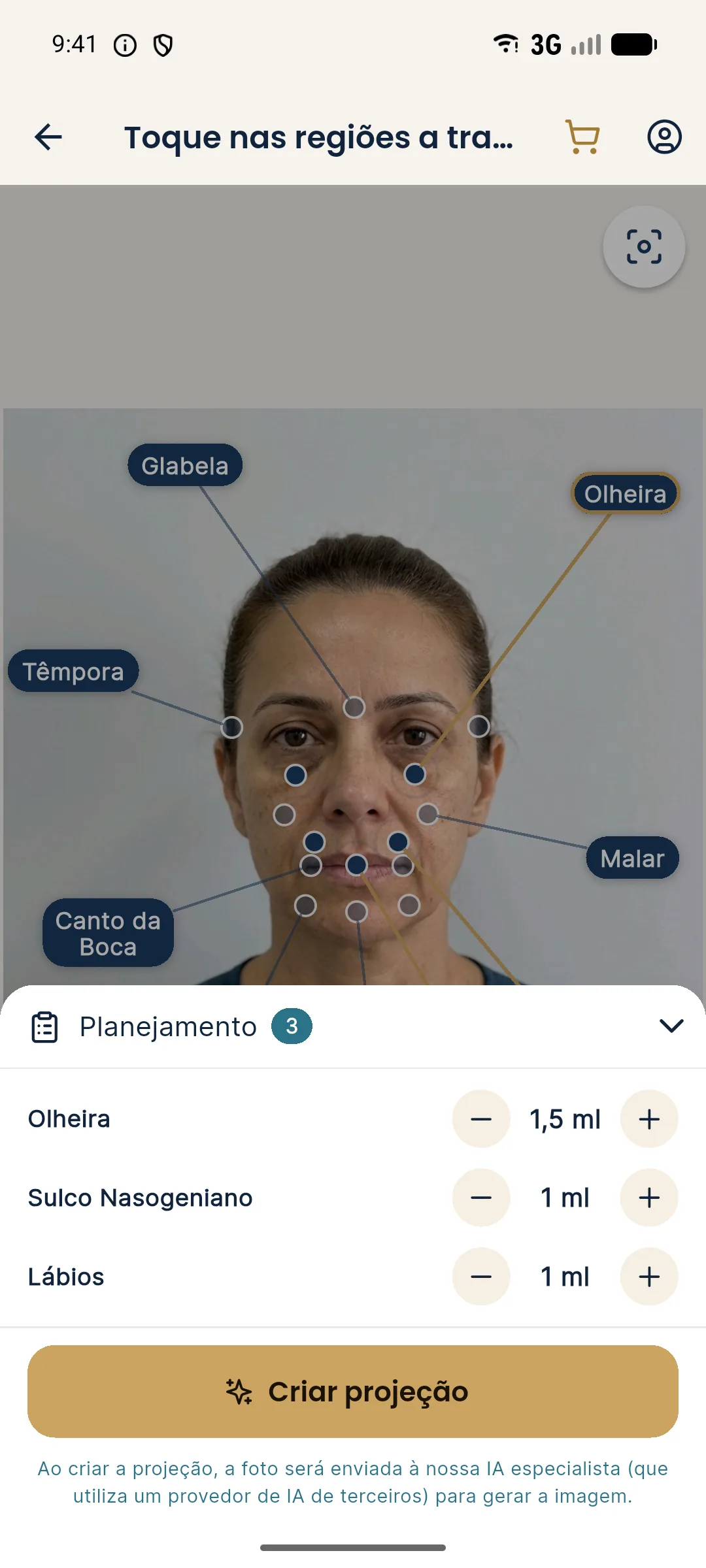
When the plan requires more than one procedure, the app lets you build a PDF quote with validity, informational installments and a notice, which helps show the stages without pressure. See also the staged plan.
What not to do in the summer campaign
Final preparation checklist
Preparing for summer is, at heart, preparing a standard of care: numbers, schedule, content and instructions. Whoever does it once repeats it in later years with less effort and learns what worked in their own clinic, instead of depending on guesses about the market.
Frequently asked questions
When should I start preparing the clinic for summer?
Planning usually starts two to three months ahead, because procedures that patients want to finish before trips and events need time to settle and for follow-up. Start with the content calendar and the schedule.
Can I advertise procedures for summer?
You can communicate in an educational way, respecting the advertising rules of your professional board and of CONAR (Brazil's advertising self-regulation council). Avoid promises of results, aggressive promotional prices and before-and-after images of patients without authorization and without compliance.
Does summer get in the way of facial harmonization?
Not necessarily, but it calls for instructions about sun, heat and physical activity. The professional defines the care according to the procedure and the patient, and may postpone a procedure if the skin is sensitized.
How do I avoid a last-minute packed schedule before the holidays?
Send invitations early to follow-up patients, open review slots and make clear, from the consultation, what the minimum interval is between the procedure and the event.