
Puffy face: fluid retention, fat or excess volume

- Highlighted area
Quick facts
- Concern
- A face that looks puffy, mainly in the morning, or persistently
- Key insight
- Swelling, retention, fat and old material look alike, and the approach differs for each
- Supporting measure
- Variation through the day, procedure history, general health and palpation
- Limit
- Persistent or sudden swelling is a medical matter before it is an aesthetic one
"My face is puffy" is a phrase the facial harmonization professional hears in very different situations: from a patient who woke up with a full face after a night of salt and alcohol, to another who has lived with swelling for months for no apparent reason. The word "puffy" covers swelling, retention, fat, old filler and illness. Treating them all the same is a mistake, and the first step is to tell them apart.
This page proposes an investigation in layers, from the simplest to the most serious, and shows what belongs to aesthetics and what belongs to medicine. For related topics, see overly full face, late swelling after hyaluronic acid and persistent cheek swelling.
What are the origins of a puffy face?
Five groups of causes, which overlap, cover most cases.
- Fluid retention, linked to diet, salt, alcohol, hormonal cycle, sleep and medication. It tends to vary through the day.
- Facial fat, stable and proportional to constitution or weight. It does not vary with the time of day.
- Filler or accumulated material, with firm-soft volume and a history of injections.
- Post-procedure swelling, expected for days or weeks, and late in some cases.
- Clinical conditions, such as allergy, kidney disease, thyroid disease and others, which need medical assessment.
Groups 1 and 4 are the most frequent and usually the least serious. Group 5 weighs the most, and is where a misreading can delay a relevant diagnosis. That is why the exam starts with the history, not the mirror.
How do you tell swelling from fat and from material?
A few simple questions and gestures help. Fluid swelling is usually worse on waking and improves through the day. Pressing gently, the skin may keep a dent that is slow to return. Fat-related fullness is constant, and material-related fullness has a time relationship with injections. Examining the eyelid and the area around the eye is especially informative, because fluid collects there.
| Clue | Fluid retention | Fat | Material |
|---|---|---|---|
| Variation through the day | Obvious | Absent | Absent |
| Worse on waking | Yes | No | No |
| Pitting under pressure | Common | No | No |
| Relation to procedures | No | No | Yes |
| Weight history | Of little relevance | Relevant | Of little relevance |
Ask about medication, diet, sleep, menstrual cycle and alcohol use. See also swelling gets in the way of comparing results, which shows how swelling distorts the reading of photos.
What if the swelling is linked to fillers?
Fillers can cause swelling in three ways. The first is expected swelling, which settles in days. The second is late swelling, which appears weeks or months later, sometimes after a trigger such as a viral infection, a vaccine or dental work. The third is accumulation of material, where the volume is not swelling but product. In every case, the history is essential, and management involves careful assessment.
In the lower eyelid and cheek region, persistent swelling may be tied to hyaluronic acid, which is hydrophilic. The pages chronic eyelid swelling after filler and Tyndall effect cover this. Hyaluronidase may be considered, at the discretion of the qualified professional after an assessment, and must always be on hand when hyaluronic acid is used.
What if the concern is fat?
If the puffiness is stable, symmetric and follows weight, the reasoning shifts to that of overly full face. In that scenario, the puffiness is perceived, but it is not fluid. Here, facial harmonization acts indirectly, working the surrounding contour, and facial fat reduction is outside the scope of many professionals, depending on the professional board and competence.
The conversation with the patient needs to be candid. Many say "puffy" to avoid the word "fat", and the professional should be welcoming without making them uncomfortable. Naming the cause respectfully avoids wrong expectations. The page how to talk about weight and face in the consultation offers language for this.
When should you refer?
Refer without hesitation when there is sudden, asymmetric or painful swelling, or swelling with fever, skin changes or systemic symptoms. Also refer when the swelling persists with no identified cause, when there is a history of kidney, heart or thyroid disease, and when allergy is the hypothesis. The aesthetic professional does not replace the physician, and building the bridge respectfully is part of the job. See patient referral in facial harmonization.
What should you do next?
If the cause is retention, guide habits and reassess. If it is material, plan the approach with caution, dissolving if indicated. If it is fat, discuss what facial harmonization can and cannot do. In any case, avoid procedures until the face is stable, because swelling changes how everything reads.
What about Harmy?
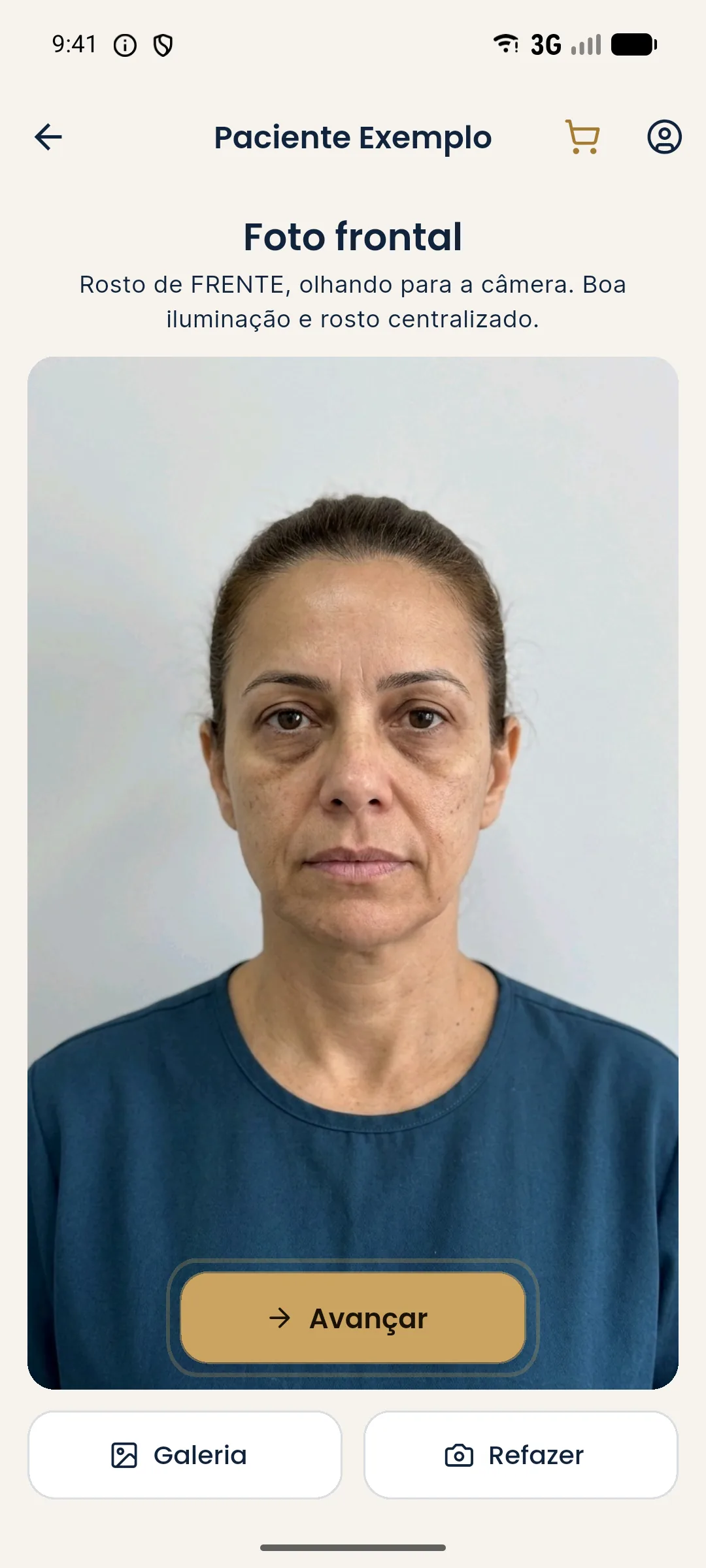
The app does not recognize swelling or tell retention from fat. The projection starts from the photo as it is, and a photo taken with a puffy face will generate a projection on a puffy face. So avoid photographing on the day of greatest swelling, and use the app only when the face is stable.
Frequently asked questions
How can I tell if my face is puffy or if it is fat?
Fluid swelling tends to vary through the day, be more obvious on waking and leave the tissue pitting under pressure. Fat is stable and firm-soft. The professional tells them apart through history and examination.
Can old filler look like puffiness?
Yes. Accumulated material, migration and late swelling can give the look of a puffy face. The injection history helps tell them apart.
When is facial swelling a concern?
When it is sudden, asymmetric, painful, accompanied by fever, difficulty breathing or swallowing, or persists with no cause. In these cases there must be an immediate medical assessment.
Can facial harmonization treat a puffy face?
Only when the cause is material or structure. Swelling from retention, illness or allergy is not treated with aesthetic procedures and requires clinical investigation.
Harmy images are illustrative simulations generated by AI from the patient's photo to support the conversation between practitioner and patient. They are not a promise of results. Indication, technique, product and volume are solely the decision of the licensed practitioner. This content is for information only and does not replace a clinical assessment.