
How to explain polynucleotides to the patient

Quick facts
- Core message
- A product aimed at skin quality, with a gradual effect
- Caution
- Do not overstate what is known or promise regeneration
- Difference
- Not a volumizing filler or a classic biostimulator
- Record
- Expected timeframe, risks and the individual nature of the effect
Polynucleotides have become a frequent term in clinics and on social media. Patients hear words like "regeneration" and "renewal" and expect something close to a miracle. Professionals, in turn, need to explain a product whose body of knowledge is still consolidating without sounding outdated or exaggerated. The safest approach is to talk about skin quality, in a tone of possibility, and make clear what the product does not do.
How to explain it in one sentence?
Three ideas are in the sentence: the goal (skin quality), the pace (gradual) and the limit (not volume or lifting). The term "tissue regeneration" is technical; for the patient, it is more honest to translate it as "encouraging the skin to recover," always with "may" and "generally."
What to say about the scientific basis?
This is where honesty counts the most. The use of polynucleotides in aesthetics is relatively recent, and the body of knowledge is still being built. Avoid categorical claims and numbers. Two phrases help:
- "Use is growing and the idea is interesting, but we are still learning about it."
- "I recommend it when I think it makes sense for your case, and I explain what to expect."
How to tell it apart from a filler and a biostimulator?
Confusion with other injectables is common. Use a short table.
| Product | Focus | Expected effect |
|---|---|---|
| Filler | Volume and contour | Generally immediate, localized |
| Biostimulator | Collagen stimulation and support | Gradual, over weeks to months |
| Skinbooster | Skin hydration | Gradual, over sessions |
| Polynucleotides | Skin quality and recovery | Gradual, variable |
The rows serve as a guide for the conversation; the classification of each product depends on its registration and indication. For the conversation about the first two, see fill or stimulate and explaining the biostimulator.
How to talk about timing and sessions?
The effect, when there is one, tends to be gradual, and many protocols use more than one session. Avoid fixing a number before the assessment and do not promise a date for results.
Timeframes vary a lot between patients. Book the follow-up and use standardized photography, with the same light and distance (see standardized clinical photography), because changes in skin quality are subtle and easy to underestimate.
Which risks and precautions to explain?
The patient needs to know that, like any injectable, there are risks: edema, erythema, bruising, tenderness, allergic reactions and, rarely, infection or nodules. Beforehand, the medical history should check for allergies, skin conditions, medications and pregnancy (see medical history in HOF). The plan for managing a complication is part of the clinic's preparation.
How does Harmy fit into this conversation?
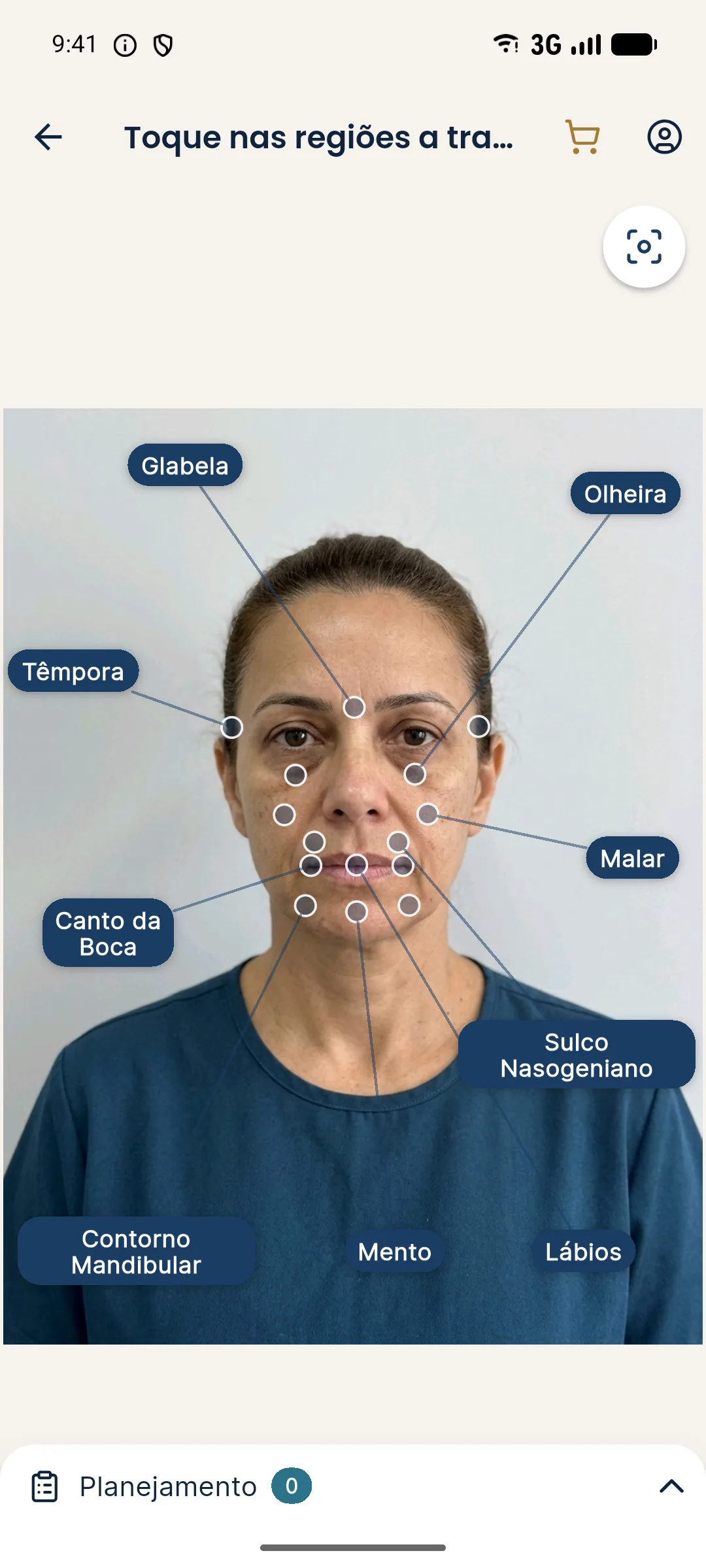
Harmy does not simulate polynucleotides, because it simulates volume changes in the marked areas and keeps the skin texture as it is. This needs to be said: the projection does not show improved glow or texture. Use the app, if you like, for other procedures in the plan, and explain that the skin quality effect is gradual and does not appear in the simulation.
Which areas are usually considered?
The patient often asks where it is applied. In general, people talk about areas of thin, delicate skin, such as the periorbital area, the neck and the décolletage, as well as the face more broadly, always at the professional's discretion after assessment. Explain that the choice of area depends on the concern, the skin and what is expected. Avoid point maps or technique details in the consultation: what the patient needs is to know the goal, the pace of the effect and the precautions.
What questions to expect?
What to record?
Note the explanation, the expected timeframe and number of sessions, the risks mentioned and the consent. Also record that the patient was told that knowledge about the product keeps evolving. Standardized starting photos are indispensable. For reading the consent form, see how to explain the informed consent form.
Being frank about what is known and what is still being learned is the best guarantee of a realistic expectation, and it is what patients value most when they notice it.
Frequently asked questions
How do I explain polynucleotides to the patient?
Say they are products applied to the skin with the aim of improving its quality, such as hydration and glow, with a gradual effect. Avoid promising regeneration or rejuvenation.
Do polynucleotides add volume?
Generally that is not the goal. The aim is to improve skin quality, not to fill volume. If the patient wants volume, other options can be assessed.
What should I say about the evidence for polynucleotides?
Be honest: use is growing, but knowledge is still consolidating. Avoid categorical claims and speak in terms of possibility, at the professional's discretion after assessment.
Is it suitable for every patient?
It depends on the assessment. There are contraindications and precautions, such as allergies and skin conditions, that are part of the medical history and the consent.
Harmy images are illustrative simulations generated by AI from the patient's photo to support the conversation between practitioner and patient. They are not a promise of results. Indication, technique, product and volume are solely the decision of the licensed practitioner. This content is for information only and does not replace a clinical assessment.