
Simulation for an anxious patient: does it help or hurt?
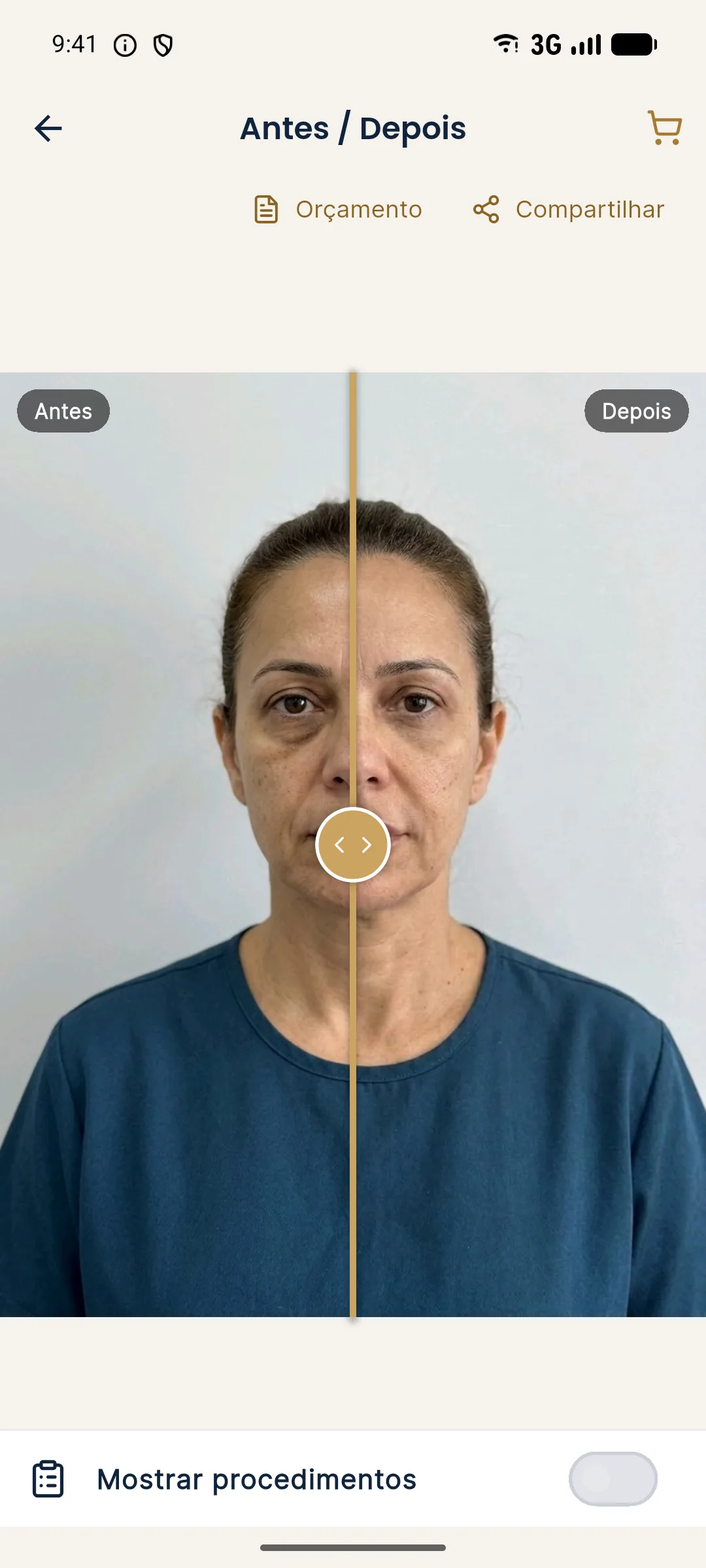
An anxious patient arrives with many questions, repeats some of them, shows up early, asks to see it again. Showing the simulation seems like a good way out: "look, this is it." It is not always. For some, the image calms; for others, it opens a new source of worry, because now there is something concrete to criticize.
This page helps you decide when and how to use the simulation with someone who is anxious. The text is about communication, not diagnosis. When you suspect a condition that goes beyond that, the referral is up to the professional, in line with the rules of their professional board in Brazil.
What is ordinary anxiety and what deserves attention?
Most consultation anxiety is expected: fear of needles, of pain, of looking artificial, of making the wrong decision. It usually eases with clear information and time. Other signs call for more care:
- repeated questions about the same point, even after clear answers;
- a need to see the image several times and to adjust it each time;
- distress out of proportion to a small detail;
- reports of trouble sleeping, eating or working because of appearance;
- a request for a total guarantee before deciding.
Diagnosing is not your role, but the medical history can include simple questions about how the patient has been feeling, and notes in the patient record help you spot patterns. To assess excessive concern about appearance, see simulation for a patient with suspected dysmorphia and anxious patient in the consultation.
When does the simulation usually help?
It tends to calm when the fear is of the unknown:
| Situation | Why it helps | How to present it |
|---|---|---|
| Fear of looking artificial | The subtle image shows that the plan is discreet | Start with the Subtle intensity and compare it with Moderate |
| Doubt about ml | Seeing what 0.5 ml and 1 ml suggest organizes the conversation | Show one area at a time |
| Insecurity about getting started | The image gives a concrete starting point | Stress that it is illustrative and that the plan can change |
| Fear of wasting money | The staged plan becomes visible | Show the priorities, not the full package |
In these cases, the simulation shrinks the space imagination occupies. The patient imagines an exaggerated result; on seeing a discreet plan, they breathe out.
When does the simulation usually hurt?
The image can make anxiety worse when the patient:
- already compares themselves with filters, edited photos or celebrities;
- finds new flaws every time they look;
- uses the image to demand an identical result;
- asks to "see just a little more" volume, again and again;
- leaves the consultation and looks at the image dozens of times at home.
Here, the simulation works like a magnifying mirror. Instead of solving anything, it hands the worry more material. In these cases it is worth cutting back its use: show it once, in an organized way, and do not send the file if that will feed the repetition. See also sending the simulation to the patient on WhatsApp.
How do you present the simulation to someone who is anxious?
A simple sequence helps you stay in control:
- Listen first. Let the patient say what worries them, without interrupting. Paraphrase.
- Say what you are about to show. "I'm going to show a subtle image, only of what we agreed on."
- Show little. One area, or the minimum plan, rather than everything at once.
- Ask for the reaction, not approval. "How do you feel seeing this?"
- Set the limit. "We'll look once and then decide. We won't adjust it several times today."
- Close with the next step. Agree on the decision or a follow-up, without hurry.
If the patient asks to see more, offer a single alternative, not endless ones. The limit is not rigidity, it is care.
What should you do about consultation time?
Anxious patients tend to ask for more time, and time is the most expensive resource. A few practices help:
- say at the start how long the consultation lasts;
- save the simulation for the second half, after listening;
- offer a brief second contact, by message or a follow-up visit, instead of stretching the first one;
- do not close the procedure on the same day if the patient is very agitated.
Closing on impulse turns anxiety into regret. See saying no to the patient who demands it today and, for the opposite case, simulation for an undecided patient.
What about consent?
The decision of a very anxious patient deserves extra care with informed consent. Give them time to read, offer to let them take the document home if they have doubts and document that their questions were answered. In case of intense distress, the procedure can wait, and waiting is not a loss.
Frequently asked questions
Does the simulation help an anxious patient?
It can help when the patient fears the unknown and needs to visualize a discreet plan. It can hurt when they already compare their face with unrealistic standards or want to look at the image over and over.
How many times should I show the simulation to an anxious patient?
One well-organized presentation is usually enough. Repeated viewings, ml adjustments on request and requests for a new image signal that the image is feeding the anxiety.
Should I show the simulation before or after talking?
In general, after listening. The conversation shows what really bothers the patient and helps you decide whether the image will calm or trigger them.
Is anxiety a contraindication for the procedure?
Not necessarily. But intense anxiety, repeated requests for more correction and disproportionate distress deserve attention and, sometimes, a referral.
Harmy images are illustrative simulations generated by AI from the patient's photo to support the conversation between practitioner and patient. They are not a promise of results. Indication, technique, product and volume are solely the decision of the licensed practitioner. This content is for information only and does not replace a clinical assessment.