
Simulation for an undecided patient: using it without pressure
An undecided patient is not saying no. They are saying "I don't know." That is an honest answer, and often the healthiest one before a procedure they will carry on their face. The challenge is to help without pushing: to give information that organizes the doubt, without turning the simulation into a sales argument.
Here is a way to use the image as a compass, not as pressure. The content is about communication and is left to the judgment of the qualified professional, in line with the rules of their professional board in Brazil.
What is the doubt behind the indecision?
Indecision is rarely a single thing. It is usually one of these:
| Doubt | Question that reveals it | What the simulation can do |
|---|---|---|
| Fear of looking artificial | "What worries you about looking different?" | Show a discreet plan |
| Doubt about need | "What bothers you most when you look at yourself?" | Show only the area of concern |
| Doubt about cost | "How much had you thought of investing?" | Show stages, one at a time |
| Fear of the procedure | "What do you imagine will happen?" | Almost nothing, the image does not solve that |
| Pressure from others | "Who else is weighing in?" | Nothing; the conversation needs to change subject |
Asking before showing makes the difference. If the doubt is fear of needles, the image does not help. If it is fear of the result, it helps a lot.
How do you use the simulation to organize, not to convince?
A few simple rules:
- Show less. One area, or the minimum plan, is usually more useful than the full plan.
- Show more than one option. Subtle and Moderate, or one area versus two. Choosing is more comfortable than accepting.
- Ask what they see, not what they think is good. "What catches your eye?" is better than "did you like it?"
- Acknowledge the "I don't know." "It's normal to be unsure, and it's good that you're thinking it over."
- Do not defend the image. You do not need to prove it is right.
See also how to close the consultation without selling and undecided patient for the broader conversation.
In stages or all at once?
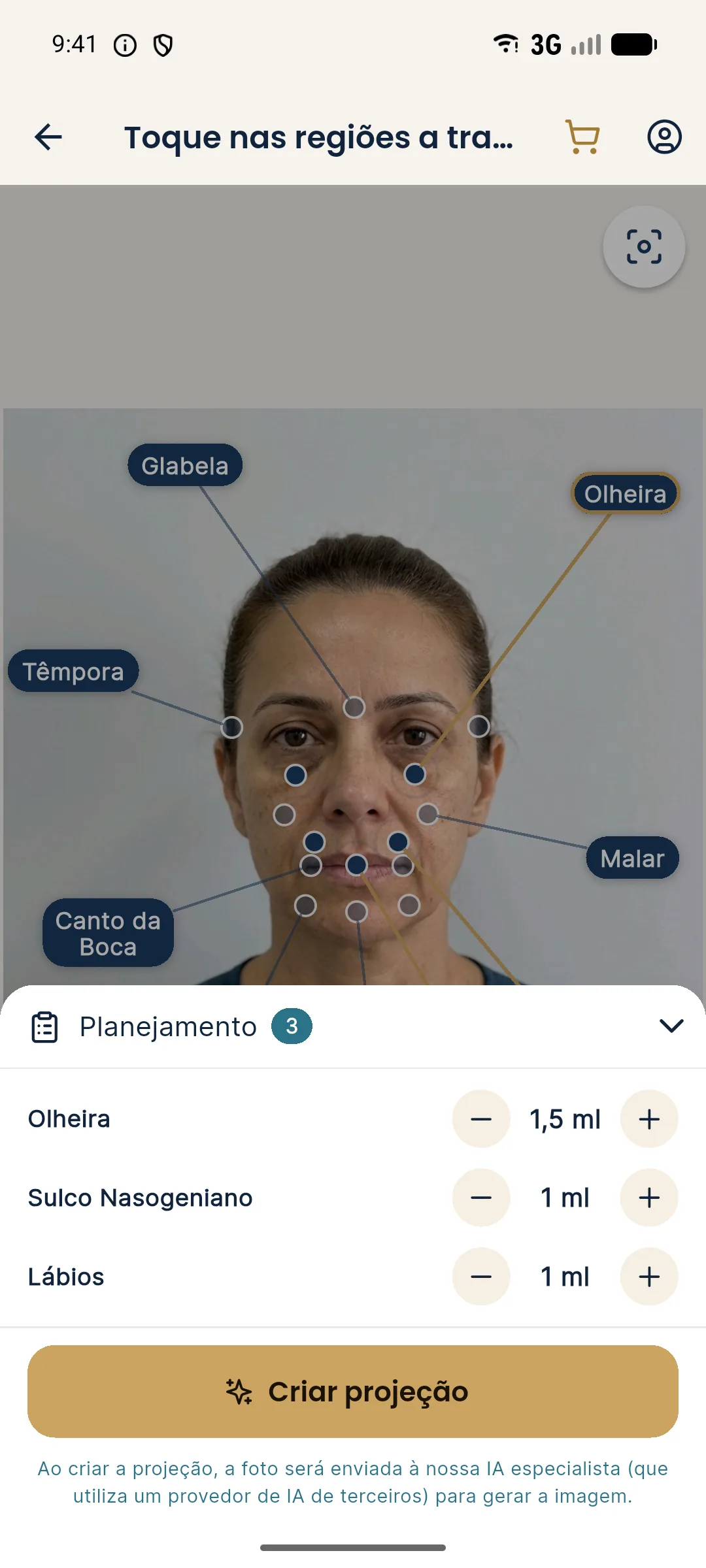
For someone undecided, the full plan can be frightening. Splitting it helps turn one big decision into small ones:
- Stage 1: the area that bothers them most.
- Stage 2: what can wait for the face's first response.
- Stage 3: maintenance or add-ons, if they make sense.
The patient only decides the first stage. The image shows what just that part would look like, and the rest stays open. This logic is the one in staged plan and in showing the simulation in stages.
What should they take home?
Many undecided patients need time outside the consultation. Ideally you hand them something they can read without you:
- a summary of the plan, with areas and stages;
- a price estimate, in a clear quote, without pressure;
- the notice that the simulation is illustrative;
- the contact channel for questions;
- a gentle time frame to resume, without an aggressive expiry.
The Harmy quote in PDF comes with a validity in days that you set. Choose a period that gives room, not one that forces. For the idea of material to take home, see also I'll talk it over with my husband and I'll think about it.
How do you follow up without pressuring?
Following up is where many clinics go wrong, either by disappearing or by insisting. A short message, a week later, is usually enough:
- thank them for the conversation;
- ask whether any questions came up;
- say the plan remains available whenever they want;
- do not repeat the price or talk about openings.
If there is no answer, a second message, much later, and that is it. Those who want it come back. Those who don't deserve respect. A culture of chasing wears down the clinic's image. For the commercial side, see patients who disappear after the quote.
When is indecision a warning?
Sometimes "I don't know" is the right answer. If the patient is torn, anxious, pressured by someone or without a clear concern, postponing is a good decision. Patient autonomy includes the right to wait. Informed consent is worth more when given without urgency.
Frequently asked questions
Does the simulation help an undecided patient decide?
It helps organize the conversation and see options, but it does not decide for them. If it is used as a push, the effect tends to be the opposite.
Should I offer a discount when the patient is undecided?
Pressuring with discounts or short deadlines goes against ethical care. Give time and information; if the clinic has terms to offer, present them transparently, without artificial urgency.
Can I send the simulation so they can think it over at home?
You can, with the illustrative simulation disclaimer, if it will not feed anxiety. Agree beforehand on what will be done with the image.
How much time should I give an undecided patient?
There is no fixed deadline. Give them the time they need within your schedule, without pressure, and make clear how to pick the conversation back up.
Harmy images are illustrative simulations generated by AI from the patient's photo to support the conversation between practitioner and patient. They are not a promise of results. Indication, technique, product and volume are solely the decision of the licensed practitioner. This content is for information only and does not replace a clinical assessment.