
Thyroid and a swollen face: can HOF fix it?

Quick facts
- Question
- Can the thyroid swell the face, and does HOF fix it
- Key point
- Swelling from endocrine disease is treated by the physician, not by filler
- Usual approach
- Investigate, refer, and only then plan the aesthetics
- Who decides
- The physician for the diagnosis, the HOF professional for the aesthetic plan
The patient arrives saying that "my face keeps getting more swollen" and asks for filler to "balance it out". When the complaint comes with fatigue, dry skin, hair loss, unexplained weight gain, or very puffy eyelids, the HOF professional's perspective has to change. It may be an endocrine condition, and the right step is to refer, not to fill. This page helps you recognize the pattern, talk about it without alarming anyone, and decide what role HOF plays.
What does the thyroid have to do with the face?
The thyroid regulates metabolism, and when its function is altered the body can show signs in the face. In hypothyroidism, for example, fluid and other substances can build up in the skin, giving a "puffy" or "heavy" look, especially in the eyelids, the face, and the lips. Other conditions, such as certain autoimmune thyroid diseases, can be associated with changes in the eyes.
This is not a diagnosis for the HOF professional to make. It is a warning that the patient should be evaluated by a physician. The relationship between hypothyroidism and procedures appears in hypothyroidism and facial harmonization, and the question of Hashimoto's thyroiditis is discussed separately.
How do you tell clinical swelling from facial volume?
| Finding | May suggest swelling of clinical cause | May suggest volume or fat |
|---|---|---|
| Onset | Gradual, along with other symptoms | Stable for years or tied to weight gain |
| Consistency | Skin that "pits" or looks thickened | Soft, measurable tissue |
| Eyelids | Persistent swelling, worse in the morning | Well-defined fat pads |
| General symptoms | Fatigue, feeling cold, sluggish bowels, cycle changes | Absent |
| Response to diet and weight | Little change | Changes with weight |
| History | History of endocrine or autoimmune disease | No relevant history |
Swelling from a systemic cause does not respond to filler: it can worsen the appearance and give a false sense that the problem is solved. A person with a face swollen by disease who receives hyaluronic acid may have the condition masked and the diagnosis delayed.
What to ask and observe
The medical history is the moment to notice. Ask about underlying conditions, medications (including hormone replacement), recent thyroid tests, family history, and recent changes in weight or skin. Observe the eyelids, eyebrows, voice, and skin. This is not an invasive question: it is part of care.
When the disease is controlled, can HOF come in?
In general, a patient whose thyroid is controlled and stable can be evaluated for harmonization like any other, with a complete medical history. The decision about each procedure belongs to the qualified professional, following the rules of their professional council in Brazil, with contact with the treating physician when in doubt. Uncontrolled disease is usually a reason to postpone. If there is active autoimmune disease, the discussion involves other points, as in autoimmune diseases and fillers.
It is also worth remembering that, as the thyroid is treated, the face can change: the swelling goes down, weight shifts, the skin resettles. Planning aesthetics before that stabilization can lead to choosing volumes that will not be needed later.
What HOF can offer, and when
HOF does not treat endocrine swelling. After clearance and stabilization, it can assess concerns such as volume loss in specific areas (for example, the cheekbone), dull skin, or asymmetries. For eyelids with persistent swelling, clinical investigation comes first. For a patient who lost a lot of weight with treatment, the conversation about facial volume loss after weight loss can be useful.
Plan and projection
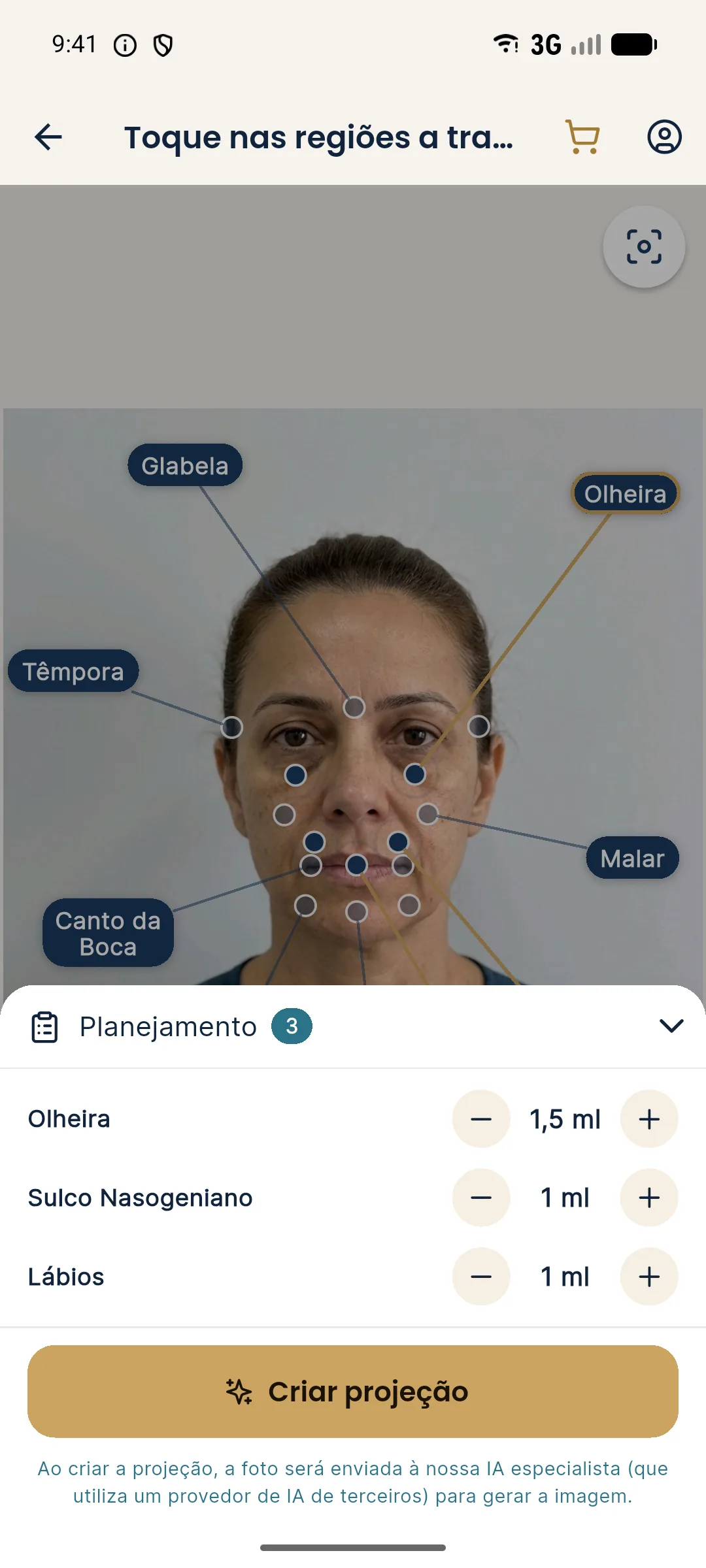
If the patient returns with clearance, Harmy helps with planning: mark the area, set the volume in ml, and generate the projection on the frontal photo, as an illustrative simulation and not a promise of results. Avoid generating a projection during active swelling, because the frontal photo reflects a face that will change with treatment.
Frequently asked questions
Can a thyroid problem make the face swollen?
Some thyroid disorders can be associated with swelling of the face and eyelids, among other symptoms. Diagnosis and treatment belong to the physician, and aesthetics comes afterward.
Can I fill the face to hide thyroid swelling?
It is not recommended. Filling a face with swelling of clinical cause can worsen the appearance, mask the disease, and delay the diagnosis.
Can someone treated for thyroid disease have facial harmonization?
In general, it depends on how well the disease is controlled and on the professional's assessment, with guidance from the treating physician. Uncontrolled disease usually means postponing the procedure.
How do you tell thyroid swelling from facial fat?
Only a clinical exam and, if needed, lab tests can tell them apart. Swelling from disease usually comes with other symptoms, and the HOF professional should refer when there is suspicion.
Harmy images are illustrative simulations generated by AI from the patient's photo to support the conversation between practitioner and patient. They are not a promise of results. Indication, technique, product and volume are solely the decision of the licensed practitioner. This content is for information only and does not replace a clinical assessment.