
Facial Bone Resorption and Its Effect on Treatment Planning
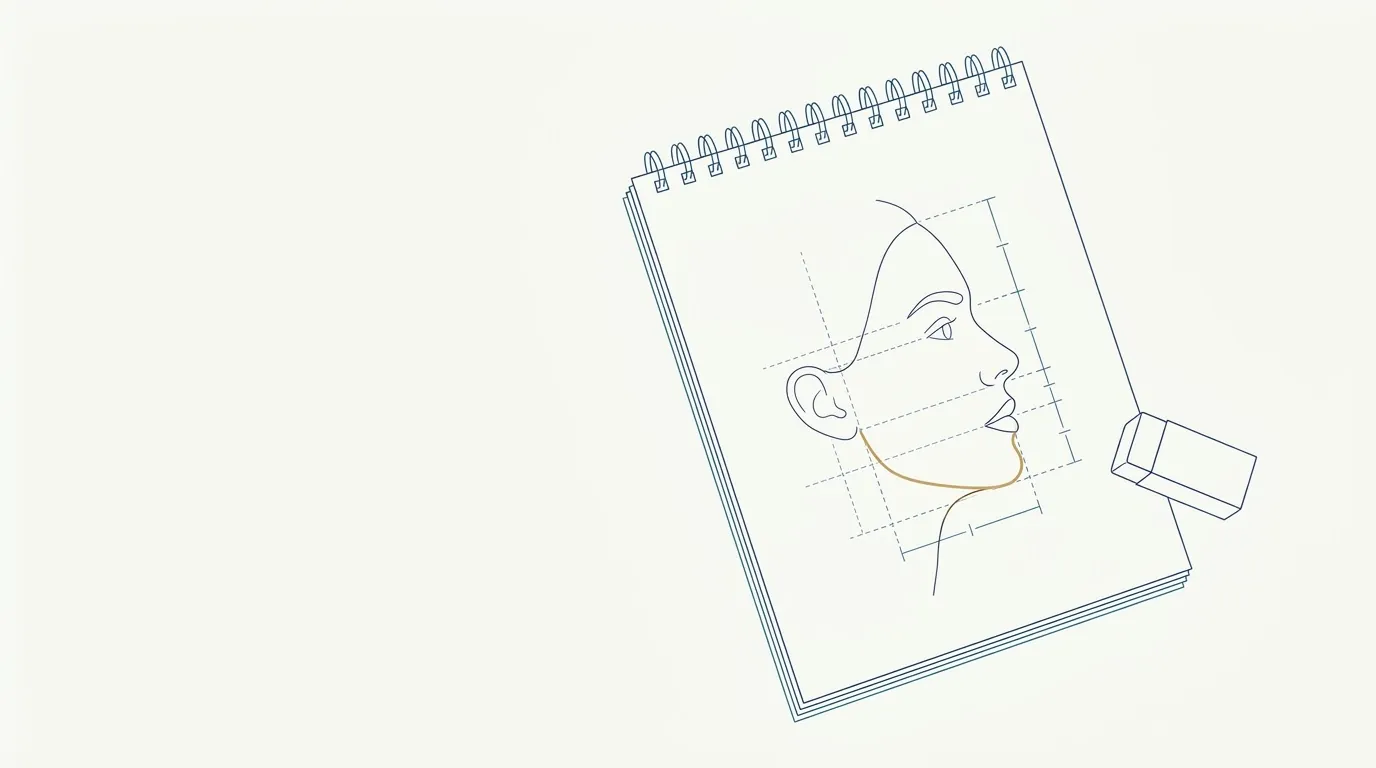
- Highlighted area
Quick facts
- Phenomenon
- With age, parts of the facial skeleton remodel and lose volume, and support for the soft tissue decreases
- Where it shows
- Orbit, maxilla and paranasal region, mandible, chin and cheekbone, at varying pace and intensity
- Effect on the plan
- Late volume shifts: what looks like soft tissue loss may be, in part, loss of bony support
- Caution
- Wide individual variation; factors such as menopause, dentition, genetics and health play a role
For a long time, facial aging was described almost only in terms of skin and fat: wrinkles, laxity, tissue descent. Today it is recognized that the skeleton changes too. Facial bone remodels, loses volume in specific regions and no longer supports the soft tissue the way it did. That explains why part of the hollowing the patient notices is not just a matter of tissue gain or loss.
Here you will see what bone resorption changes in planning: where it tends to appear, how to tell it apart from soft tissue loss, and how to adjust goals and forecasts. The text is a review, with no injection technique.
What is facial bone resorption?
It is the gradual loss of volume and projection of the bones of the face. It results from bone remodeling throughout life, with contributions from hormonal, genetic, dental and general health factors. The result is that the framework supporting skin, fat and muscle gets smaller, and the soft tissue, even without losing volume, takes up more space than the skeleton. The visual consequence is looseness and hollowing.
This process is described in different regions of the face, at different paces. It is not an event, it is a tendency, and its intensity varies widely from person to person.
Where does it usually show up?
| Bone region | What can happen | Described visual effect |
|---|---|---|
| Orbit (orbital rim) | Enlarged cavity, with the rim receding | Deeper-set eye, more visible tear trough and groove |
| Maxilla and piriform aperture | Recession of the paranasal support and the base of the nose | Flatter midface, deeper fold |
| Mandible | Reduced height and length of the body and ramus | Loss of contour definition, more visible jowl |
| Chin | Remodeling that varies between people | Chin more recessed or shorter in some cases |
| Zygoma | Remodeling and loss of projection in some patients | Flatter cheekbone |
The description above is general. Patients have different patterns, and some regions may hold up. What counts is individual assessment, with an exam and standardized photos, as in facial skeleton before injecting.
Why does this change planning?
Because it changes how you read the concern and what you expect from the result.
- Separate bone from soft tissue: a patient who complains of a hollow under-eye may have lost support at the orbital rim, not just fat. That reasoning changes the plan, as in cheekbone and tear trough: combining them in the plan.
- Choose where to restore: restoring volume where support was lost, and not only where the face looks empty, tends to give a more coherent result. See structure before detail in the plan.
- Calibrate expectations: volume compensates for part of the look, but it does not restore bone. See when bone is the problem, not volume.
- Forecast evolution: because resorption continues, the plan has to anticipate that the look may change over time, even with maintenance. See how a facial harmonization result ages and a three-year facial harmonization plan.
- Integrate other specialties: dentition, orthodontics and bone health enter the conversation, as in facial harmonization plan after orthodontics.
How does late volume "move"?
With resorption, regions that used to get support from bone depend more on soft tissue, and the soft tissue redistributes. The result is that the point where volume makes the most difference shifts over time. A plan from five years ago may no longer reflect where the face needs support today. The same amount of product can have a different effect, and the distribution between areas deserves periodic review.
This reinforces the idea of the plan as a living document, as in when the plan needs to change and reassessment at 3, 6 and 12 months. It also connects with volume accumulated over the years: always restoring in the same place, without understanding the change in support, can lead to excess in one area and a shortfall in another.
Which factors speed up or modulate resorption?
Without going into numbers, the literature points to associated factors:
- Age and sex: the process is described with different patterns in men and women, and menopause is a moment for attention.
- Tooth loss and use of dentures: associated with alveolar bone resorption and a change in the lower third.
- Genetics and facial pattern: part of the variation is inherited, and faces with different patterns age in different ways.
- Health and habits: smoking, diet, overall bone health and medications may play a role. See habits that change the plan: sun, smoking and sleep.
- Weight and rapid fat loss: they accentuate a skeletal look, as in planning facial harmonization for people who lose weight quickly.
These factors do not replace the exam. They help you form questions for the medical history.
How do you talk about this with the patient?
Patients grasp the idea that "the face has a structure underneath, and it changes too." It explains why some treatments need maintenance and why the result is not the same for everyone. Avoid alarmism and promises. Focus on what can be done: compensate, support, follow up. Language for talking about aging is in explaining facial aging to the patient.
Frequently asked questions
Does facial bone really change with age?
Yes, the literature describes remodeling of the facial skeleton over time, with changes in the orbit, maxilla and mandible. Intensity and pace vary widely between people.
How does this change facial harmonization planning?
A concern about a hollow face may have a bone support loss component, and not just fat loss. This affects where to restore volume, what to expect from the result and how to forecast evolution.
Can filler treat bone resorption?
Volume can compensate for part of the look of lost support, but it does not restore bone. Expectations should be calibrated, and the approach is up to the licensed professional.
Does tooth loss affect the face?
It can, because tooth loss is associated with resorption of the alveolar bone and a change in the lower third. In these cases, dental assessment is part of the plan.
Harmy images are illustrative simulations generated by AI from the patient's photo to support the conversation between practitioner and patient. They are not a promise of results. Indication, technique, product and volume are solely the decision of the licensed practitioner. This content is for information only and does not replace a clinical assessment.