
Expression lines that differ from side to side of the face
- Muscle
- Highlighted area
Quick facts
- Concern
- Forehead, eye or brow lines more marked on one side
- Method
- Film the patient in several expressions and compare the sides in motion
- Structures
- Frontalis, corrugator, orbicularis oculi and expression habit
- Caution
- Treating both sides equally may keep or create brow asymmetry
Every face works harder on one side. The brow that rises more, the eye that closes more when smiling, the forehead that wrinkles more intensely on the left: these are habits that time engraves as lines. The patient notices when the mirror starts to show the difference, and the professional needs to know why it exists before planning.
This page covers the assessment and the plan adjustment, and ties in with marked crow's feet, deep forehead wrinkles and asymmetric brow.
Why does one side mark more?
Dynamic wrinkles arise from the repeated contraction of a muscle. When the habit is lateralized, the more-used side marks more, and over time the fold becomes a static wrinkle. Among the most common causes are:
| Cause | How it appears | Note |
|---|---|---|
| Expression habit | Brow or smile rises more on one side | Teach the patient to notice it |
| Sleeping posture | Deeper lines on the side they sleep on | Contact time and pressure |
| Bone or soft tissue asymmetry | Brows and eyes at different heights | Changes the plan |
| Dominant chewing side | More marked lateral lines | Relation to the masseter and the smile |
| Vision | Squinting one eye more to see | Ophthalmological assessment |
The functional cause is the most common, and vision deserves a question: someone who squints one eye to see may need a prescription correction, which changes the expression.
How to assess in motion
The still photo misleads. The line that appears on video often does not exist at rest, and the opposite also happens. Ask the patient for the movements that make the lines appear.
The relationship between brow height, the eyelid and the frontalis muscle weighs heavily. A side where the frontalis works to compensate for a heavy look will have more marked lines, and reducing that contraction without planning can worsen apparent ptosis.
What the plan considers
At the discretion of the licensed professional, after assessment:
- Strength adjustment per side: botulinum toxin can be planned to respect the difference in contraction, with reassessment at follow-up.
- Brows: depending on position, avoid relaxing the frontalis too much on the side that compensates.
- Static lines already formed: may call for approaches other than toxin, and the consent should mention that some lines remain.
- Habit: guiding the patient to notice their expression can complement the result.
Risks
Toxin has known risks: bruising, asymmetry, brow or eyelid ptosis, a heavy feeling and a result different from what was expected. The glabellar area carries a vascular risk associated with fillers, and the practice of having hyaluronidase available applies when hyaluronic acid is used on static lines. The study of the area is in glabella toxin and lines between the eyebrows.
How to show it in Harmy
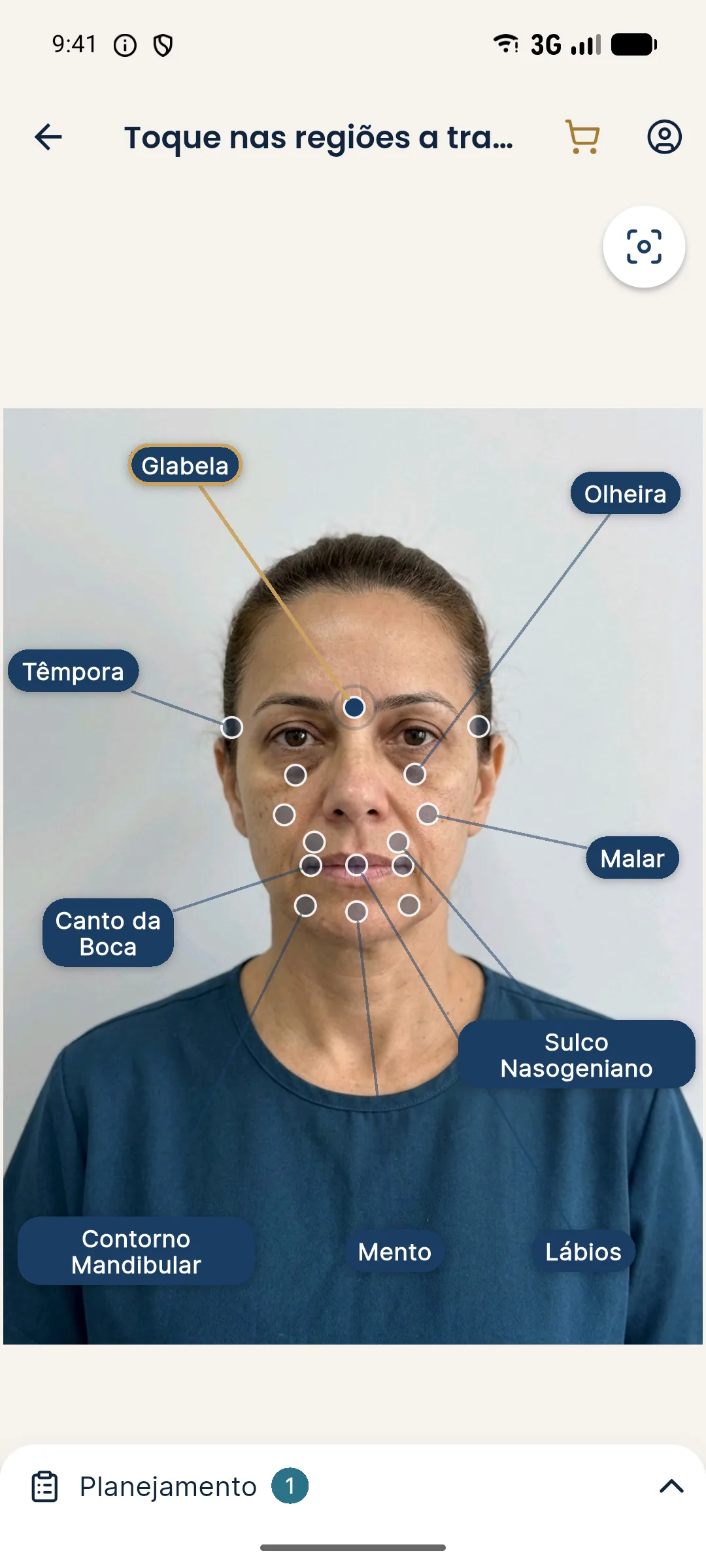
Harmy uses a still frontal photo and simulates the marked areas. Projecting expression lines is not the app's focus, and it does not simulate dynamic asymmetry. The Glabella point can illustrate the effect of smoothing the frown in the central area, without showing the lateralized habit. The app also does not treat wrinkles by side.
Common mistakes with asymmetric expression
The most common mistake is applying the same amount on both sides because "the face is symmetrical." When one side works harder, the muscle is stronger, and an equal result leaves one side still active. The reverse also happens: reducing too much the side that compensates for a lower brow can worsen the look.
Another mistake is assessing only at rest. The difference in expression shows up in movement, and a still photo hides the habit. It is also a mistake to ignore vision: a patient who squints one eye to see will keep the gesture, and no treatment changes that.
Finally, avoid promising symmetry. The face is asymmetric by nature, and the goal is to reduce a bothersome difference, not eliminate it. Explaining this before the procedure avoids unrealistic expectations.
Follow-up and adjustment
The scheduled follow-up is part of the treatment. Book the review for when the effect is already established, assess in motion with video and compare with the initial record. If a relevant difference persists, the adjustment is planned with caution, always at the professional's discretion. Note in the patient record the habit identified, the brow height, the conclusion of the plan and the adjustment made. Guide the patient to notice their own gesture, because small habit changes, such as avoiding frowning when reading, help maintain the result and reduce the difference between sides over time.
Patient profiles and associated habits
Patients who work at a computer frown more; those who drive a lot squint; those who sleep on their side carry the mark on one side. Knowing the routine helps explain the difference and propose habit changes that complement the treatment.
People with brow asymmetry tend to compensate with the frontalis on one side only, and that accentuates the lines. In those cases, the plan must be even more careful not to alter brow height in an unwanted way.
Patients who have had toxin before often bring valuable clues: what worked, what did not and on which side the response was weaker. Ask for previous photos and records, when they exist.
Wrap-up
Record the video, photos, perceived habit, probable cause and the adjustment planned for follow-up. For other forehead and gaze concerns, see heavy look and low brows. Doses and techniques are at the discretion of the licensed professional, in line with the rules of their professional council in Brazil.
Frequently asked questions
Why are the lines more marked on one side?
The expression habit is usually lateralized, such as raising one brow more, closing one eye more when smiling, or sleeping on one side. The more-used muscle marks the skin more.
Can toxin be applied differently on each side?
In general, the plan takes muscle strength asymmetry into account, at the discretion of the licensed professional, adjusting the result for each side. This requires a dynamic assessment and a reassessment after the effect.
Do asymmetric lines indicate bone asymmetry?
Not always. They may be just habit. Brow and eyelid asymmetry also influence how the lines read.
Does the app simulation show the asymmetry of the lines?
No. Harmy projects from a still frontal photo and changes only the marked areas. The dynamics of the lines must be assessed on video, outside the app.
Harmy images are illustrative simulations generated by AI from the patient's photo to support the conversation between practitioner and patient. They are not a promise of results. Indication, technique, product and volume are solely the decision of the licensed practitioner. This content is for information only and does not replace a clinical assessment.