
Lines between the eyebrows: assessing the frown

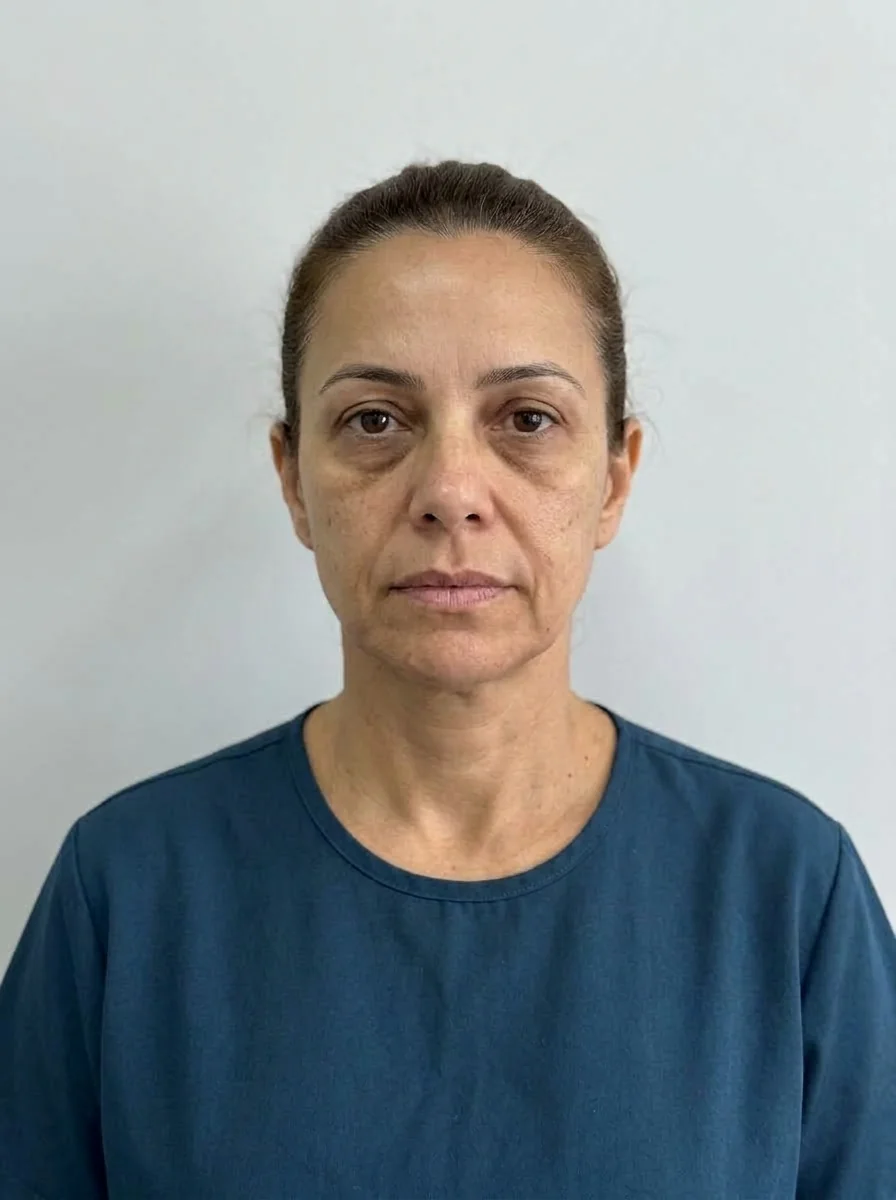 BeforeSimulation
- Muscle
Quick facts
- Concern
- Vertical lines between the eyebrows that give an angry or worried look
- Method
- Assess at rest and while frowning, with photo and video
- Structures
- Corrugator, procerus, depressor supercilii and glabellar skin
- Caution
- High vascular risk zone if filler is used
The vertical lines between the eyebrows are one of the most frequent concerns in a harmonization consultation, and the reason is not only aesthetic: they change how the gaze reads. The person looks angry, tired or worried even when calm, and the patient is bothered by this in meetings and in photos.
This page covers the assessment, which comes before choosing the technique, and ties in with man with marked forehead and glabella, deep forehead wrinkles and angry look at rest.
What forms the glabellar lines?
The muscles that contract when frowning are the corrugator, the procerus and the depressor supercilii. Together, they draw the brows together and down. When the gesture is repeated for years, the skin follows: first a dynamic wrinkle appears, visible only in motion; later, a static wrinkle, present at rest.
| Stage | At rest | When frowning | Note |
|---|---|---|---|
| Early | No visible line | Faint line | Frowning habit |
| Intermediate | Discreet line | Marked lines | Dynamic component predominates |
| Static | Marked line | Deep lines | The skin has changed too |
The frowning pattern varies: some patients draw the brows closer together, others lower them. Observing the pattern that shows up in each patient helps understand which muscle dominates.
How to assess the frown
The relationship with the gaze matters: low brows and heavy eyelids call for care, because relaxing the wrong muscle can worsen the heavy feeling. See heavy look and expression lines that differ from one side to the other.
What the plan can consider
At the discretion of the licensed professional, after assessment, the options include:
- Botulinum toxin, for the dynamic part, with aligned expectations and a follow-up to reassess. See glabella toxin.
- Skin care, when the static line depends on skin quality.
- Filler for the static line, in selected cases, with all the rigor the area demands.
- Habit guidance, when the frown is conscious or tied to vision.
Risks
For toxin: bruising, asymmetry, brow or eyelid ptosis, headache, a heavy feeling and a result smaller than expected. For filler: swelling, nodules and, rarely and seriously, vascular occlusion, with risk of necrosis and visual compromise, hence the need for preparation. Prior assessment and consent are essential.
How to show it in Harmy
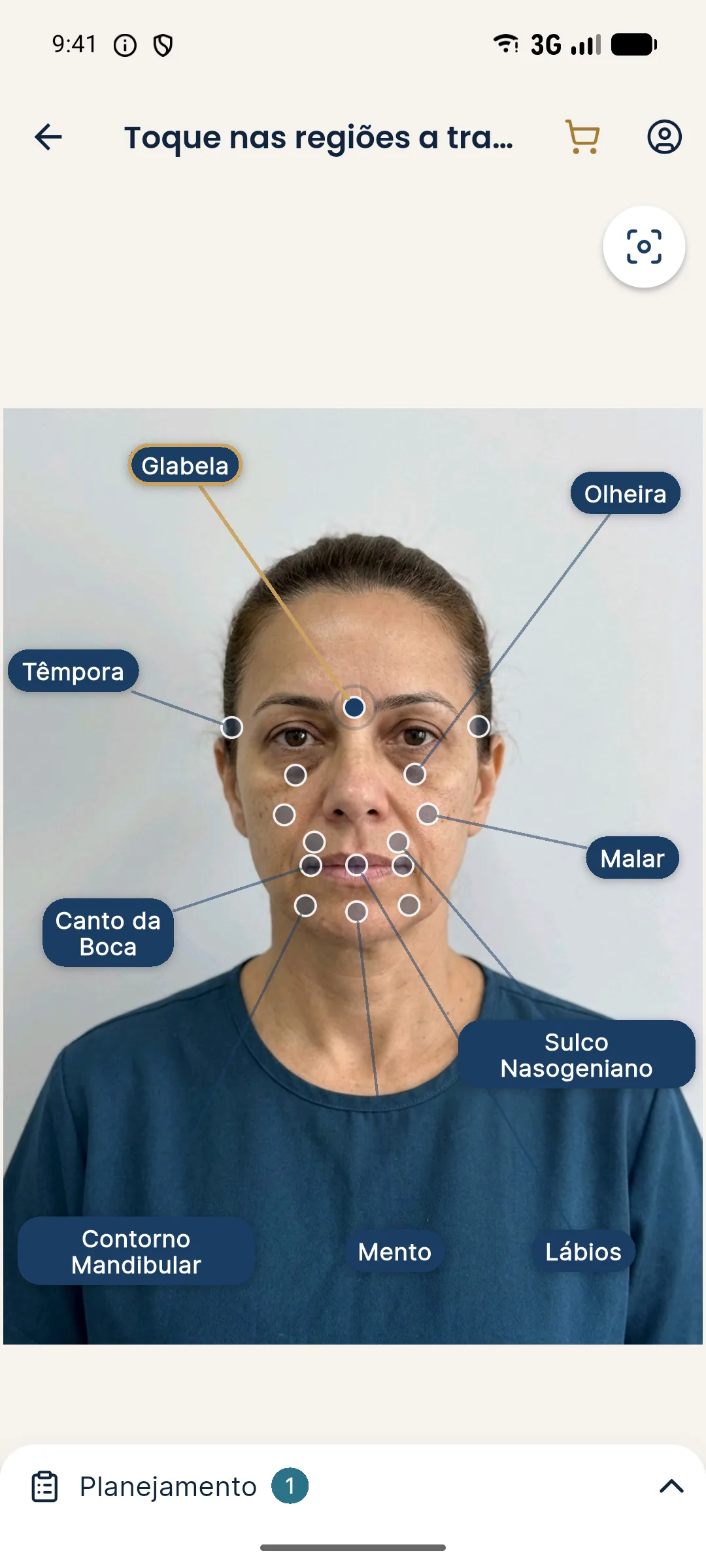
In Harmy, the Glabella point simulates the effect in the central forehead area, on the frontal photo. The app uses a symbolic unit for the glabella and is not a dosing tool. The intensity shortcut can illustrate a Subtle or Pronounced effect, and the projection changes only what was marked, with no skin retouching.
Records and follow-up
Record the frowning pattern, the brow position, the expectation and the follow-up to reassess. Standardized photos at rest and while frowning, before and after the effect, are worth more than any description.
Common mistakes in the glabellar area
The most common mistake is treating the line without looking at brow position. In someone with low brows or heavy eyelids, relaxing the frown without planning can increase the heavy feeling. The second mistake is promising that the line will disappear. The dynamic part responds well, but the static one may remain and calls for a frank conversation.
Another mistake is minimizing the risk of filler. Because it is a high vascular risk zone, the glabella is not a place to improvise, and the decision should consider the injector's experience, preparation for complications and the consent. A less talked-about mistake is ignoring the habit: someone who frowns to read, to drive or out of anxiety marks the area again when the effect ends.
Expectations, follow-up and records
Explain to the patient that the toxin's effect is temporary and that maintenance depends on them. Book the follow-up to reassess, with photos and video at rest and while frowning, and record the brow position before and after. Note in the patient record the frowning pattern, the product and amount used according to your protocol, the guidance given and the warning signs. When the static line is deep, talk about combining it with skin care and other approaches, always at the professional's discretion. Well-informed patients understand that the goal is to soften the frown, not to erase the expression of the face.
Patient profiles and frowning patterns
There are patients who frown symmetrically and vertically, others in a V or omega pattern, and some with procerus predominance, which creates horizontal lines at the root of the nose. Recognizing the pattern helps choose the approach and explain to the patient what to expect.
Very expressive or anxious people, or those with limited vision, tend to frown more, and the habit returns when the toxin's effect ends. Male patients tend to have stronger muscles, which changes the response and the follow-up interval.
In patients who have never had the procedure, it is worth starting conservatively and adjusting at follow-up, teaching them to notice the gesture. Patience the first time usually builds confidence for the next ones.
Wrap-up
Assessing the frown means understanding habit, muscle and gaze before thinking about product. See also marked crow's feet and low brows. Doses and techniques are at the discretion of the licensed professional, in line with the rules of their professional council in Brazil.
Frequently asked questions
What causes the lines between the eyebrows?
Repeated contraction of the glabellar muscles, which furrow the area, combined with skin, sun, genetics and habits. Over time, the movement line can become marked even at rest.
Is botulinum toxin the only option?
It is the most widely used approach for the dynamic part. Lines already marked at rest may call for complementary approaches, at the discretion of the licensed professional and after an assessment.
Is filler in the glabella safe?
The glabella is a high vascular risk zone, because of arteries such as the supratrochlear, and requires technique, anatomical knowledge and hyaluronidase on hand. The decision and the risks must be in the consent.
Will the line disappear completely?
There is no guarantee. The tendency is to soften the dynamic part, and deep lines may remain. The plan and expectations are agreed beforehand.
Harmy images are illustrative simulations generated by AI from the patient's photo to support the conversation between practitioner and patient. They are not a promise of results. Indication, technique, product and volume are solely the decision of the licensed practitioner. This content is for information only and does not replace a clinical assessment.