
Resting angry face: what to assess

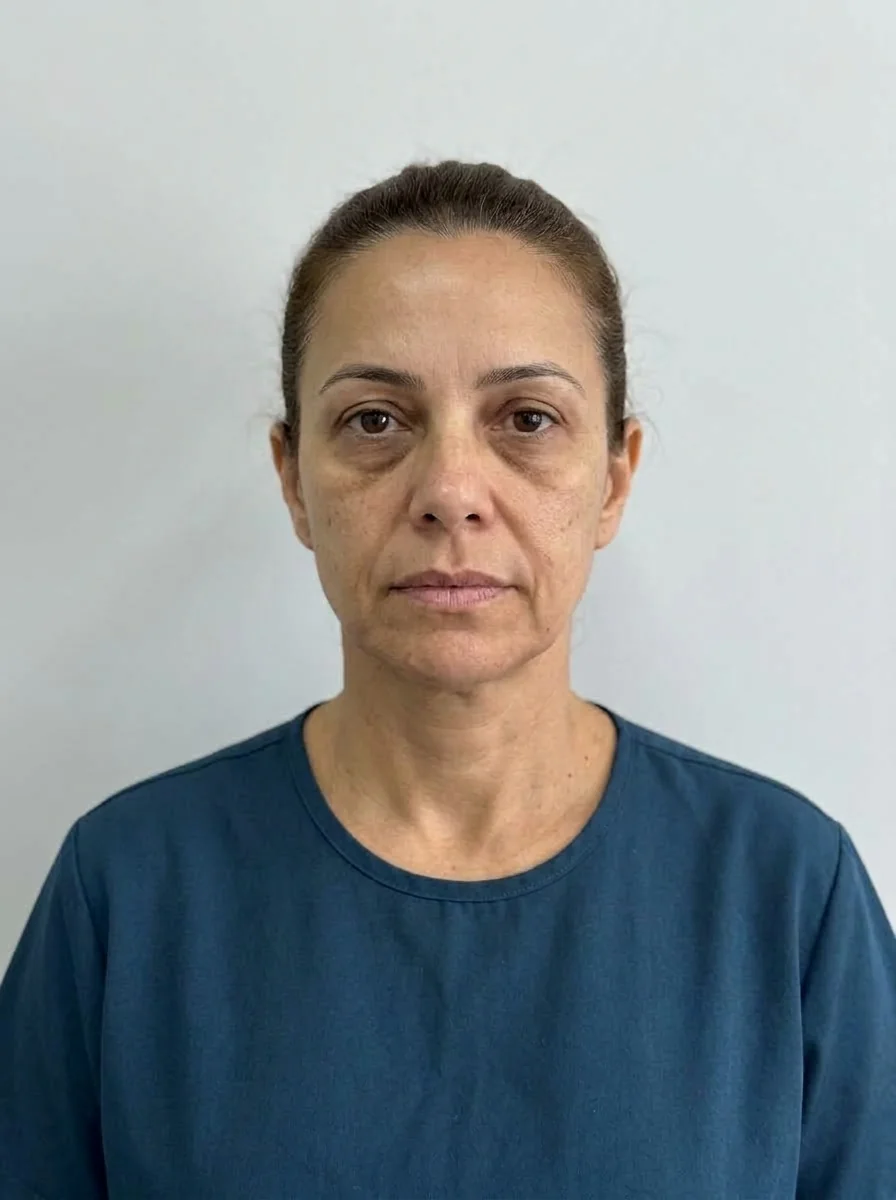 BeforeSimulation
- Muscle
Quick facts
- Concern
- People tell me I look angry or in a bad mood, and I'm not
- Key insight
- The angry look usually adds up a tense glabella, a low brow and downturned mouth corners
- Supporting measure
- Neutral photo compared with a fully relaxed photo, and a short video of the face at rest
- Limit
- The habit of tensing the forehead and frowning persists, and relaxing the muscle does not change the mental posture
The resting angry face is a subtle concern that gets in the way of everyday life. The patient says that colleagues ask if they are upset, that photos show a hard stare, or that someone at a meeting found them impatient. None of these readings matches their real mood. The clinical question is: which parts of the face are building that message?
The answer is plural. The glabella is the first suspect, but brow position, the weight of the upper eyelid and the mouth corners interfere just as much. This page helps separate these factors in the photo and build a plan that does not "freeze" the face. For the angle centered on the mouth, see mouth with an angry expression, and for the gaze, heavy gaze.
Which parts of the face build the angry expression?
The brain reads anger from familiar signals: low, drawn-together eyebrows, a line between them, a narrowed gaze, and a mouth in a straight line or turned downward. Even with the face relaxed, the patient's anatomy can reproduce some of these signals. Three contributions appear often.
- Glabella: the corrugator and the procerus pull the brow inward and down, forming the vertical line between them.
- Low or horizontal brow, when the tail of the brow does not rise, which gives the gaze a heavy look.
- Downturned mouth corners, from the action of the depressor anguli oris and loss of support in the area, as in downturned mouth corners.
When the line is already etched at rest, it is a static wrinkle, and the approach differs from a wrinkle that only appears when frowning. The glossary distinguishes dynamic wrinkles and static wrinkles, and the difference changes what to expect.
How to separate the muscular component from the structural one?
Active muscle reveals itself in movement. Ask the patient to frown and then relax, and watch whether the line disappears. If it does, the dynamic component is important. If the line persists, there is a static mark, which also depends on skin and collagen. The same logic applies to brow position: compare the height at rest and when raising the forehead. The more the position varies, the harder the frontalis muscle is working to compensate.
| Finding at rest | Likely contribution | How to confirm |
|---|---|---|
| Vertical line between the brows | Active or etched glabella | Frown and relax, comparing |
| Low, straight brow | Brow ptosis or weak frontalis | Raise the forehead and measure |
| Heavy upper eyelid | Excess skin or ptosis | Frontal gaze with side lighting |
| Downturned mouth corners | Depressor or loss of support | Photo smiling and at rest |
| Deep fold beside the mouth | Descent of the midface | Gentle lift test |
See forehead and hairline analysis for the reasoning on forehead and brow, and dynamic facial analysis in expression for the movements.
What is the highest-risk area in this plan?
The glabella is a high vascular risk area, because its arteries communicate with the circulation of the eye. Possible complications of any treatment include swelling, bruising, asymmetry and, rarely, vascular occlusion, with a risk of visual compromise in the case of fillers. When the material is hyaluronic acid, hyaluronidase must be available. See supratrochlear artery and supraorbital artery for the anatomy, and safety and complications for the overview.
Do toxin and filler do the same thing?
No. Toxin acts on the muscle, reducing the force with which the patient frowns, which is why it is the tool most tied to the glabellar line. Filler acts on volume and support, and is more relevant for the mouth corners, folds and brow in selected cases. Mixing the two ideas usually frustrates the patient. The topic of toxin in the area is in toxin in the glabella and the muscle map in muscle map for botulinum toxin.
The risk of excess is a second face: a forehead without expression, a brow that drops and a gaze that becomes heavier. Conservative doses and reassessment within a short period reduce this risk, at the professional's discretion. The concept of baby botox explores the idea of preserving movement.
How does Harmy help illustrate?
Harmy's Glabella point lets you show the patient, in a frontal photo, the idea of softening the area between the brows. The projection is subtle, the app respects only what was marked, and the patient understands there is no magic. The unit used in the area is symbolic in the app and does not correspond to a toxin dose.
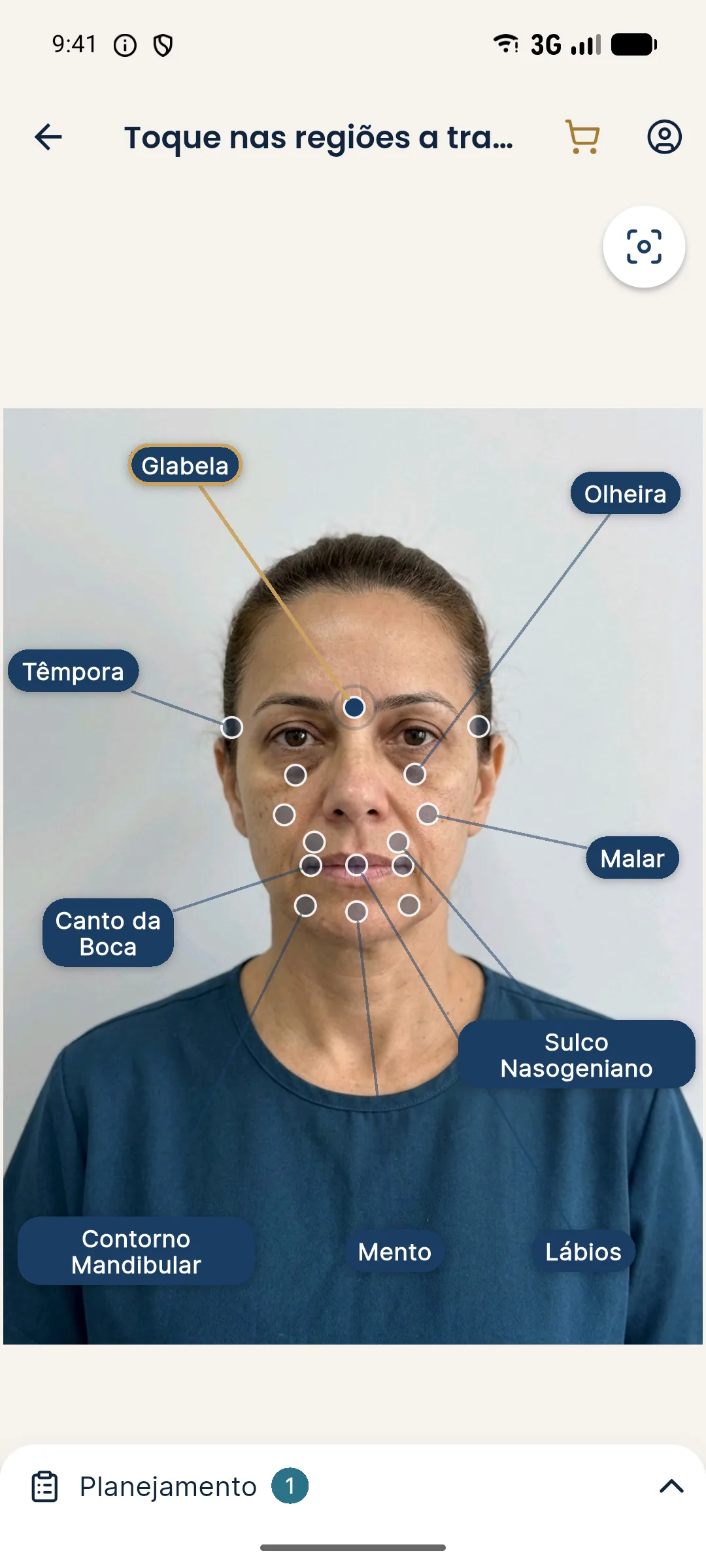
If the mouth is also part of the plan, combine it with the Mouth Corner point and show the two effects separately, so the patient sees which change weighs more on the expression. Compare the subtle result with the moderate one using the idea described in comparing Subtle, Moderate and Pronounced intensities.
What is the order of the plan?
In general, you start with the component that contributes most and has the lowest risk of worsening the gaze. When the line is the protagonist, the glabella comes first. When the mouth is the protagonist, the plan starts with the corners. Reassessment at 15 to 30 days shows whether the whole has changed enough. The reading on mouth corners and marionette lines combined helps when the lower third is involved.
Also record what the patient says they feel. Many report that, with the line softer, they stop noticing their own frown, and that changes the habit. Others, on the contrary, find the forehead strange and ask to go back. Agree beforehand that the effect is temporary and that the goal is to soften, never to cancel, the expression.
Frequently asked questions
Why does my face look angry even when relaxed?
It is usually the sum of the glabella with vertical lines, a low or flat brow and mouth corners turned downward. Each factor contributes a little, and together they convey irritation.
Does botulinum toxin fix the angry face?
It can soften the glabellar component when that is the dominant one. If the mouth and brow position also contribute, the plan usually needs more than one approach, at the discretion of the qualified professional.
Is the angry face only about the glabella?
No. The glabella is the best-known factor, but brow position, the upper eyelid and the mouth corners weigh heavily in how the expression is read.
Can the effect be shown beforehand?
The glabellar area can be illustrated in a simulation, always as an illustrative image and not as a promise of results.
Harmy images are illustrative simulations generated by AI from the patient's photo to support the conversation between practitioner and patient. They are not a promise of results. Indication, technique, product and volume are solely the decision of the licensed practitioner. This content is for information only and does not replace a clinical assessment.