
One-page plan summary for the patient

Quick facts
- Goal
- The patient understands the plan in two minutes
- Length
- One page, plain language
- Content
- Concerns, stages, risks, aftercare, timelines, and costs
- Caution
- No promise of results and no replacing the consent form
After a long consultation, the patient leaves with a lot of information and little memory. Even the most attentive patient forgets timelines, costs, and what was agreed. A one-page plan summary solves this problem: it organizes what was said, gives the patient something to read calmly, and narrows the gap between what you explained and what the patient understood. This page shows the structure of a good summary and offers a template to adapt.
Why does a one-page summary work?
Because the patient decides at home, with family or a partner, and needs a clear document for that. If the summary is long, the patient does not read it. If it is vague, the patient interprets it. One page, with plain language and fixed sections, is the point at which most people can understand the plan in two minutes. It also works as a counterweight to haste: it moves the patient from "decide now" to "decide well." See how to close the consultation without selling and I'll think about it.
What must not be missing?
| Section | What to say | Tip |
|---|---|---|
| Your concerns | The patient's words | Use the literal wording. See recording concerns in the patient's own words |
| What we will do | Areas and proposed procedures | One sentence per area |
| In how many stages | Order and expected interval | Show what is left for later |
| What to expect | Transient effects and limits | No promise of results |
| Main risks | The most relevant ones, in plain language | Complements the consent form |
| Aftercare | What to do before and after | Short and practical |
| Follow-up | When and how | Date or timeframe |
| Costs | Total and payment method | Itemized by area, if possible |
| Contact | Channel for questions | Clinic name and phone |
How do you write so it is understood in two minutes?
Short sentences, active voice, no jargon. Replace "hyaluronidase" with "a substance that dissolves the product, if needed," and "vascular occlusion" with "a blocked blood vessel, which is rare and requires immediate care." Use "may" and "in general." Avoid adjectives and promises. Use bold only for deadlines and phone numbers.
What is the delivery routine?
Template to adapt
The role of the simulation in the summary
If you used the simulation in the consultation, you can attach the image, with the notice that it is an illustration and not a promise. The image helps the patient remember what was discussed. Avoid leaving it alone, without text. See illustrative simulation notice for the patient and sending the simulation to the patient by WhatsApp.
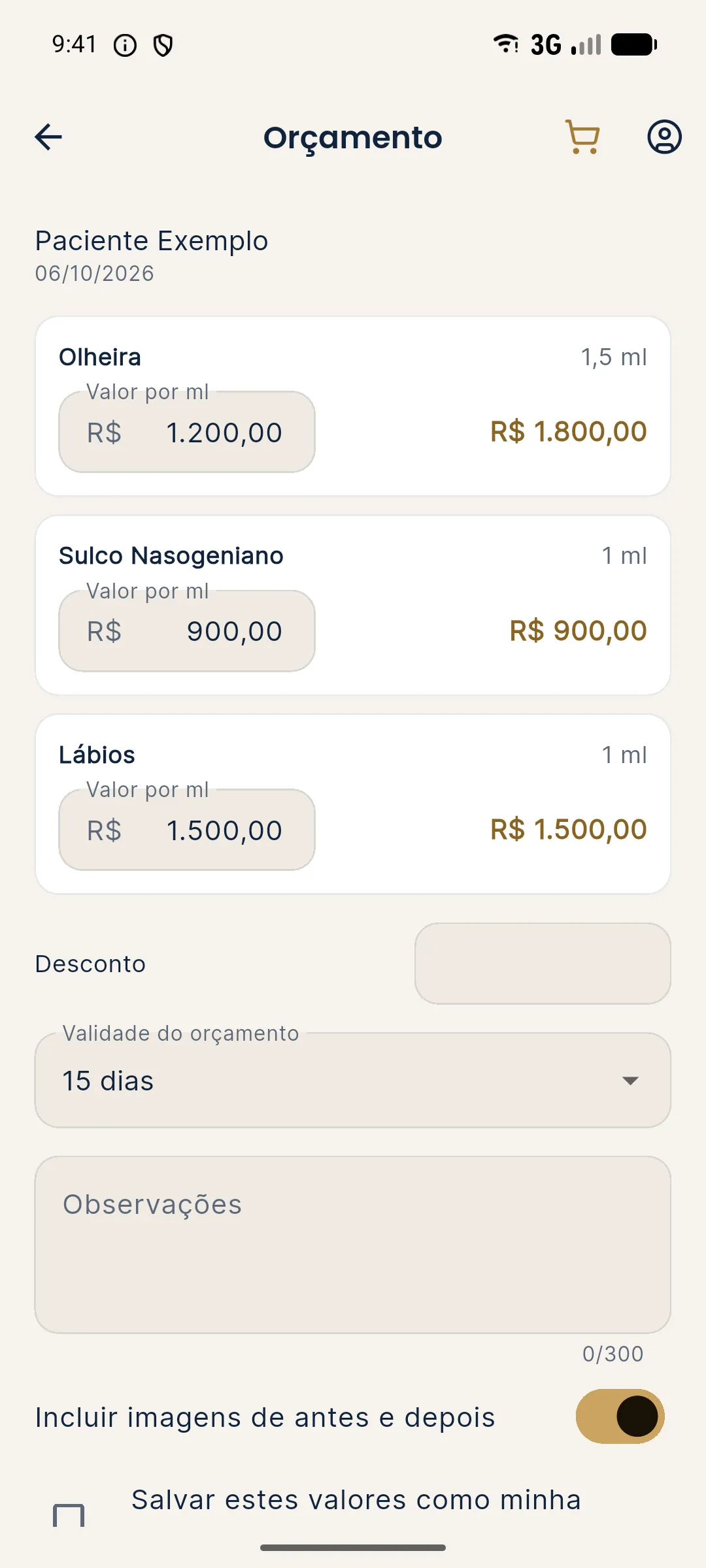
For the conversation about costs, see how to explain the quote by area and simulation and quote in the same consultation.
A well-made summary takes ten minutes to write and prevents a lot of misunderstanding. It is the difference between the patient who leaves with doubts and the one who leaves with a plan.
When does the summary change from one consultation to the next?
The summary is not fixed. It should be updated at every follow-up where the plan changes: a stage completed, an area postponed, a new wish from the patient. Keep the earlier version with its date, so it is clear how the plan evolved. This prevents arguments about what was agreed and gives the patient a view of the path so far.
When updating, keep the same structure and the same sections. Repetition helps the patient find their way quickly and notice what changed. If something was postponed because of a clinical decision, write the reason in one sentence. See follow-up with a satisfied patient.
Frequently asked questions
Does the plan summary replace the informed consent form?
No. The summary organizes the plan so the patient can decide calmly. Informed consent is a separate document, according to the rules of your professional board.
What should a one-page plan summary include?
The patient's concerns, what will be done at each stage, the main risks, aftercare, the follow-up timeframe, and costs. All in plain language.
Can I include the simulation in the summary?
Yes, with the illustrative simulation notice. The image is an illustration and does not promise results.
Does the patient need to sign the summary?
Not necessarily. The summary is a support. If you want to record that it was delivered, you can ask for the patient's acknowledgment, according to your routine.
Harmy images are illustrative simulations generated by AI from the patient's photo to support the conversation between practitioner and patient. They are not a promise of results. Indication, technique, product and volume are solely the decision of the licensed practitioner. This content is for information only and does not replace a clinical assessment.