
Simulation and Quote in the Same Consultation: How to Organize

Quick facts
- Principle
- Clinical decision first, commercial decision second
- Order
- Assess, talk, simulate, plan, and only then quote
- Caution
- Do not use the image as pressure to close
- Alternative
- Send the quote afterward, with no rush
The simulation excites and the quote frightens. Putting both in the same conversation, without care, creates a trap: the patient decides on the emotion of the image and regrets it when they see the price, or flees from the price and loses interest in the image. Organizing the order of the information protects both the clinical decision and the commercial one. This page shows a sequence that works.
Why separate image and money?
Because they are different decisions. The image answers "what makes sense for me?", and the quote answers "how much does it cost and how do I pay?" When one pressures the other, the patient chooses badly: they accept the entire plan because they fell for the image, or reject the entire plan because the total scared them. Separating lets each question be answered in its own time. See how to explain the quote by area and how to close the consultation without selling.
What is the recommended order?
The pause between the simulation and the quote is the most underrated point. It can be a question ("Would you like me to explain the prices now, or would you rather think a bit first?") or a real break. What matters is that the patient notices the change of subject.
How do you build the quote so it does not frighten?
Show it by area and by stage, not only the total. The patient understands better when they see what they pay for each part and can choose to start with one. Make it clear what is included, what is not (touch-ups, for example), and how long the proposal is valid. See pricing per ml and simulation in stages for the patient.
| Quote item | Good practice |
|---|---|
| Price per area | Separate so the patient can prioritize |
| Stages | Show the order and the expected interval |
| Validity | State a clear deadline, with no artificial pressure |
| Discount | Only if it is a defined condition, not improvised |
| Payment method | Informational, according to your policy |
| Notes | Include what is not included |
What should you say about the value of the image?
The simulation has no price for the patient and should not be sold as part of the result. It is a conversation tool. Avoid phrases like "the image shows what you will get" and prefer "the image illustrates what we discussed." See what never to say when showing the simulation.
How does Harmy organize the two?
The app separates the stages: first marking and planning (ml per area), then the projection and, on another screen, the quote. This makes it easier to follow the order of the conversation. You can use presentation mode to show only the image and leave the quote for later.
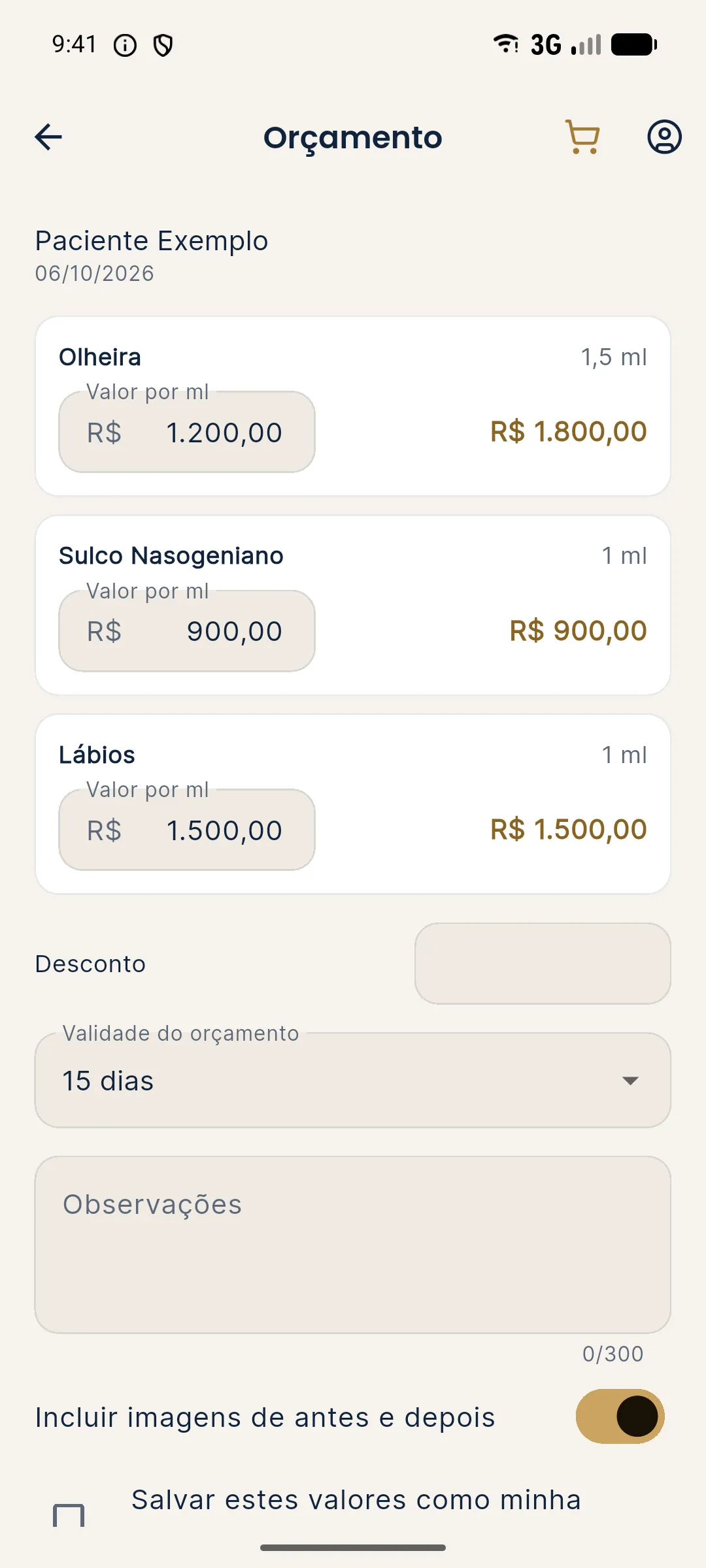
See also PDF quote.
What if the patient wants to close on the spot?
It can happen, and it is not forbidden. But confirm that they understood the plan, the risks, and the limits, and that they are not deciding on the emotion of the image. Offer the pause and the written summary. If they still want to go ahead, go ahead, with consent up to date. See one-page plan summary and saying no to a patient who demands to do it today.
What should you record?
Record the proposed plan, the areas and stages, that the simulation was presented as an illustration, that the quote was delivered (date and validity), and the patient's decision. See recording risk communication.
Whoever separates image and money looks after both decisions. The patient is grateful, and decisions made calmly tend to be the ones they stick with.
What if the clinic works with health insurance or packages?
Some clinics offer packages or special terms. In those cases, present the package as one option among others, after the clinical plan is defined, and never as part of the argument for accepting more procedures. The package should reflect the plan, not the other way around.
Explain clearly what is included, what changes if the patient does less, and what the validity is. Avoid short "offer" deadlines that pressure. A decision made with time tends to cause less regret and less conflict. See patient objections and answers.
Frequently asked questions
Should I show the simulation and the quote at the same time?
You can, but in separate stages. First the clinical conversation and the image, then a pause, and only then prices. Mixing the two pressures the decision.
Can I send the quote after the consultation?
Yes, and it is often better. The patient decides calmly, and the image does not become a sales argument.
How do I explain the price by area?
Show what each area includes, the planned volume, and the price, without comparing with other professionals. See the page on explaining the quote by area.
Should I offer a discount to close on the spot?
Avoid it. An urgency discount pressures the decision and can contradict a clinical stance of care. Use only conditions defined in advance.
Harmy images are illustrative simulations generated by AI from the patient's photo to support the conversation between practitioner and patient. They are not a promise of results. Indication, technique, product and volume are solely the decision of the licensed practitioner. This content is for information only and does not replace a clinical assessment.