
What never to say when showing the simulation to a patient

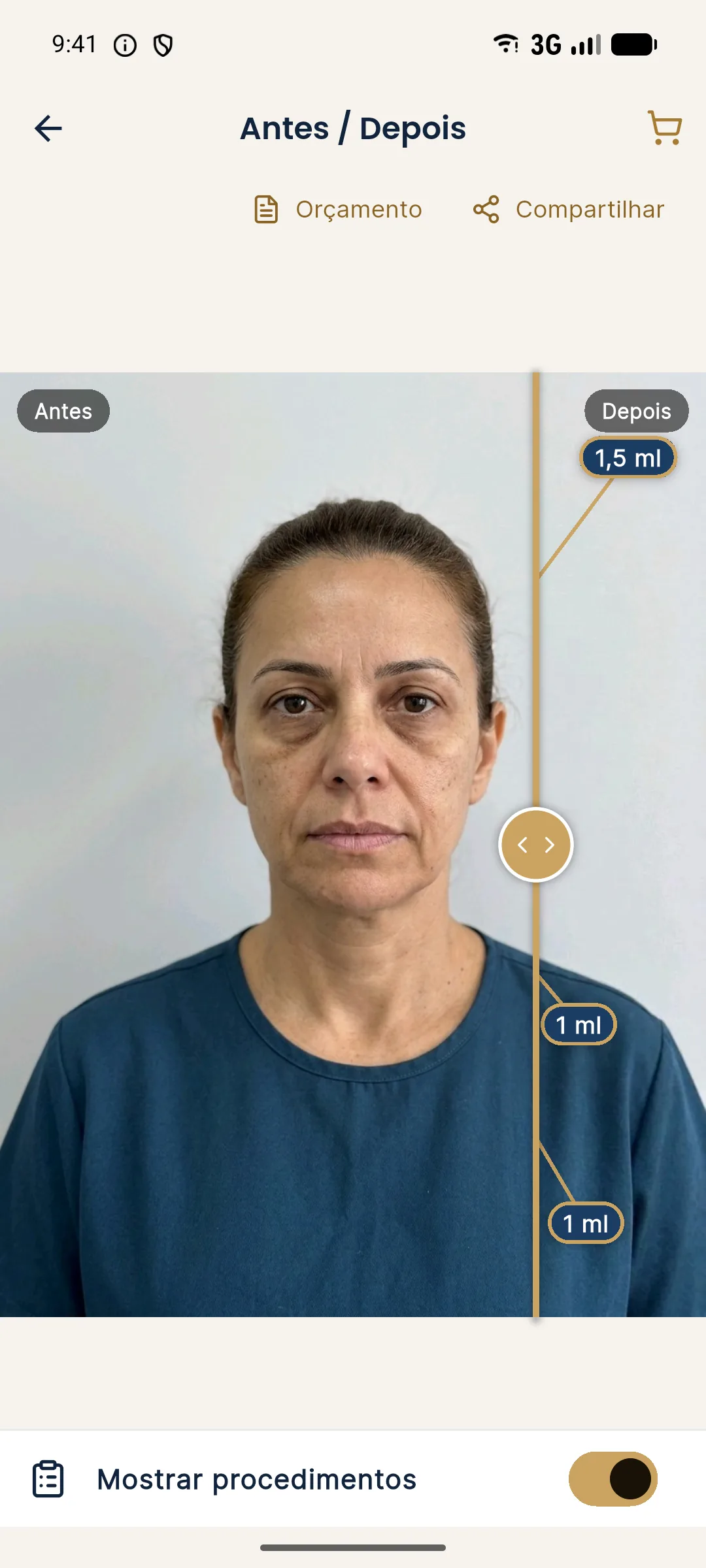
The Before/After slider is the strongest moment of the consultation, and therefore the riskiest. A loose phrase ("it will look like this", "look how beautiful you look") can become a commitment in the patient's mind. And a commitment the face does not keep turns into a complaint, a request for a touch-up and, in worse cases, a lawsuit. This page lists what not to say and what to say instead.
Why do word choices matter so much?
Because the patient does not hear the phrase with a technical ear. They hear it with the expectation of someone who wants to change. "It looks like this" is understood as "it will look like this". Informed consent assumes that they know what is likely, what is possible and what is not promised, and what is said at the moment of the image can undo everything the form wrote.
The simulation is also not an exam: it is an illustrative simulation, generated by AI, meant for conversation. Talking about it as if it were a medical report is the original mistake. For the full structure of the presentation, see presenting the projection in the consultation.
Which phrases to avoid and what to say instead?
| Avoid | Why | Say instead |
|---|---|---|
| "It will look exactly like this." | Becomes a promise of results | "This image is one possible direction, not a prediction." |
| "This is your result." | Confuses illustration with outcome | "This is an idea for us to talk about." |
| "It looks the same, trust me." | Asks for trust in place of information | "What I can offer is planning and follow-up, not the outcome." |
| "Look how pretty you look." | Presents the before as a flaw | "Look at what changes in this area and what stays the same." |
| "This is the real thing." | Removes the simulation character | "This is a computer-made simulation." |
| "More product looks better." | Pushes volume up | "Let's see how you feel about this version." |
| "Everyone likes it." | Social pressure | "I want to know what you think, no rush." |
| "It's just a little detail." | Downplays risk and cost | "Each area has its own goal, risks and follow-up." |
How to open the presentation safely?
Before turning the screen, say the essentials in two sentences. Then show it. This keeps the notice from arriving late, when the patient is already enchanted. One possible opening:
After showing it, ask for their opinion before giving yours. An open question works better than a statement: "What do you notice that is different?" For the notice itself, see illustrative simulation notice to the patient.
What should you never do with the image itself?
- Compare it with a celebrity photo or with other patients' results. It reinforces the expectation and opens the door to frustration. See saying no to requests to see other patients' photos.
- Publish the simulation as a result. It is not a result, and publishing has its own rules; read what can be published (CFO and CONAR), covering Brazil's dental council (CFO) and advertising self-regulation council (CONAR).
- Hand over the image without context. If the patient takes the image, it needs the simulation notice alongside it. See sending the simulation to the patient on WhatsApp.
- Use the image to pressure a decision ("if you close today, it's cheaper"). That is high-pressure selling, and it lands badly.
Train the team with a quick quiz
Whoever sees patients can also get the phrase wrong. Read the statements aloud and answer before revealing.
What if the patient has already left the consultation with the wrong phrase in mind?
Correct it early, in writing if needed. A simple message does it: "I want to reinforce that the image we saw is a simulation and not a promise. The actual result may be different, and we will follow it together." Record the message in the patient record. To narrow the gap between image and result, see difference between simulation and actual result and patient wants a result identical to the simulation.
Pocket summary
Before showing: the notice. While showing: an open question. Afterward: the patient's decision, without pressure, with a record of what was said. If the phrase sounds like a salesperson, swap it for one that sounds like a colleague explaining. That is the difference between an honest projection and a disguised promise.
Frequently asked questions
Can I tell the patient the result will look just like the simulation?
No. The simulation is an illustrative image generated by AI, not a prediction. The actual result depends on anatomy, product, technique and individual response.
What is the best phrase for introducing the simulation?
Something like: this image shows one possible direction for us to talk about, not a promise of results. What matters is how you feel about it.
Do I need to say the image is a simulation, even if it seems obvious?
Yes. Say it before showing it and keep a record. The notice keeps the image from being understood as a promise.
What if the team uses sales lines when showing the slider?
Agree on a short script and practice it with the team. The quiz on this page is for that: forbidden phrases and replacements, read aloud.
Harmy images are illustrative simulations generated by AI from the patient's photo to support the conversation between practitioner and patient. They are not a promise of results. Indication, technique, product and volume are solely the decision of the licensed practitioner. This content is for information only and does not replace a clinical assessment.