
Patient who wants a result identical to the simulation

Quick facts
- Problem
- The simulation becomes a fixed target, and any difference becomes a failure
- Principle
- A simulation is an illustrative direction, not a prediction
- When to talk
- Before showing the image and again before approving the plan
- Record
- Note that the patient understood the result may be different
The patient looks at the simulation, breaks into a smile, and says: "That's how I want to look." For the clinician, it is a good sign and a warning sign at the same time. Good, because the image helped explain the plan. A warning, because an AI-generated image is one step away from becoming a mental contract: "the professional showed me, so it will look like this."
The challenge is to keep the enthusiasm without letting a promise take shape that no one made. This page shows how.
Why does the simulation become a target?
The brain treats images as evidence. A photo of your own face, slightly altered, is far more convincing than any verbal explanation. That is why the simulation works so well in the consultation, and why it calls for care.
When to talk about the limit?
The limit should be stated at two moments, not just one. Before showing the image, to prepare the eye. And afterward, before approving the plan, to confirm understanding.
| Moment | What to say |
|---|---|
| Before showing | "I'm going to show you an illustration of what we discussed. It is not a promise of results." |
| While showing | Point out what changed in the image and what did not |
| When approving the plan | "Remember the image is illustrative? The real result may be subtler or different." |
| When recording | Note the patient's acknowledgment |
The concept is covered in illustrative simulation, and the phrases to avoid in what never to say when showing the simulation. For the specific conversation, see a simulation is not a guarantee.
How not to deflate the enthusiasm?
The most common mistake is to "cool down" the patient abruptly. A good approach is to preserve what they felt and redirect to what is concrete:
- Validate. "It makes sense that you liked this direction."
- Translate. "What you saw was a softer shadow and a more defined contour."
- Set the limit. "That is the kind of change we aim for. How much and how depends on your face."
- Reframe. "Let's agree on what a good result is for you, in terms we can actually observe."
The last step is the most important. See defining a good result with the patient and aligning expectations in writing.
Why can the real result be different?
Explaining why helps the patient accept the difference. In plain language:
- the image is generated from a photo, not from an exam of the face from the inside;
- the body responds to the product individually;
- swelling in the first days hides the final result;
- pre-existing asymmetries remain and may become more noticeable;
- the recommended volume may change at the time of injection, at the professional's discretion.
Each of these reasons is honest and verifiable, and none relies on an excuse. For the difference between the two, read difference between simulation and actual result.
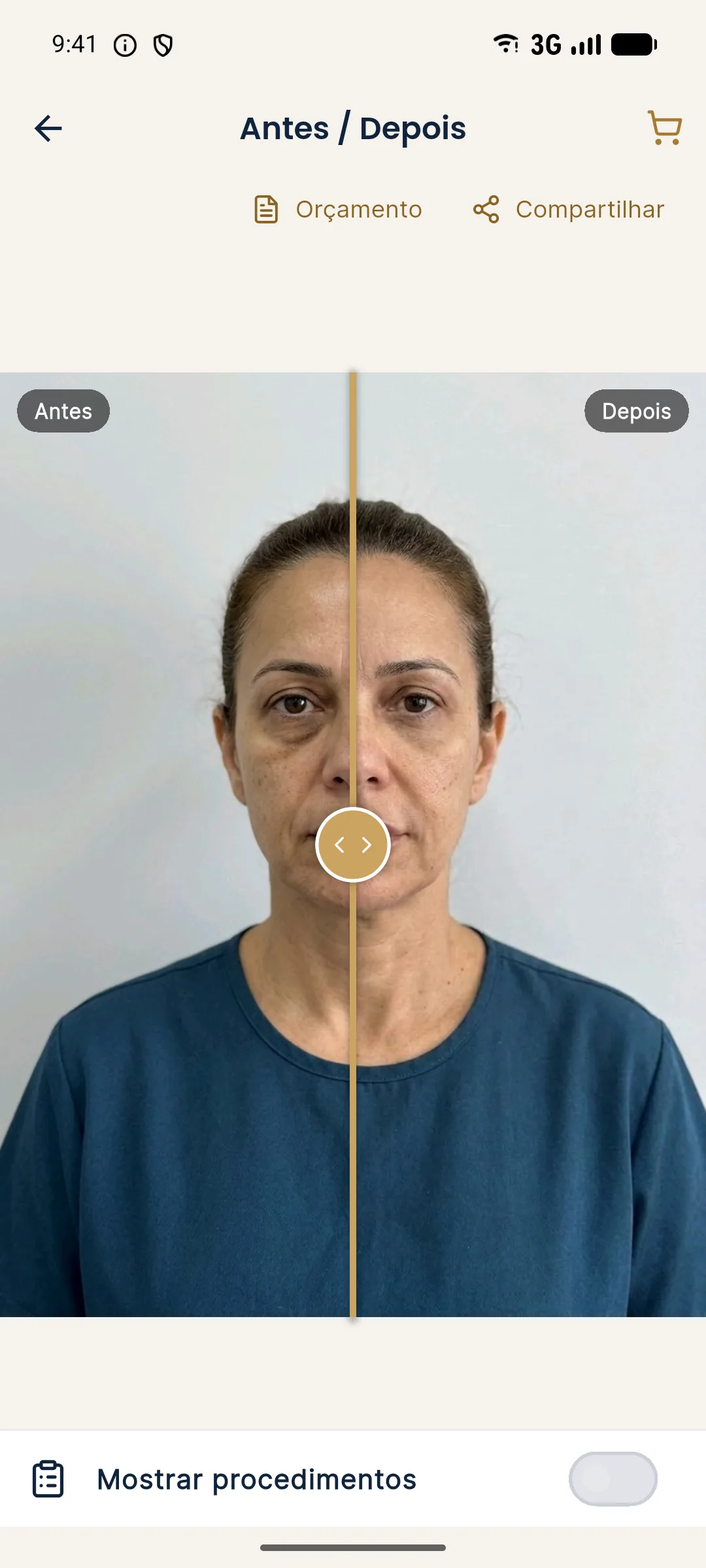
What if the patient left with the image in mind?
It happens that the patient returns, weeks later, with the image saved on their phone and an implicit demand. If that happens, do not argue about the image as proof. Ask them to describe what they notice that is different and bring the conversation back to the real face. The script is in comparing the simulation with the after photo and in communicating a result below expectations.
When to consider not proceeding?
If, even after two conversations, the patient insists on demanding an identical result, the relationship is starting badly. In these cases, assess honestly: is this a patient with an unrealistic expectation who may improve with time, or someone with whom the care will not work well? See patient with unrealistic expectations and saying no to a request for a guarantee.
What should you record?
Note that the simulation was shown as an illustration, the notice wording used, the patient's reaction, and the understanding that the result may be different. Include the passage in the informed consent or in a separate record. This care is what separates a transparent conversation from a promise that no one made but that the patient understood as made.
Frequently asked questions
Will the result look identical to the simulation?
It cannot be promised. The simulation is an illustration generated from a photo and the volumes entered; the real result depends on anatomy, tissue response, and technique.
How do I explain this without dampening the patient's enthusiasm?
Validate what they liked in the image, explain that it shows a direction, and turn what they saw into observable goals, such as softening a shadow or improving proportion.
Should I avoid showing the simulation so I don't create expectations?
Not always. For many patients it helps, as long as it is presented with the right notice. For patients with very unrealistic expectations, it may be better to postpone or not show it.
What if the patient insists on an identical result?
Restate the limit, record the conversation, and consider not proceeding if the expectation cannot be realigned.
Harmy images are illustrative simulations generated by AI from the patient's photo to support the conversation between practitioner and patient. They are not a promise of results. Indication, technique, product and volume are solely the decision of the licensed practitioner. This content is for information only and does not replace a clinical assessment.