
Patient Wants Two Procedures in One Day: How to Decide

"Since I'm here, can we do the lips and the under-eye area today?" It is a common request, driven by convenience, travel and the wish to see everything finished. The answer is not always yes or always no: it depends on safety, on comfort and on a question many people forget, whether you will be able to assess the result of each thing.
This page lays out the criteria for deciding and the phrases to explain it to the patient. The topic also appears, from the reader's side, in procedures on the same day, and the logic of staging is in do I need to do everything at once? and explaining why more than one session is needed.
Which criteria decide between combining and separating?
The table summarizes the points that weigh most. It does not replace clinical assessment or the rules of your professional council.
| Criterion | Favors combining | Favors separating |
|---|---|---|
| Safety | Combination with no overlapping risk | Neighboring areas or high vascular risk |
| Expected swelling | Little total swelling | Swelling that makes assessment harder |
| Comfort | Calm patient who tolerates it well | Anxiety, reported pain, fatigue |
| Reading the result | Distinct effects, easy to tell apart | Effects that blend together |
| Complication | Cause is easy to identify | Hard to know which procedure caused it |
| Patient's schedule | Time to recover | Upcoming commitment |
How does swelling factor in?
Each procedure produces its share of edema and, sometimes, hematoma. Added together on the same day, the face can be more swollen and for longer. That is uncomfortable, but the bigger problem is assessment: with a swollen face, it is hard to tell whether the volume in one area is proportional to the other. Any adjustment, if needed, is compromised by uncertainty. See explaining what expected swelling is and aligning expectations about swelling and bruising.
What if the combination uses the same type of product?
Combining two areas with the same type of product is usually simpler than mixing different categories, such as toxin and filler in neighboring areas, or a biostimulator with filler. Even so, clinical judgment decides. To understand how the sessions can be organized, see the overview in explaining a combined protocol to the patient.
How do you explain the recommendation to the patient?
This phrase avoids a flat "no" and gives a reason the patient understands. If the recommendation is to combine, explain that too: "we will do both today because they complement each other and the recovery is compatible, and I will assess you at the follow-up to look at each one".
What if the patient has an upcoming commitment?
Events, trips and photos change the decision. If the patient needs to look good within a few days, the swelling from two procedures weighs more than from one. In that case, doing the most important procedure early and postponing the rest is usually the sensible choice. See I have an event scheduled and declining to treat a few days before an event.
How does the simulation help decide?
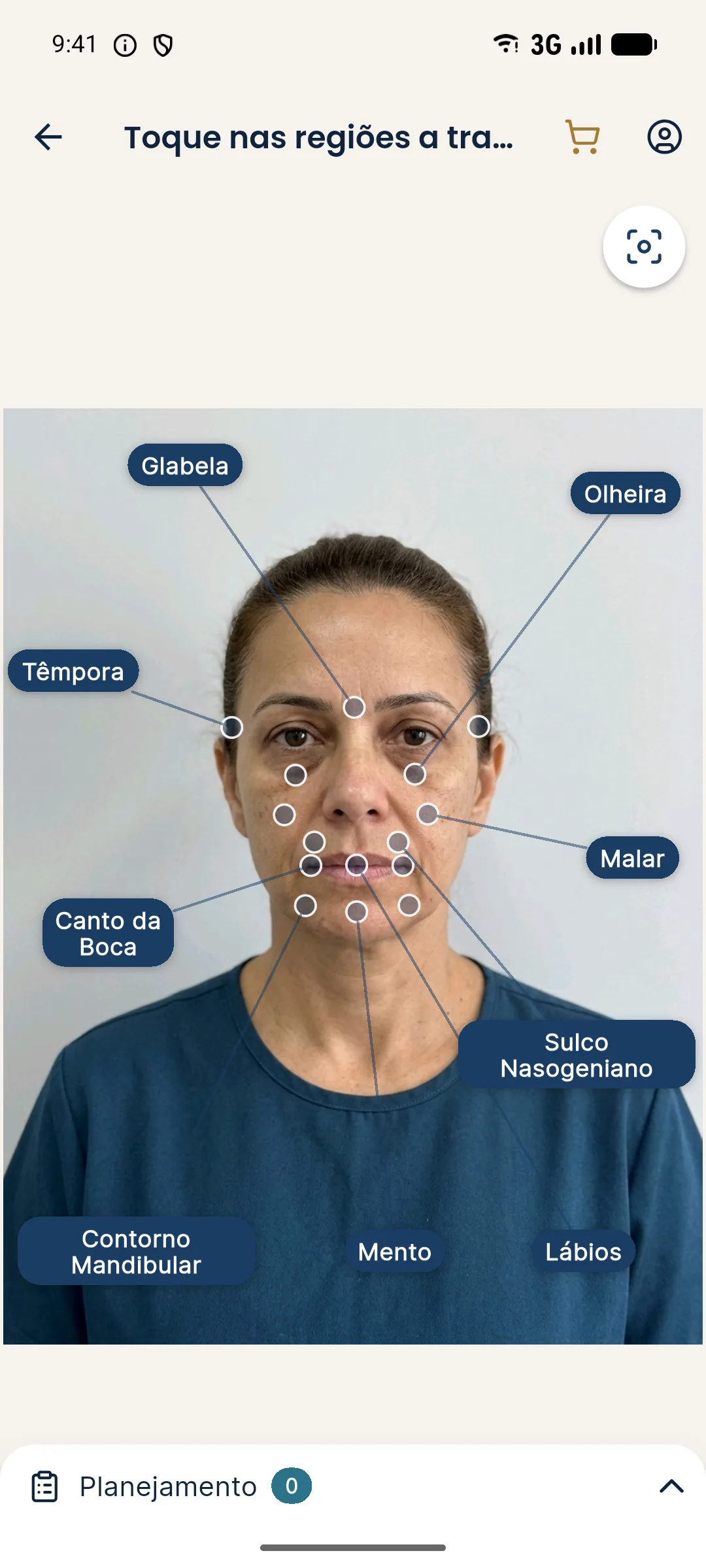
It lets you show the patient different versions and discuss the order. You can simulate the priority area alone and then both together, and ask what the patient notices as different. Often, the patient understands that doing it in stages makes the plan clearer. The projection is an illustrative simulation, not a promise of results, and that notice must be given.
Which consent precautions apply?
If you combine procedures, the informed consent must cover both, with the risks of each and an explanation of the combination. If you separate them, the form for the second session should be updated. In both cases, record the decision and the reason in the patient record. To explain the form, see how to explain the informed consent form.
Do cost and logistics matter?
They matter to the patient, and it is legitimate to talk about them. People who live far away, have little room in their schedule or want to concentrate the investment tend to prefer a single visit. Acknowledge that, but do not let convenience decide alone. One way out is to explain that the quote can be split into stages, with agreed dates, and that the total does not change by separating the sessions. In the quote, describe each stage and the planned order, so the patient sees the whole picture. See how to explain the quote by area.
What if the patient insists on doing everything?
Repeat the criteria, without blaming. If the combination is not safe, the clinical decision prevails. If it is possible and prudent, do it with extra attention to the medical history and the follow-up. What does not help is giving in under pressure and explaining a complication afterward. If the reason for the insistence is hurry, see saying no to a patient who demands treatment today.
Combining or separating is a decision about safety and clarity, not convenience. When you explain the criteria, the patient usually accepts the proposed order.
Frequently asked questions
Can I do two procedures on the same day in facial harmonization?
In some cases yes, at the professional's discretion, when the combination is safe, the patient tolerates it well and the result of each one can still be assessed. In others, separating the sessions is more prudent.
Which criteria help decide whether to combine or separate?
The safety of the combination, the amount of swelling expected, the patient's comfort, the ability to assess each result and the patient's schedule, such as upcoming commitments.
Does combining procedures increase the risk?
It can increase swelling and discomfort, and make it harder to tell which procedure caused a complication. Each case is assessed individually.
Can the patient demand both on the same day?
They can ask, but the clinical decision belongs to the professional. Explain the criteria and, if it is not safe or prudent, propose the sessions in sequence.
Harmy images are illustrative simulations generated by AI from the patient's photo to support the conversation between practitioner and patient. They are not a promise of results. Indication, technique, product and volume are solely the decision of the licensed practitioner. This content is for information only and does not replace a clinical assessment.