
Botox touch-up: why wait 15 days

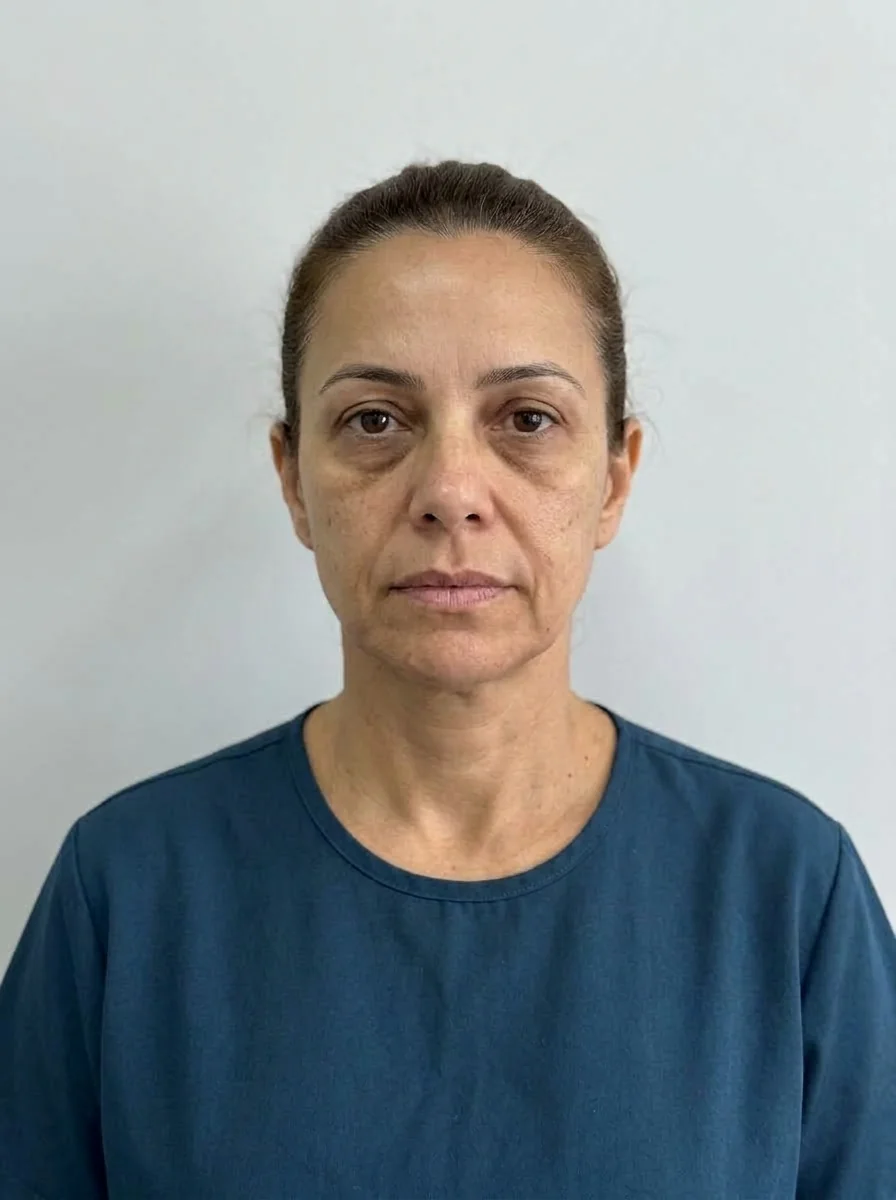 BeforeSimulation
Quick facts
- Question
- Why wait 15 days for the touch-up
- Usual range
- Full effect in about 2 weeks
- Risk of rushing
- Adding dose without seeing the final result
- Who decides
- Licensed professional, at the follow-up
The short answer: a botox touch-up usually waits about 15 days because the effect of botulinum toxin builds up gradually and is only complete around two weeks. Touching up earlier means deciding without seeing the final result, which raises the risk of adding unnecessary dose and of producing an excessive result.
This page is for explaining to an anxious patient why the follow-up is at two weeks, and for organizing what to assess at that visit.
How the effect builds up
The toxin works by blocking the release of the messenger that activates the muscle. This effect is not instant: it starts to be noticed within a few days and keeps consolidating. So when you look at the patient on day three or four, you see a partial effect that is still going to change.
A patient who looks in the mirror on day two and says "it didn't work" or "one side looks different" is looking at a result still in progress. Explaining this at the time of the injection greatly reduces anxious messages.
What usually happens in each phase
The days are conversational averages. Some patients respond faster or slower, and the assessment is always individual.
What to assess at the follow-up
The 15-day follow-up is an assessment visit, not necessarily one for re-injecting. In many cases nothing needs to be done.
See how to communicate an asymmetry in this context in asymmetry after botox.
The risk of touching up too early
Touching up on day four may seem simple: the patient complains, you inject a bit more. The problem is that the effect was still building. Once complete, the sum can produce a frozen forehead, a heavy brow or loss of expression. And an excess of toxin cannot be undone: you can only wait for the effect to wear off.
That is why the logic is the opposite of filler: there is no antidote, so the care comes beforehand. The timing logic for filler is different, described in filler touch-up.
Agreeing on the follow-up rule
The touch-up policy is a business decision and should be stated at the consultation, before the injection, so the patient is not surprised. Some professionals include a free assessment follow-up, others charge only for the additional dose. Whichever you choose, put it in writing: see touch-up policy and whether to charge for touch-ups.
When a touch-up makes sense
And the simulation in Harmy?
Toxin in the glabella can be simulated in Harmy with the Glabella point, which uses a symbolic unit in the app to generate an illustrative front-facing projection. It helps the patient picture the idea of the procedure, but it does not show movement or the evolution over two weeks.
Summary
- The toxin's effect is complete at about two weeks.
- Touching up earlier means deciding without seeing the final result.
- The follow-up is for assessing, not always for re-injecting.
- Signs such as ptosis call for immediate assessment.
- Timelines and decisions are at the discretion of the licensed professional, according to the rules of their professional council (in Brazil).
Frequently asked questions
Why wait 15 days for a botox touch-up?
Because the toxin's effect builds up gradually and usually takes about two weeks to fully appear. Touching up earlier means deciding without seeing the final result.
How many days until botox starts working?
In general the effect starts to show within a few days and is complete at about two weeks, with individual variation.
Can I touch up before 15 days if I look asymmetric?
In general, no. An asymmetry in the first days can resolve on its own as the effect builds up, and the adjustment is usually made at the follow-up.
Is the botox touch-up charged?
That depends on each clinic's policy. It is good practice to agree on the follow-up rule in writing before the injection.
Harmy images are illustrative simulations generated by AI from the patient's photo to support the conversation between practitioner and patient. They are not a promise of results. Indication, technique, product and volume are solely the decision of the licensed practitioner. This content is for information only and does not replace a clinical assessment.