
Does Cheek Filler Age You? When the Face Is Overfilled

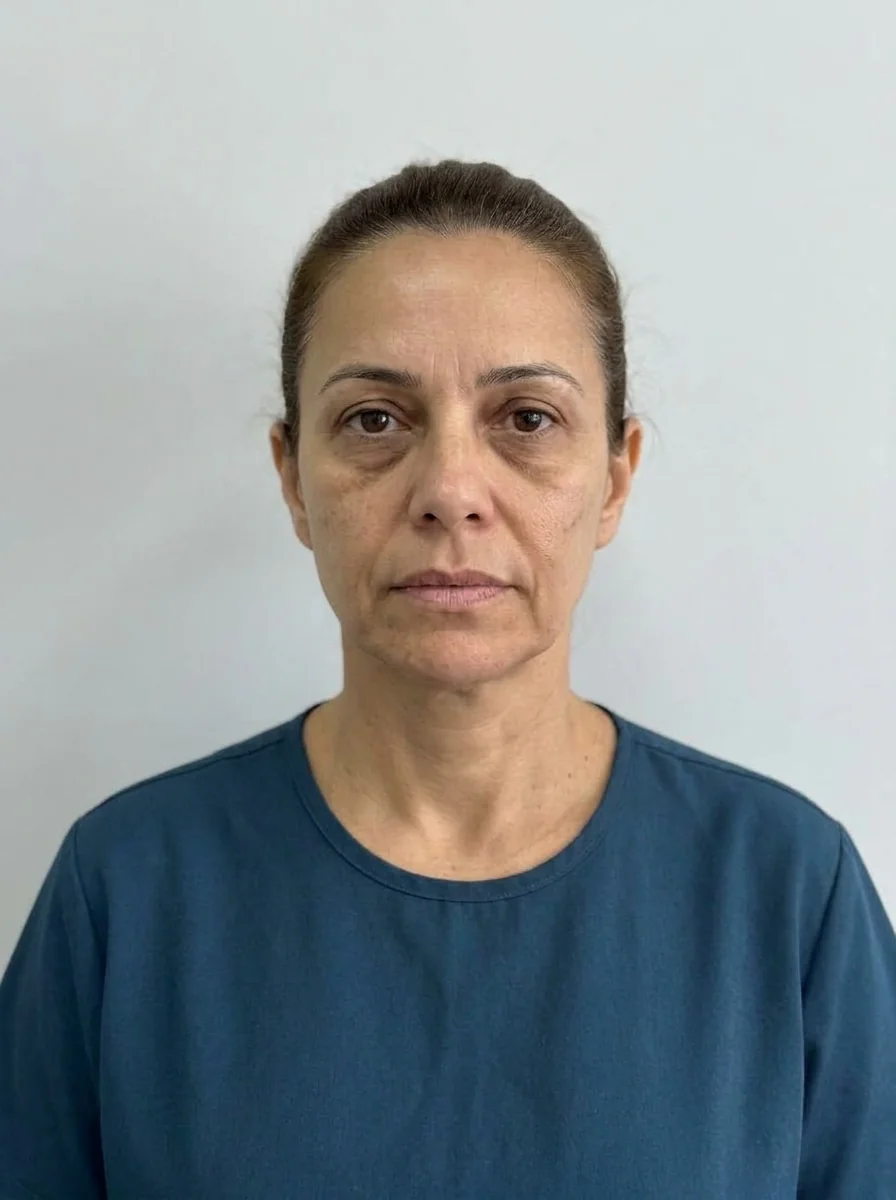 BeforeSimulation
Quick facts
- Question
- Does malar filler age the face
- Short answer
- It can, when there is excess volume or poor distribution
- Classic sign
- A wide, heavy or "puffed" face in the cheek area
- Correction
- Assessment and, when indicated, hyaluronidase
The short answer: well-indicated, proportionate malar filler usually restores support to the midface and does not age you. What "ages" is excess volume or poor distribution, which leave the face wide, heavy and tired. The phrase "malar filler ages you" comes from overdone results, not from the procedure itself.
This page helps the professional recognize the risk, avoid excess and handle the conversation with a patient who has already ended up there.
How excess ages the face
The malar area supports the projection of the cheek over the zygomatic bone. A proportionate volume enhances the curve of the cheek and opens the transition with the lower eyelid. Excess, on the other hand:
- widens the midface, making the face squarer or rounder;
- increases the shadow under the cheek and in the nasolabial fold;
- weighs down the lower third, accentuating the sagging look;
- leaves the face "puffed," without the naturalness of the original proportions.
The visual read of an "older face" comes from the loss of elegance in the lines, not from wrinkles. It is a proportion error.
Signs of excess or poor distribution
| Sign | What it suggests |
|---|---|
| Wide face from the front | Excess lateral volume |
| "Ball" or very rounded cheek | Dose above what the midface can carry |
| Nasolabial fold more marked after filler | Weight in the area and a change in distribution |
| More tired look or more evident tear trough | Volume shifting the shadows |
| Feeling of a heavy or tight face | Excess or persistent swelling |
| Projection asymmetry between sides | Uneven distribution |
These signs alone do not make a diagnosis. Early swelling can mimic excess, which is why day 15 is the assessment milestone.
How to avoid excess
Prevention starts with the assessment and the dose. Some practices help, without getting into technique:
- Assess the face as a whole: the malar area relates to the tear trough, the fold, the chin and the jaw.
- Respect the bony anatomy: someone who already has high zygomatic projection needs less.
- Prefer forward projection over lateral, when the proportions of the face call for it.
- Work in stages, with a review on day 15.
- Avoid repeating too soon, as discussed in filler: how often to repeat.
The logic of combining with other areas is in facial filler at 40 and midface fat compartments in the plan.
If it has already happened, what to do
Management depends on the diagnosis. In broad terms:
- Wait for it to settle, if it is swelling still in progress;
- Dissolve with hyaluronidase, when there is excess hyaluronic acid, at the dose decided by the professional;
- Reassess the strategy, with another product or another distribution, if the patient wants to redo it;
- Investigate other causes, such as inflammation or lumps, if the volume is out of proportion to what was injected.
Dissolving causes its own swelling and recovery time. In general, patients wait for things to settle before a new injection. How the enzyme works is in hyaluronidase: how long does it take to work and the question about its extent in does hyaluronidase remove all the filler?.
Malar filler is not the answer to everything
In some faces, what looks like a lack of malar volume is actually a fold, tear trough, laxity or loss of support somewhere else. Filling the malar area to treat the fold may be too little; filling the fold to treat the lack of malar volume may be too heavy. The comparison with the biostimulator is in malar filler or biostimulator, and the question of whether it slims the face is in does malar filler slim the face?.
General risks of malar filler
Besides excess, malar filler has the risks common to any hyaluronic acid: swelling, bruising, asymmetry, lumps and, rarely, vascular complication. The consent form should mention them, and hyaluronidase must be available. Asymmetry cases are in asymmetry after malar filler.
How to use Harmy
Harmy helps avoid excess by showing the effect of the volume beforehand. The Cheekbone point accepts 0.5 to 5 ml in steps of 0.5 ml, at Subtle, Moderate or Pronounced intensity, and in a bilateral area the ml is the total, split between the two sides. The projection uses only the front-facing photo, so it does not replace the three-quarter and profile assessment.
Summary
Frequently asked questions
Does malar filler age you?
When well indicated and in a proportionate dose, it usually restores support to the midface. When there is excess volume or poor distribution, it can leave the face wide, heavy and older-looking.
Why does the face look wide with malar filler?
Too much lateral volume widens the midface and flattens the transition between the cheek and the rest of the face. Forward, high projection is usually more favorable than lateral excess.
Can an overdone malar area be corrected?
With hyaluronic acid, hyaluronidase can dissolve the excess. The decision and dose are up to the professional, and dissolving has its own swelling and timeline.
How do I know whether I really need malar filler?
The assessment decides: loss of midface projection, shadow under the eye and a blurred transition are signs, but not every face needs it. In some cases, the answer is not to fill.
Harmy images are illustrative simulations generated by AI from the patient's photo to support the conversation between practitioner and patient. They are not a promise of results. Indication, technique, product and volume are solely the decision of the licensed practitioner. This content is for information only and does not replace a clinical assessment.