
Does Nasolabial Fold Filler Hurt?

 BeforeSimulation
Quick facts
- Question
- Does nasolabial fold filler hurt
- Usual range
- Mild to moderate discomfort, with anesthesia, that usually fades within hours
- Pain that calls for contact
- Intense, increasing or disproportionate pain, with a change in skin color
- Who decides
- The professional who assessed and treated
"Will it hurt?" is the question patients ask before booking filler for their smile lines, and the honest answer has two parts: there is usually some discomfort, of very variable intensity, and there is a type of pain that is not discomfort and needs to be recognized. This page helps you answer both, without promising a pain-free session and without scaring anyone.
What does the patient usually feel during treatment?
In the nasolabial fold, the most common complaint is pressure with a burning sensation, sometimes with stinging, most noticeable near the side of the nose and the crease beside the upper lip. Sensitivity changes with each person's pain threshold, their emotional state that day, the hormonal cycle in some patients and previous experience with needles.
Two factors weigh more than the procedure itself: skin preparation and anxiety. A tense patient tightens the face, breathes shallowly and interprets any sensation as pain. Talking while you inject, warning before each step and keeping a calm pace reduce complaints more than many people expect.
How can discomfort be reduced?
Each practice has its own protocol, and the choice belongs to the licensed professional, in line with the rules of their professional board. In general terms, the most commonly used resources are:
- Topical anesthetic applied early enough to take effect, and removed before disinfection. The precautions and limits are in the entry on topical anesthetic.
- A product with lidocaine in the formulation, which relieves discomfort as the treatment progresses. A formula with anesthetic is the professional's choice among registered products.
- Local cold in short intervals, before and after, without overdoing it so as not to confuse the assessment of skin color.
- A slower pace and breaks when the patient asks, instead of pushing through to the end in one go.
- Distraction and breathing, which help mostly those who fear needles.
None of these resources removes the sensation, and promising otherwise leads to frustration. What you can promise is that you will adjust comfort during the session.
Pain timeline
| Moment | What usually happens | What to advise |
|---|---|---|
| During treatment | Mild to moderate discomfort, strongest near the nose and lip | Warn before each step, pause if asked |
| First hours | Numbness that fades, then tenderness to the touch | Avoid pressing or rubbing the area |
| First and second day | Sensitive area, swelling and sometimes bruising | Light cold, sleep with the head raised, no intense exercise |
| Third to seventh day | Tenderness that drops each day | Get back in touch if the discomfort increases |
| At any moment | Severe, increasing pain with a color change | Immediate contact with the person who treated |
When does pain stop being discomfort?
The fold and the perinasal region have large-caliber vessels and anastomoses that connect the face to the orbit, which is why the fold is treated as a high vascular risk zone (details in risks of nasolabial fold filler). The pain that comes with vascular occlusion is usually different from needle discomfort: it appears early, is disproportionate, does not improve with time and comes with a change in the skin.
It is worth recording the pain complaint in the patient record, with the time and a description in the patient's own words. If the patient reports pain far above what is expected during the injection itself, stop, reassess the color and capillary refill of the area and only then decide whether to continue.
Soreness afterward: is it normal for it to hurt to the touch?
Yes, generally. Injected hyaluronic acid causes an expected inflammatory response, with swelling and tenderness to the touch, usually greater in the first 48 hours. Pain when pressing the area, smiling widely or chewing hard foods is common in the first days and tends to fade.
What is not expected: pain that gets worse from the second to the third day, redness with local heat over a growing area, and a lump that hurts and gets harder. These situations need assessment, because they can be late inflammation or infection.
Myths and facts about pain in the fold
How does Harmy help reduce anxiety?
Much of the fear comes from not knowing what will happen. At the consultation, you can mark the Nasolabial Fold area in Harmy, choose the volume in ml and the intensity (Subtle, Moderate or Pronounced) and show the patient the projection. When patients see what will be done and understand that the planned change is subtle, they tend to arrive calmer for the treatment.
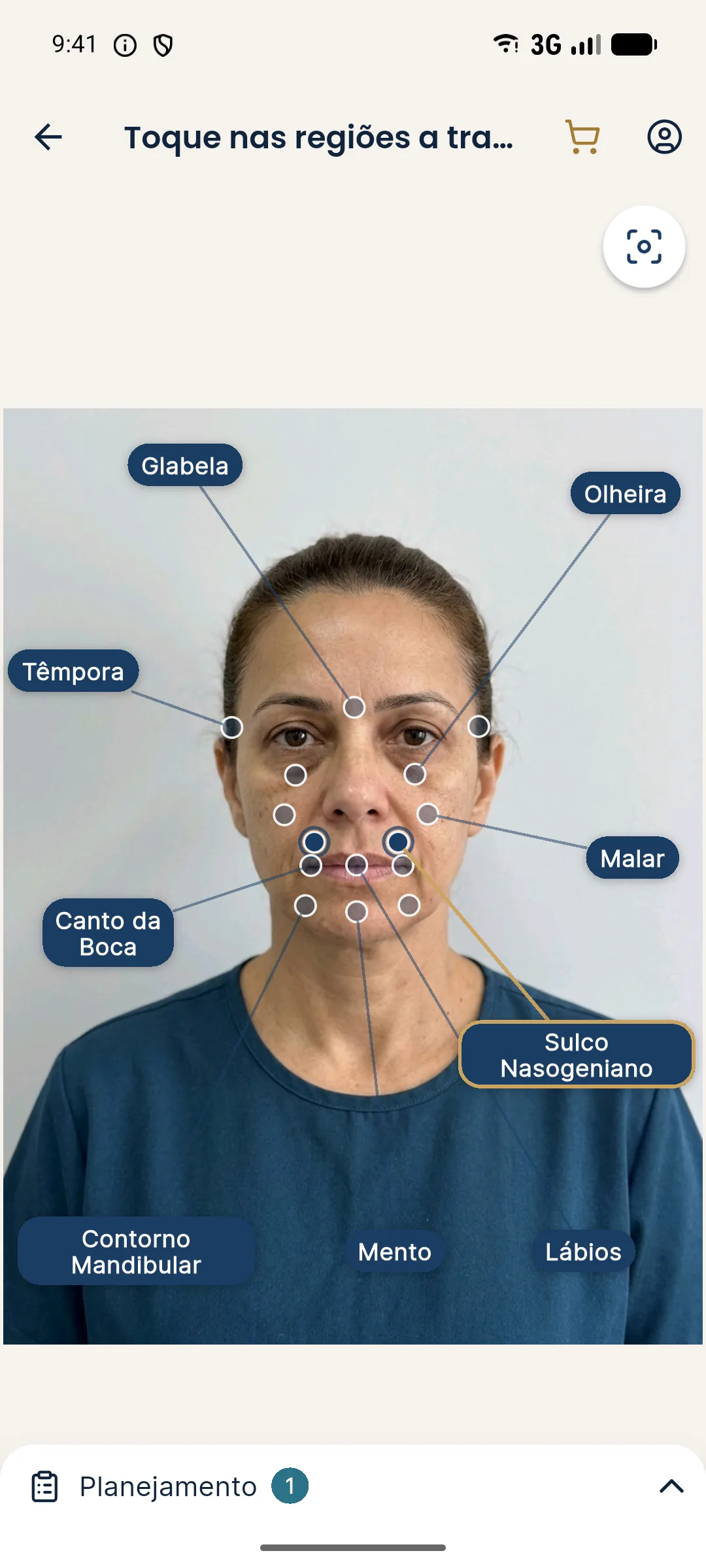
The projection is an illustrative simulation, not a promise of results, and it does not replace clinical assessment or the explanation about discomfort and risks.
Summary for the next consultation
It hurts to a variable degree, generally mild to moderate, and comfort can be improved with preparation, a suitable product and a good pace. Pain that grows, that comes with a change in skin color or with visual symptoms is not discomfort: it is an emergency. Teaching the patient to tell the two apart is part of treatment safety, and it works better than trying to convince them it will not hurt.
Frequently asked questions
Does filling the nasolabial fold hurt a lot?
Most patients describe mild to moderate discomfort, and it varies a lot from person to person. Topical anesthetic and a product containing anesthetic usually help, at the professional's discretion.
Why does the nasolabial fold bother more than other areas?
The area is richly innervated and sits close to the nose and upper lip, where sensitivity is higher. Patients are also often tense from having heard about the vascular risk in this area.
How long does the area stay sore afterward?
Tenderness to the touch usually lasts from one to a few days, along with swelling. Pain that gets worse over time is not expected and should be reported.
When is pain after filler a sign of a problem?
Severe, disproportionate pain, pale, bluish or net-patterned skin, or any visual change call for immediate contact with the person who treated you.
Harmy images are illustrative simulations generated by AI from the patient's photo to support the conversation between practitioner and patient. They are not a promise of results. Indication, technique, product and volume are solely the decision of the licensed practitioner. This content is for information only and does not replace a clinical assessment.