
Fear of Looking Overdone: How to Avoid It

 BeforeSimulation
Quick facts
- Question
- Fear of looking overdone
- Core idea
- A natural look comes from a conservative plan, proportion and communication, not luck
- Signs of overdoing it
- Loss of expression, a wide face, a projected lip, mismatched areas
- Who decides
- The licensed professional, together with the patient
"I don't want to look overdone" is the phrase heard most often in harmonization practices. The fear is legitimate: the patient has seen wide faces, disproportionate lips and lifeless expressions, and wants a guarantee that it won't be them. You cannot guarantee it, but you can build a process that greatly reduces the chance. This page gathers the points that separate a natural plan from an exaggerated one and suggests how to talk with the patient.
What does the patient mean by "overdone"?
The expression is vague, and it is worth finding out what they want to avoid. For some, it is the overly projected lip. For others, it is the "puffy" face, the motionless forehead, the cheekbone that is too high or the uniformity that erases identity. Ask: "show me a face you think looks artificial and tell me what bothers you." The answer becomes a criterion for the plan.
Ask the opposite too: which face do they consider natural and beautiful. That reference helps calibrate, as long as it is realistic and does not ask to look like someone else. The topic of asking without overdoing it is covered in how to ask for natural facial harmonization.
Signs of overdoing it, and what is behind them
What the eye calls "artificial" is usually a break in proportion, not volume itself. Some patterns:
| Sign | What is usually behind it |
|---|---|
| Wide or "puffy" face | Too much lateral volume, without assessing the whole face |
| Projected lip, "duck" look | Volume out of proportion with the lower third |
| Loss of expression | Too much toxin or poorly distributed |
| Cheekbone too high and hard | Projection that ignores the overall face |
| Areas that do not relate | Each area treated in isolation, without a view of proportion |
| "Stretched" look | Excess traction or too much product in too little space |
The general principle is to treat the face as a whole. Assessment by thirds and facial proportions guide the work without becoming a rigid formula. More on the topic in overdone facial harmonization.
What lowers the risk of overdoing it
There is no guarantee, but some practice habits reduce it considerably:
- Start conservative. Smaller volumes, with a follow-up to adjust, are safer than correcting later.
- Plan in stages. See facial harmonization all at once or in stages.
- Respect identity. The goal is to improve harmony, not to change the face.
- Leave time between sessions. Swelling is deceptive; assessing after it goes down prevents overdoing.
- Record with standardized photos. Patients get used to the new look and forget the "before."
- Know how to say no. Declining a volume that does not fit is part of the job.
The projection as an alignment tool
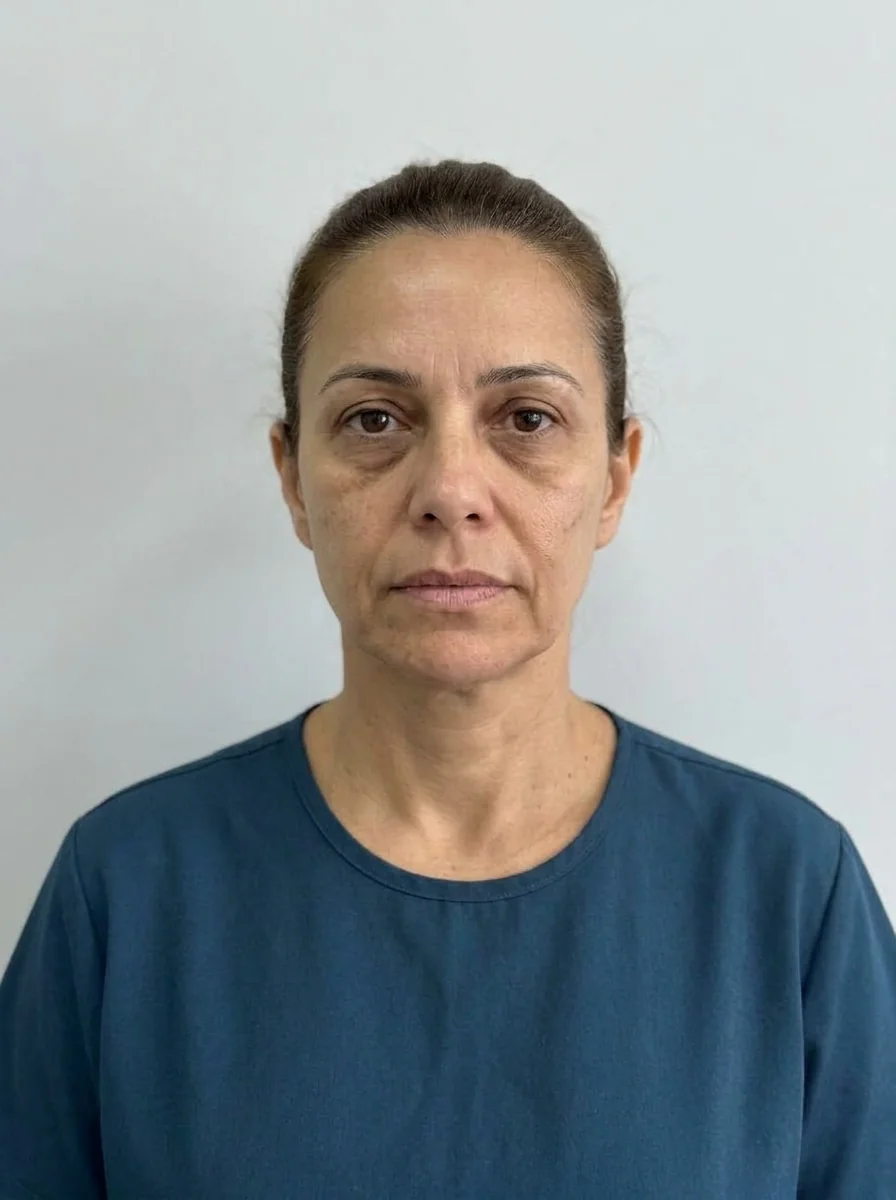
One of the best uses of simulation is to show, before injecting, the difference between a conservative plan and a more pronounced one. In Harmy, each area has ml and intensity (Subtle, Moderate or Pronounced), and the AI respects the volume: more ml, more noticeable. The patient sees the likely visual effect on their own photo, in an illustrative simulation, and understands that the goal is subtle.
A good practice is to generate two versions, one with less ml and one with more, and ask which looks natural to them. In many cases, the patient picks the more discreet one after seeing the more pronounced one. In the app's "Full harmonization," for example, the shortcuts are editable starting points, not a prescription.
What if the patient already feels "overdone"?
When a patient arrives with a look they consider artificial, the first step is to understand what was done, when and with what. With hyaluronic acid, hyaluronidase allows it to be reversed, with care. For other materials, the approach is different and, in some cases, more complex, and that must be clear in the informed consent. Acknowledging excess in someone else's work without judging the colleague is part of ethics. See overdone facial harmonization.
Closing the agreement
Record expectations in writing, along with the before photos. Book the follow-up before the patient leaves. Explain that perception changes over time: what looks like little in the mirror on day one often looks natural months later, and the reverse also happens.
In short: avoiding the overdone look is a matter of proportion, conservative volume, stages and communication. The illustrative projection helps align what the patient imagines with what you plan.
Frequently asked questions
How do I avoid looking overdone?
Combine a clear goal, conservative volume, proportion between areas and a follow-up for adjustments. A natural result comes from a staged plan, not from doing everything at once.
What are the signs of overdone harmonization?
A wider face, disproportionate lips, loss of expression and areas that do not relate to each other. The sign is always a lack of proportion with the rest of the face.
Can I see how it will look beforehand?
An illustrative simulation helps align expectations, but it is not a promise of results. The actual result depends on individual response.
What if I already look artificial?
There may be a correction, decided after an assessment. With hyaluronic acid filler there is hyaluronidase; for other materials the approach is different.
Harmy images are illustrative simulations generated by AI from the patient's photo to support the conversation between practitioner and patient. They are not a promise of results. Indication, technique, product and volume are solely the decision of the licensed practitioner. This content is for information only and does not replace a clinical assessment.