
Needle-free nonsurgical rhinoplasty? Cannula and other methods
Quick facts
- Question
- Does needle-free nonsurgical rhinoplasty exist
- Short answer
- There are cannula techniques, but there is always an entry point in the skin
- Myth
- A cannula does not remove vascular risk
- Who decides
- Qualified professional, after assessment
The short answer: nonsurgical rhinoplasty without an injection does not exist. There are techniques with a cannula, a blunt-tipped instrument that often replaces the needle for the stage where the product is placed, but the entry through the skin is usually made with a needle, and the procedure is still injectable. This page helps you clarify what is myth and what is real technique, without selling a safety that does not exist.
What a cannula is and what it changes
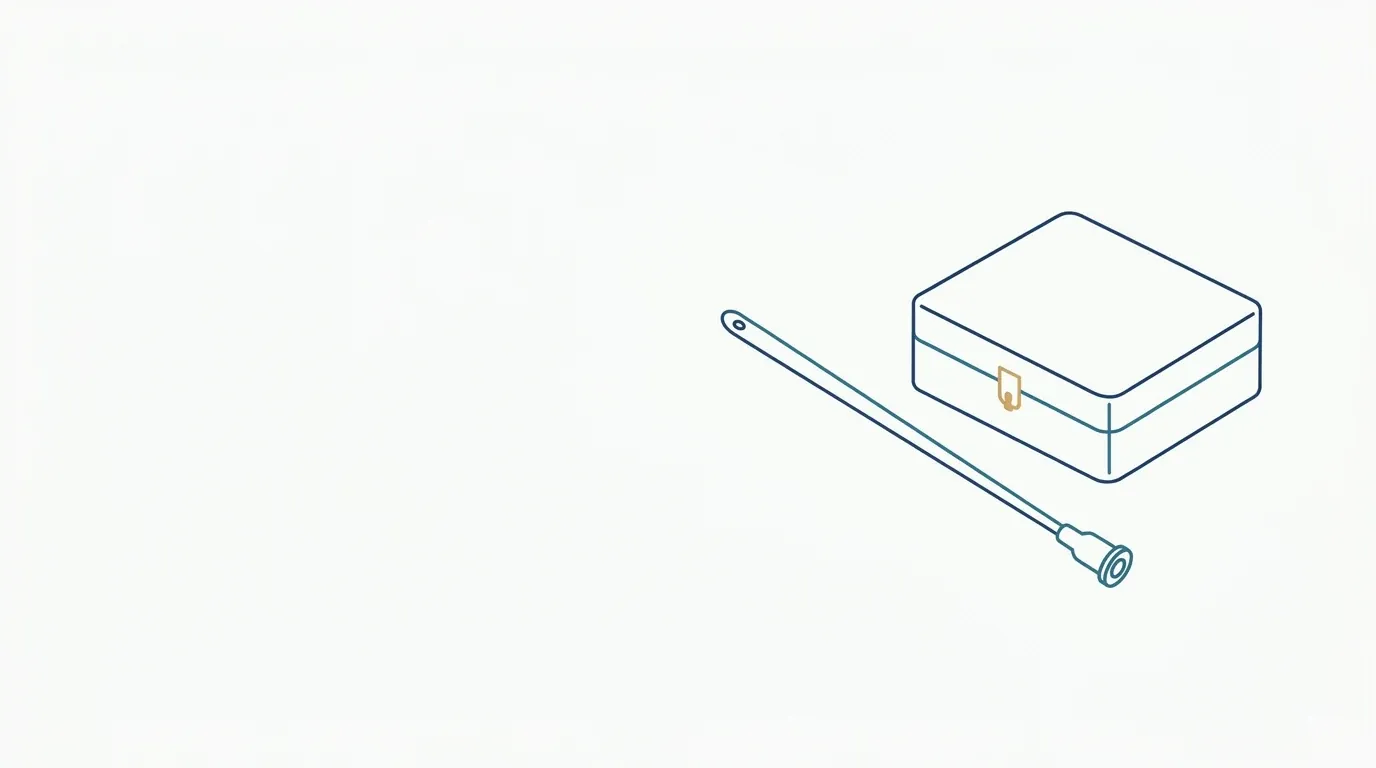
A cannula is a thin tube with a rounded tip. To use one, the professional makes a small entry point with a needle and slides the cannula in through it. The blunt tip tends to glide between structures instead of piercing them, which in theory can lower the chance of entering a vessel and of causing a bruise in certain areas.
There are also usually fewer entry points, because a single entry reaches a larger area. That can be an advantage for patients who worry about marks or who tend to scar. The strengths and weaknesses of each instrument are in the glossary entry on the cannula.
What a cannula does not change
In the nose, a cannula does not remove the risk of vascular occlusion. Volume, pressure, and product position remain risk factors, and vascular complications with cannulas have been reported. Telling the patient that "with a cannula there's no risk" is a false promise.
| Aspect | Needle | Cannula |
|---|---|---|
| Entry through the skin | Direct | Made with a needle, then the cannula is inserted |
| Number of points | May be higher | Usually lower |
| Precision in fine structures | High at specific points | Lower in some fine nasal designs |
| Bruising risk | Present | May be lower in some areas |
| Vascular occlusion risk | Present | Present, not eliminated |
The table is a comparison for conversation. The choice of instrument depends on the area of the nose, the goal, and the professional's experience, and neither is universally better.
The most common myths
Some ads talk about "needle-free nonsurgical rhinoplasty," "painless," or "with a device." It is important to unpack this with the patient.
How to talk to the patient
Patients who fear needles often look for "needle-free" as a relief. The honest answer is to explain that a cannula technique may be an option for some steps, but that the needle is still part of the process. The focus of the conversation should be safety and results, not the instrument.
When to consider a cannula
The decision to use a cannula usually takes into account the area of the nose, the goal of the procedure, the patient's healing, and the professional's technical preference. In some fine designs of the tip, the needle offers precision that a cannula lacks; in others, the cannula makes it easier to place the product with fewer entries. The choice is clinical and individual.
Anyone who wants to know how this affects the sensation during the procedure can read does nonsurgical rhinoplasty hurt?. For risks in general, see nonsurgical rhinoplasty: risks.
Timeline of aftercare with a cannula
Summary
- Nonsurgical rhinoplasty without an injection does not exist.
- A cannula has a blunt tip and may reduce entry points, but there is always an entry point.
- A cannula does not remove the risk of vascular occlusion.
- Be skeptical of promises of a device that "lifts the nose."
- The choice of instrument is at the discretion of the qualified professional, following the rules of their professional council (in Brazil, CFM, CFO, CFBM, COFEN, depending on the profession).
See also nose for the area and nonsurgical rhinoplasty or surgical rhinoplasty for the limits of the procedure.
Frequently asked questions
Does needle-free nonsurgical rhinoplasty exist?
There are techniques that use a cannula, a blunt-tipped instrument. Even so, there is usually an entry point made with a needle, and the procedure is still an injectable one.
Is a cannula safer than a needle in the nose?
A cannula may reduce some risks in certain areas, but it does not remove the risk of vascular occlusion. In the nose, safety depends on anatomical knowledge, volume, and technique.
Is there nonsurgical rhinoplasty with a laser or a device, without injecting anything?
No procedure without an injection adds volume to the nose the way filler does. Promises of this kind deserve skepticism.
Does a cannula hurt less?
In some areas, a cannula can reduce the number of entry points and the discomfort. The sensation varies with the patient and the area, and it is not a guarantee of less pain.
Harmy images are illustrative simulations generated by AI from the patient's photo to support the conversation between practitioner and patient. They are not a promise of results. Indication, technique, product and volume are solely the decision of the licensed practitioner. This content is for information only and does not replace a clinical assessment.