
Vitamin E and Garlic Before Botox: Should You Stop?

Quick facts
- Question
- Do vitamin E and garlic raise the risk of bruising before botox
- Key point
- High-dose supplements may affect clotting, but the evidence is mixed
- Usual guidance
- Ask, document, and advise a pause when indicated, without stopping prescribed medication
- Who decides
- The professional, and the physician for ongoing medications
The orofacial harmonization (HOF) patient often takes more than they list in the medical history: vitamin E, omega 3, garlic capsules, ginkgo, ginger, evening primrose oil, "natural" formulas for hair and skin. When botox or filler comes up, the fear of bruising appears along with the question "do I need to stop anything?". This page organizes the answer honestly: the evidence is mixed, and the approach is caution.
Why do these supplements come up?
Several natural products have, in theory, some effect on platelet aggregation or clotting, and so they are cited as possible contributors to bruising in procedures with a needle. High-dose vitamin E, concentrated garlic, ginkgo biloba, concentrated ginger, and omega 3 are among the most often mentioned. The topic is discussed more broadly in omega 3 before botox or filler.
Important: the size of this effect is controversial and depends on the dose, the product, and the person. An occasional capsule probably weighs little. A combination of several supplements at high doses, together with anti-inflammatories or anticoagulants, is another story.
What to ask in the medical history
The medical history often fails at one point: it asks about "medications," and the patient does not consider a supplement a medication. Use a broad question.
| Question | Examples the patient may mention |
|---|---|
| Uses vitamins or supplements | Vitamin E, omega 3, collagen, multivitamin |
| Uses herbal or "natural" products | Ginkgo, garlic capsules, ginger, concentrated teas |
| Uses routine medications | Anti-inflammatories, aspirin, anticoagulant |
| Uses something for hair, nails, or weight loss | Compounded formulas with several substances |
| History of easy bruising | May indicate a tendency to bleed |
| Had bleeding in a previous procedure | Informs individual risk |
Ask the patient to bring the label or a photo, because brand names and compounded formulas vary. Prescribed medications deserve separate handling: see aspirin and bruising with filler and anticoagulants and injectable procedures.
What is usually advised
Each service sets its own policy, at the discretion of the qualified professional, according to the rules of their professional board. The pattern seen in practice is:
- High-dose supplements with a theoretical effect on clotting: pause for a few days before the procedure, when possible, without harm to the patient.
- Low-dose supplements or seasoning/food: generally no restriction.
- Prescribed medications: never stop without guidance from the responsible physician.
- Resuming: usually cleared a few days later, once the risk of bruising has passed, depending on the area.
There is no universal list, which is why an individual conversation is worth more than a poster on the wall.
Bruising with botox and filler: what to expect
A bruise or ecchymosis is a possible complication of any injection, even in people who take nothing. Areas with many vessels, such as under the eyes and lips, tend to bruise more. Botulinum toxin usually causes less bruising than filler, because the injected volume is smaller, but it can happen.
Reducing the risk depends on technique, the choice of needle or cannula, pressure after injection, and attention to what the patient takes. The concern about supplements is only one part of this equation. See aftercare in care after botox.
When to postpone
If the patient has an important event in a few days and uses several substances with a theoretical effect, it is worth reassessing the date. It may also be prudent to postpone when there are frequent spontaneous bruises, gum bleeding, or when the medical history reveals combined use of several substances without supervision.
Harmy in the plan
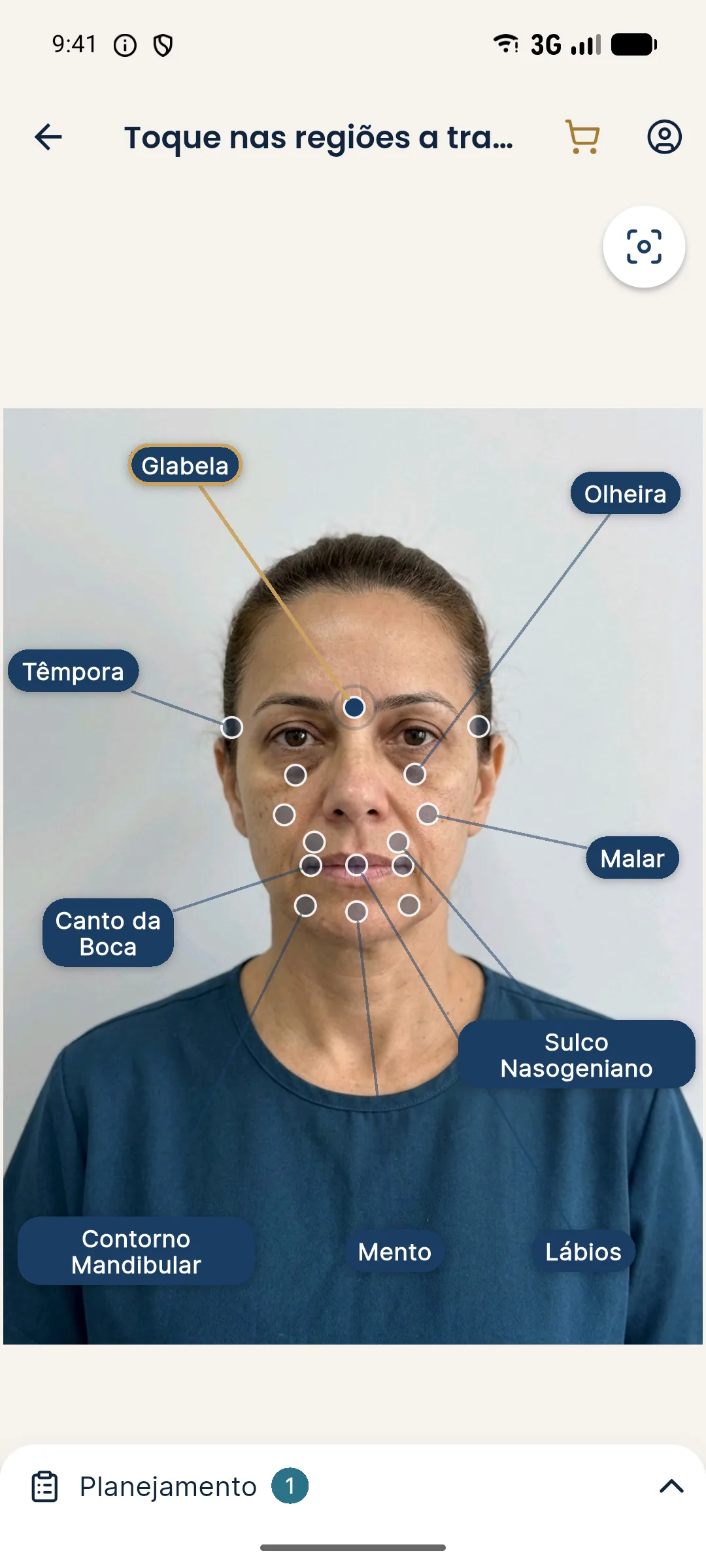
Harmy does not assess clotting, but it helps you plan ahead: by marking the area, setting the volume, and generating the projection, the patient leaves the consultation with a plan and a date, and you can send the pre-procedure guidance in advance. The projection is an illustrative simulation, not a promise of results. For botox in the glabella, remember that the app's point uses a symbolic unit, not a dose.
Frequently asked questions
Do I need to stop vitamin E before botox?
Some professionals advise pausing supplements that affect clotting, such as high-dose vitamin E, for a few days beforehand. The evidence is mixed, and the decision is the professional's.
Does garlic in capsules increase the risk of bruising?
Garlic in concentrated supplement form is cited among products that may affect clotting. Garlic used as a seasoning is not usually a reason for restriction.
Can I stop prescribed medication before botox?
Not on your own. Ongoing medications should only be stopped by the physician who prescribes them.
How long before should I stop supplements?
There is no single established timeframe. Many services advise from a few days to about a week, depending on the supplement, but the decision is individual.
Harmy images are illustrative simulations generated by AI from the patient's photo to support the conversation between practitioner and patient. They are not a promise of results. Indication, technique, product and volume are solely the decision of the licensed practitioner. This content is for information only and does not replace a clinical assessment.