
Loyalty program at an HOF clinic
Quick facts
- Topic
- Loyalty without a disguised discount
- Principle
- Benefits of care and access, not of price
- Main risk
- Advertising rules and devaluing the procedure
- Metric
- Return rate, interval between visits and satisfaction
Loyalty is a dangerous word at a harmonization clinic. Said carelessly, it turns into a points card, "10% off for those who come back" and a birthday gift, and within a few months the patient learns to wait for the discount before deciding. The clinic ends up selling its own procedure cheaper to people who already trust it, which is the opposite of what a loyalty program should do.
The path that works is usually different: build loyalty through care, access and follow-up. The patient comes back because they felt well looked after and because the follow-up is part of the plan, not because the price went down. This page shows how to build a program like that, which benefits make sense, which ethical points need attention and how to measure whether it is working. The general overview of returning patients is in return visits and loyalty, and here the focus is the program itself.
Loyalty, discount and promotion: what each one does
| Mechanism | What it does | Common effect | Point of attention |
|---|---|---|---|
| Permanent discount for returning patients | Lowers the price of the same service | Trains the patient to expect low prices | Devalues the work and runs into advertising rules |
| Cashback or points | Returns value toward new spending | Encourages new spending | May induce a procedure without an indication |
| Care benefit | Priority, included follow-up, monitoring | Increases the sense of care | Needs capacity to deliver |
| Access benefit | Reserved time slots, priority waitlist | Makes the clinic more convenient | Must not harm those who do not participate |
The comparison shows why the first row is usually avoided: it sells the clinic on price. The other rows require more organization but build perceived value.
Which benefits make sense without becoming a discount
Think of benefits that are part of the care and cost time, not margin.
- Included follow-up within a defined window, which is already part of the protocol and highlights the monitoring.
- Priority scheduling for follow-ups, with time slots reserved for program patients.
- Active outreach from the clinic to remind the patient of the follow-up interval the professional recommended.
- Personalized written instructions, with a follow-up photo and record.
- Early access to openings during weeks with a full schedule.
- Educational material about care and routine, with no promise of results.
- News announcements such as "we opened follow-up slots," with no promotional appeal.
How to design the program step by step
The simpler the program, the easier it is to deliver. A program with five tiers, colors and gifts gets lost in weeks. One with two clear benefits lasts.
What it costs and how to protect your margin
Every benefit costs something, even if it is staff time. Before launching, estimate:
- Hours per month of follow-up, outreach and reserved schedule.
- Clinical hour value of those hours, using your clinical hour calculator.
- Expected return, in additional visits that the program should generate.
- Break-even point of the program: how many extra follow-ups pay for the cost.
The patient LTV calculator shows how much a returning patient is worth over time, and the return package cost calculator helps price benefits that are part of a package. For discounts in general, the reasoning is in discount policy.
What to tell the patient
The message should explain the benefit as part of the care, with no pressure and no artificial urgency.
Combine the text with the six-month maintenance message and the 15-day follow-up script. For patients who disappear, see reactivating inactive patients and patient recall.
Ethical and advertising considerations
Promoting the program on social media, in ads or on posters falls under the advertising rules of your board and of CONAR. Avoid:
- advertising the discount as the main advantage;
- using expressions such as "promotion," "unmissable" or "last spots";
- raffling off procedures or gifts;
- showing before and afters of patients without authorization and compliance;
- suggesting that the benefit increases the chance of a result.
Read advertising in HOF, advertising harmonization prices and misleading advertising before communicating the program. If you are unsure whether the message is allowed, take the question to your board.
Harmy in follow-up
Harmy helps sustain follow-up because it keeps sessions by patient in History, with search by name. When the patient comes back, you open the previous projection and can compare it with what was done. If the patient had the procedure, "Add actual result" saves the photo aligned by the eyes and lets you compare Projection, Actual result and Projection vs Actual.
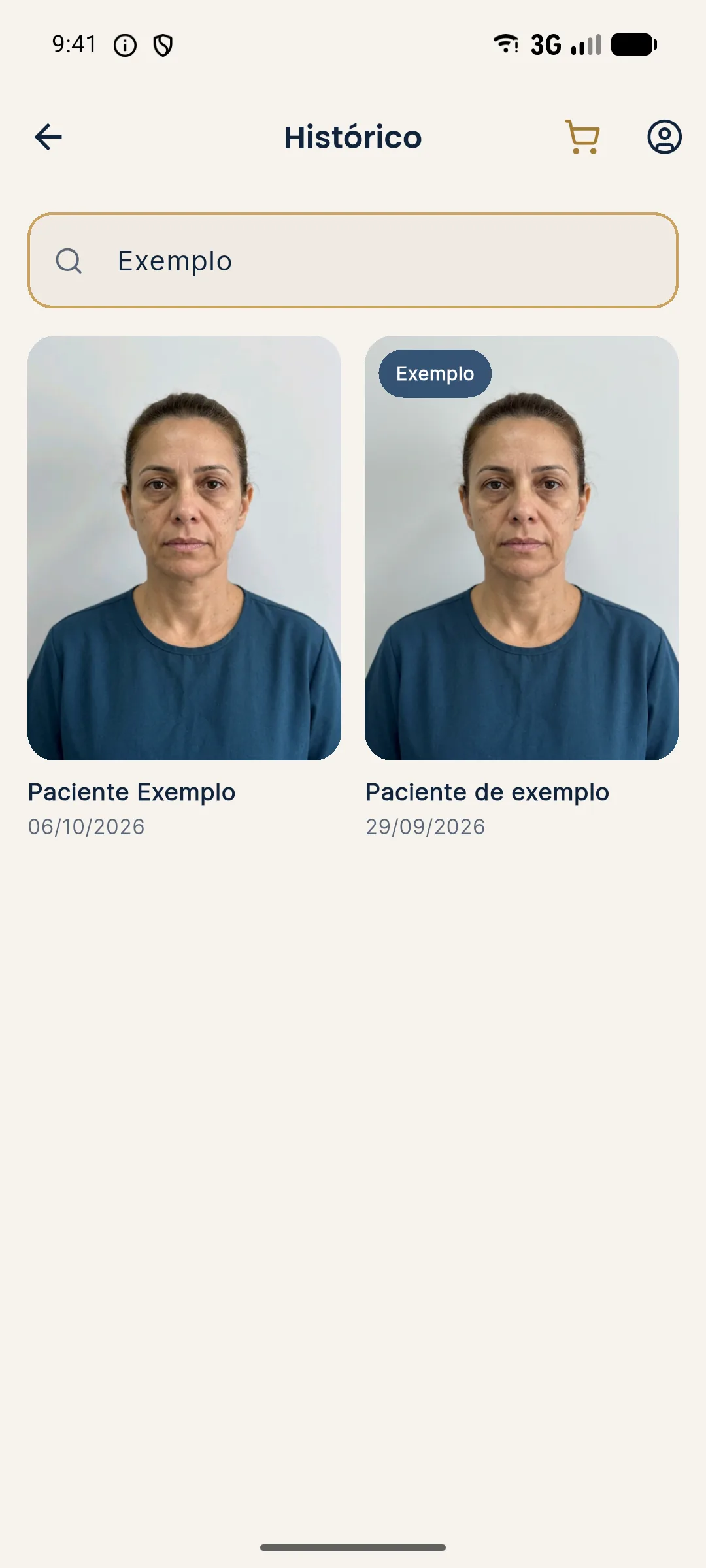
This makes the follow-up conversation concrete: the patient sees the progress and you record what was planned and what was done. For the comparison routine, see the page comparing projection and actual result.
Metrics to know if it works
Compare the numbers every quarter. If the program did not change returns and used up hours, simplify it or end it. Loyalty is a means, not an end.
The best loyalty program is the one the patient barely notices as a program: they only notice that the clinic remembers them, looks after them and is organized to receive them. The rest is an operational detail.
Frequently asked questions
Are loyalty programs allowed at an HOF clinic?
Follow-up and service benefits tend to be safer than price benefits. Any promotion of the program must respect the advertising rules of your professional board and of CONAR (Brazil's advertising self-regulation body), and the rules must be clear in writing.
What is the difference between loyalty and a discount?
A discount lowers the price of the same service. Loyalty offers something extra to the patient who comes back: schedule priority, an included follow-up, monitoring, guidance. The second preserves the value of the procedure.
Do cashback and points work at an aesthetics clinic?
They can, but they tie the patient's decision to money rather than care, and may encourage procedures without an indication. If you use them, make clear that the indication is clinical and never make a procedure depend on the benefit.
How do I know if the program is working?
Compare the interval between follow-ups, the return rate of patients who joined and the average ticket before and after. If the numbers do not change, the program is a cost with no effect.