
Script for explaining natural facial asymmetry
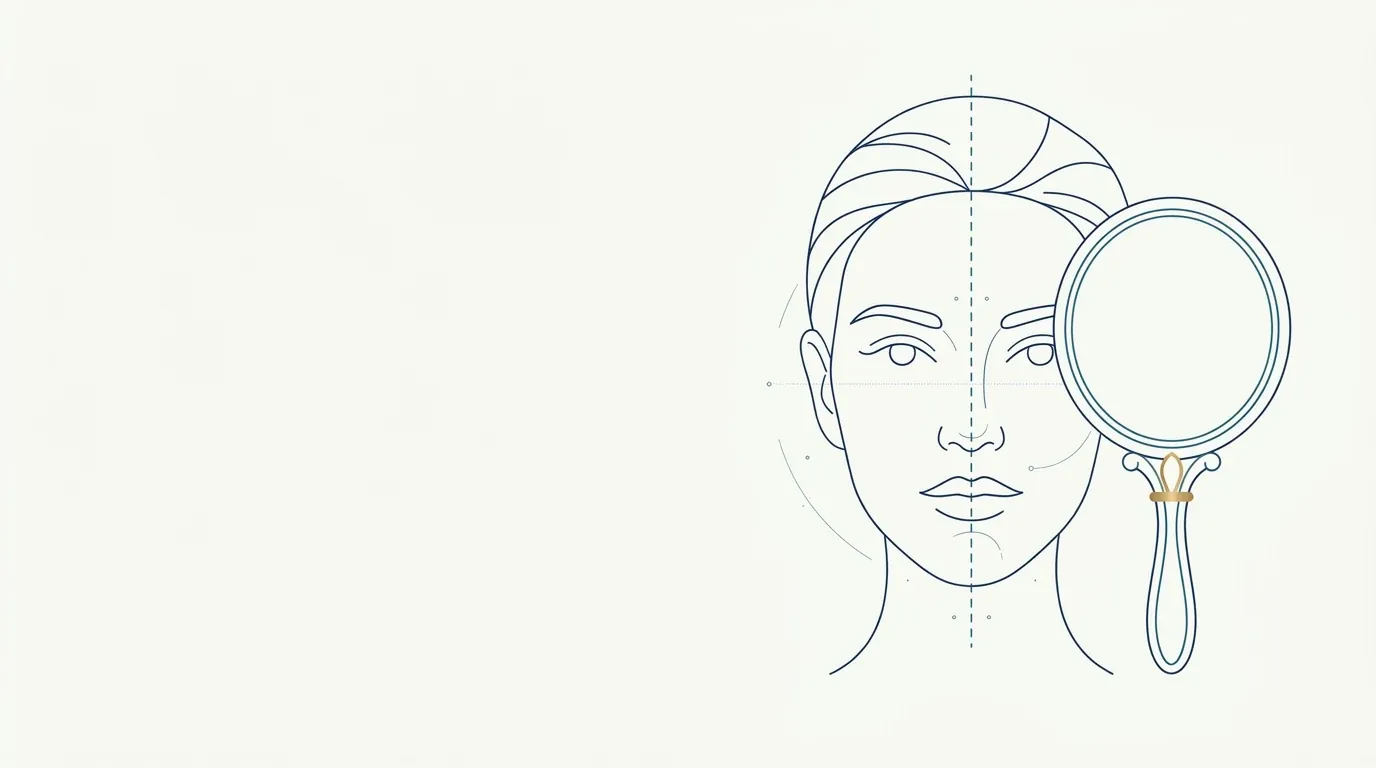
Showing a patient their asymmetry is one of the most delicate moments of the appointment. Done in a hurry, it sounds like criticism. Done with care, it becomes one of the best tools for aligning expectations: the patient understands why the plan does not aim for an "identical" face, but for a achievable balance.
The script below uses the frontal photo as a tool, always with the patient's authorization.
How do you show it using the photo?
The standardized frontal photo is the best starting point. See standardized clinical photography to ensure light, distance and framing. During the conversation:
- Show the photo with the patient beside you, in silence for a few seconds.
- Ask what they notice before saying what you see.
- Only then point out the differences that were already there, in neutral language.
- Avoid terms like "crooked", "drooping" or "flaw".
| Instead of | Say |
|---|---|
| "Your face is crooked" | "There is a natural difference between the sides" |
| "This side is drooping" | "This side has a little less projection" |
| "I will fix it" | "I will aim for more balance" |
| "It will be symmetric" | "I can soften it, without promising symmetry" |
Where does the app come into this conversation?
To go deeper, see explaining natural asymmetry to the patient, aligning expectations about asymmetry and the glossary entry facial asymmetry.
Frequently asked questions
Is every face asymmetric?
To a greater or lesser degree, yes. Small differences between the sides are common and often go unnoticed until the patient looks closely.
Can I show the patient the asymmetry in the photo?
You can, carefully and respectfully, at the professional's discretion. Show it without pointing out flaws, explaining that the difference is normal and serves as a reference for the plan.
Does the procedure correct asymmetry?
It can soften certain differences, but it does not promise symmetry. Explain this beforehand, so the patient does not expect a face that is perfectly equal on both sides.
What if the asymmetry bothers the patient later?
Keep the initial photos, show that the difference was already there and talk through the options, without blame and without promising to fix everything.