
Sagging face in a young person: causes
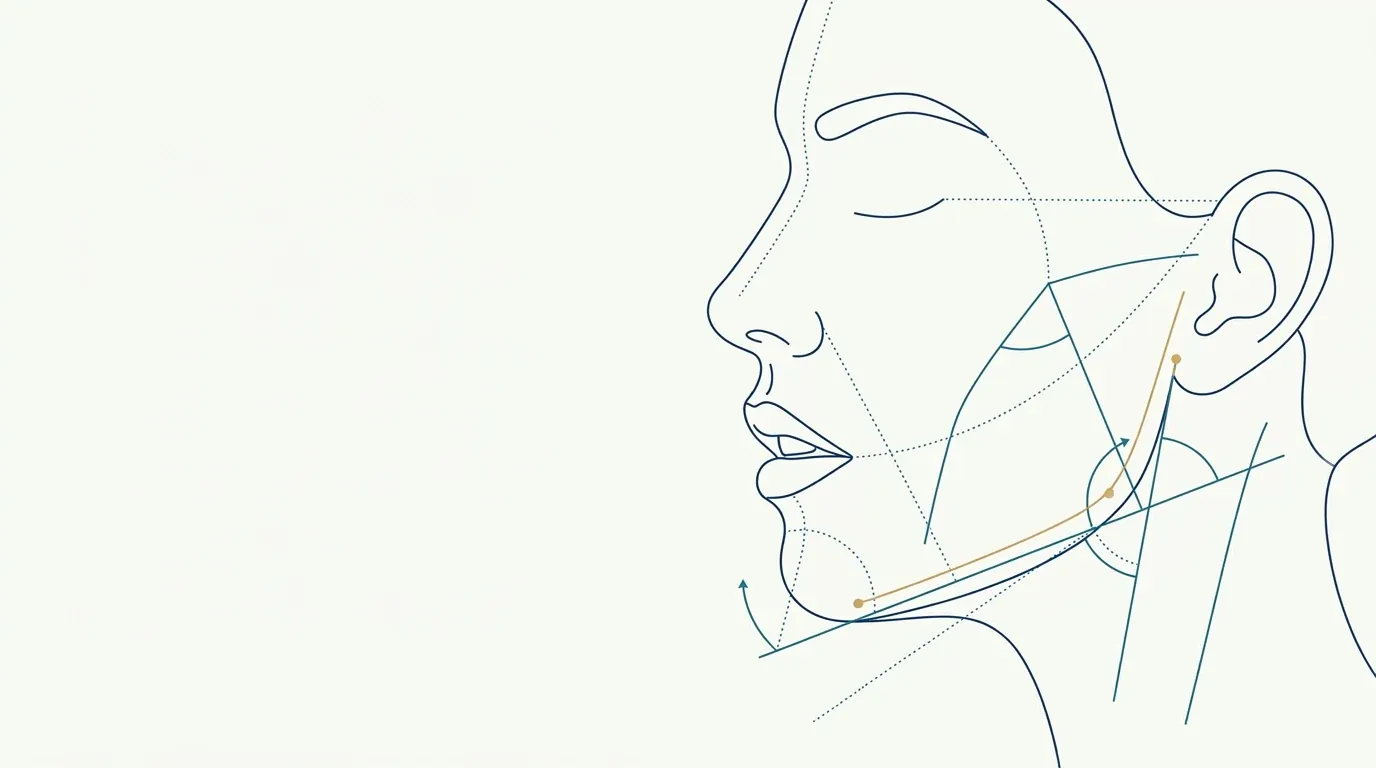
- Nerve
- Highlighted area
Quick facts
- Concern
- Loose skin and contour in a person under 35
- Key insight
- Early laxity has varied causes, and investigation comes before any procedure
- Supporting measure
- History of weight, sun, smoking, illnesses and comparison with relatives
- Limit
- When there is a clinical cause, referral comes before aesthetic treatment
Facial laxity is usually associated with age, which is why the complaint in a young person raises a flag. A 28-year-old patient who says "my face is dropping" deserves a question before any treatment proposal: what is going on? The answer may be simple, such as recent weight loss, or may call for a medical workup.
This page gathers the most common causes of laxity in a young person, guides what to ask and examine, and shows what facial harmonization can offer without setting unrealistic expectations. For related topics, see face at 30, loose skin on the face and biostimulator at 30.
Why can a young face look saggy?
Laxity is the loss of firmness in the skin and supporting tissues. In young people, the causes tend to differ from those of classic aging. Six groups deserve attention.
- Weight loss, especially rapid, when the skin does not keep up with the reduction in fat volume. See gaunt face after weight loss.
- Genetics, with less resistant collagen or looser ligaments from an early age.
- Chronic sun exposure, which degrades collagen and elastin.
- Smoking, which impairs circulation and skin quality, as in smoker's face.
- Habits, such as sleeping little, abrupt weight swings and use of harsh products.
- Clinical conditions, such as hormonal changes and connective tissue disorders, which need medical assessment.
None of these items explains the picture alone in every case. The clinical reasoning is to combine what the patient reports with what the exam shows, without jumping to the conclusion that "it's genetic".
What should you examine?
The exam aims to separate skin laxity, loss of ligament support and volume loss. The gentle skin-lift test helps: if lifting greatly improves the contour, there is a descent component. Skin thickness and elasticity are assessed by pinch and recoil. Palpation of the fat compartments and observing the contour in an oblique photo complete the picture. Anatomical references are in retaining ligaments and layers of the face.
| Finding | Possible origin | Note |
|---|---|---|
| Thin skin with slow recoil | Loss of collagen or elastin | Consider skin quality |
| Contour that improves when lifted | Descent due to ligaments | Support may help in part |
| Flat cheek, deep fold | Volume loss | Modest replacement |
| Generalized looseness, hypermobility | Connective tissue condition | Refer for medical assessment |
| Sudden laxity | Clinical cause or weight loss | Investigate before treating |
The relationship with general aging is in facial aging by layers. The difference is that, in a young person, the plan needs to be even more conservative, because the face has many years of change ahead.
What can facial harmonization offer?
The options are limited and should be used sparingly. In young people, the risk of overtreating is greater than the risk of undertreating. The paths discussed, always at the discretion of the qualified professional and in line with the rules of their professional board in Brazil, are:
- Habit guidance, such as sun protection, quitting smoking and weight stability.
- Collagen biostimulator, in selected cases, for skin quality. See biostimulators: overview and biostimulator and skin quality.
- Modest volume support, when there is fat loss in the cheekbone or jaw. See cheekbone filler.
- Complementary skin treatments, outside the scope of this page.
Each option has risks. A biostimulator can form nodules, filler demands vascular attention and hyaluronidase must be available for hyaluronic acid. Explain everything and record the consent. In young people with dysmorphia or unrealistic expectations, the prudent course is not to treat, as discussed in saying no to a patient with dysmorphia.
What is the most prudent plan?
In a young person, the most prudent plan starts with what is not a procedure: guidance on sun, smoking and weight. Then, when there is a clear indication, a modest step of support or skin quality, with reassessment. The goal is to avoid the cycle of treating too early and accumulating product over the years. The logic of interval between sessions counts double in this age group.
How do you talk to someone in a hurry?
Young patients with laxity often come from comparisons with social media, image filters or old photos in which the skin looked firmer. The hurry is great and the tolerance for waiting is small. It is worth making the wait part of the treatment: explain that caring for sun exposure, sleep and smoking is the foundation, that procedures build on that foundation and that the best results depend on consistency.
Avoid the argument that "prevention is better", which can push the patient into unnecessary sessions. Instead, offer an annual follow-up with standardized photos. That way, the decision to treat comes from a change measured over time, not from anxiety in the moment. If the concern seems out of proportion to what you observe, the conversation should consider referral, not a procedure.
How does Harmy fit into the conversation?
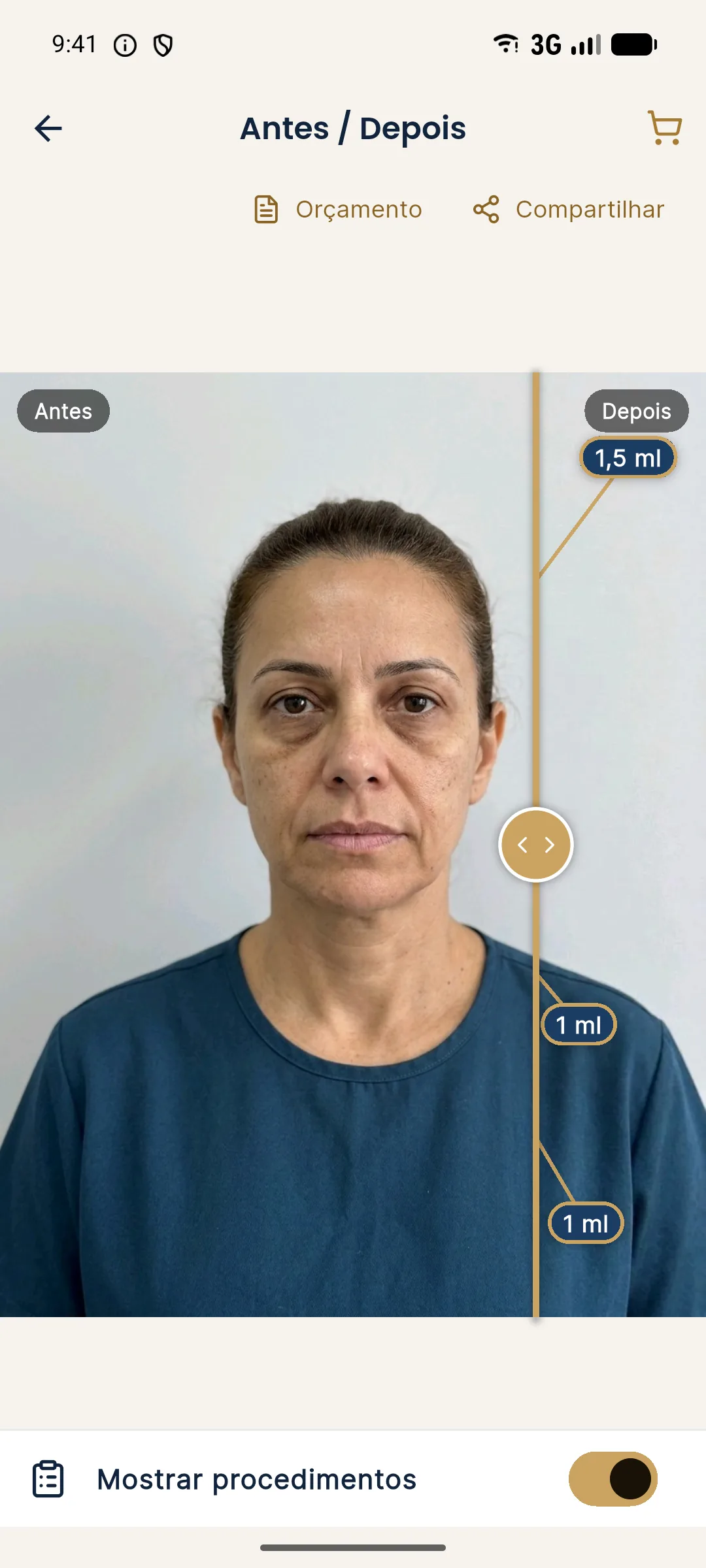
The app can illustrate modest support in the cheekbone or jaw, but it does not show improvement in texture, skin firmness or laxity. In young people, this limitation is central, and the image can create an expectation the procedure does not meet. Use the projection with caution, making clear what it represents.
Frequently asked questions
Why can a young person have a sagging face?
There can be genetic factors, weight loss, intense sun exposure, smoking, habits such as sleeping little, connective tissue disorders and hormonal conditions. The cause needs to be investigated.
Does filler fix laxity in young people?
Not always. If the cause is volume loss, it may help. If it is skin laxity or loss of support, other approaches may be more appropriate, at the discretion of the qualified professional.
Is a biostimulator appropriate for a young person with laxity?
It may be considered in selected cases after an assessment, always with caution and without promising results. The indication depends on the degree of laxity and the age.
When should I refer to a physician?
When the laxity is sudden, out of proportion to age or accompanied by other clinical signs. In these cases, aesthetics should not be the first step.
Harmy images are illustrative simulations generated by AI from the patient's photo to support the conversation between practitioner and patient. They are not a promise of results. Indication, technique, product and volume are solely the decision of the licensed practitioner. This content is for information only and does not replace a clinical assessment.