
How to mark the mouth corner in Harmy and what to expect

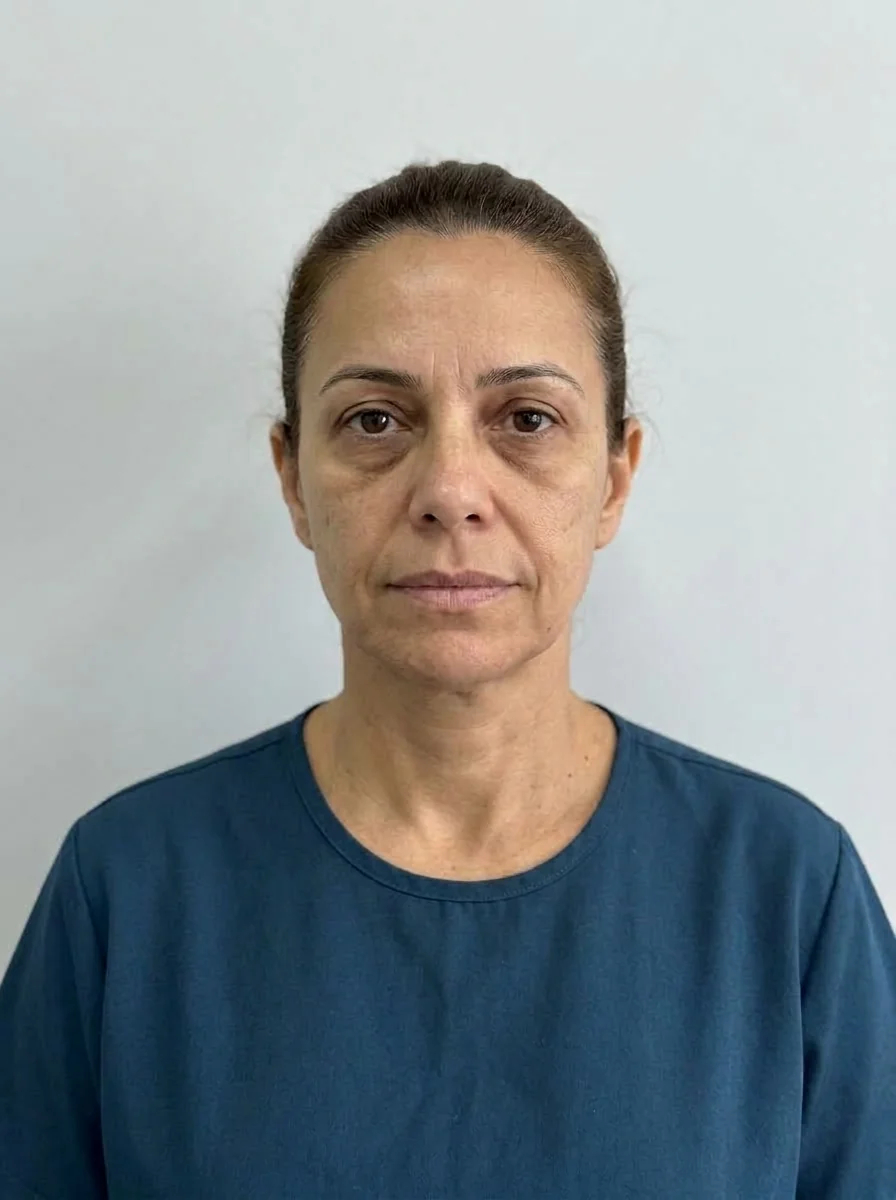 BeforeSimulation
The Mouth Corner point in Harmy represents the area where the lips meet the side of the face, where concerns such as downturned corners, a sad expression and marionette lines tend to appear. This page shows how to mark the point, set the volume and read the projection, always as an illustrative simulation.
When should I mark this area?
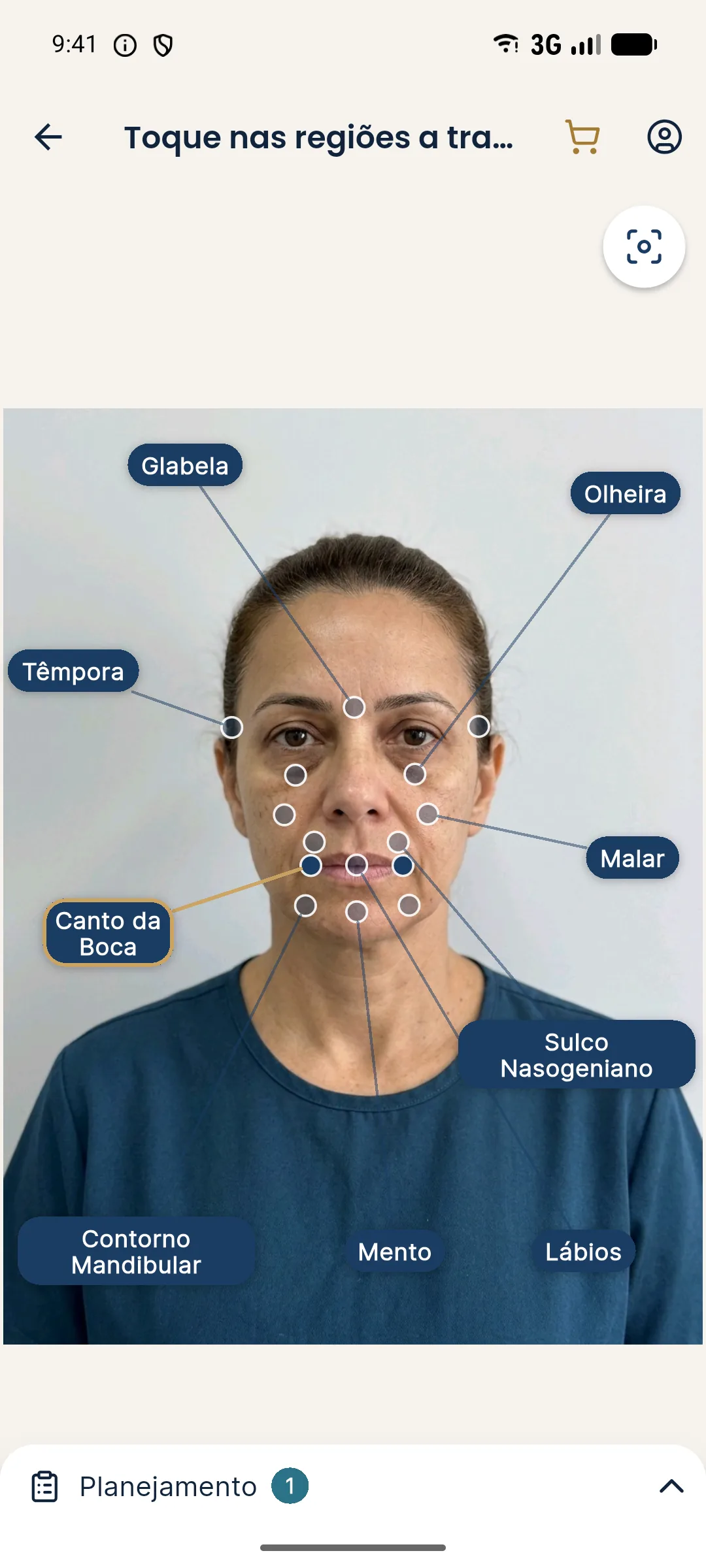
Mark it when the plan includes the mouth corner area, based on clinical assessment. The point is one of nine in the marking: Glabella, Temple, Tear Trough, Cheekbone, Nasolabial Fold, Mouth Corner, Lips, Chin and Jawline. For the clinical content on the area, see the page on mouth corners and the procedure for mouth corner filler.
Step by step
- With the front-facing photo approved, open the Tap the areas to treat screen.
- Tap the Mouth Corner point or label. The point fills in and the label gets a gold border.
- If it is hard to hit the point, zoom the photo in with two fingers.
- Open the Plan and check the ml. The starting value is 1 ml.
- Choose the intensity (Subtle, Moderate or Pronounced, default Moderate).
- Tap Create projection and then turn on Show procedures.
What to expect from the projection
The projection shows a subtle, localized change, keeping expression, skin, background and lighting. Because the area is small, the effect shows more with zoom and with the gold line moving slowly. Use the photo with the mouth closed and a neutral expression, because a smile changes the corners and distorts the reading.
Safety and talking to the patient
Any hyaluronic acid procedure requires a qualified professional, according to the rules of their professional council in Brazil, a prior assessment and hyaluronidase on hand. The main complications include swelling, bruising and, more rarely, vascular compromise. The projection does not replace that conversation.
Common errors
| Situation | How to fix |
|---|---|
| Marked the fold instead of the corner | Unmark and tap the right label |
| Photo with a smile | Retake the photo with a neutral expression |
| Projection almost imperceptible | Use zoom and the magnifier; avoid inflating the ml |
| Forgetting it is the total for both sides | Add up both sides before typing |
To read this together with the rest of the face, see combining several areas in one Harmy projection.
When to combine with other areas
Mouth corners are rarely treated alone. They relate to the nasolabial fold, the lips and the chin, and assessing the whole usually weighs more than reading a single point. In the projection, mark only the areas in the plan and check that the final image stays proportional, without leaving the mouth looking overdone.
If the plan includes more than one of these areas, help the patient see the order of priority and the reason for each choice. Using Show procedures helps link each ml to the part of the face it refers to, and the presentation mode magnifier enlarges the area for a clearer conversation.
Frequently asked questions
How do I mark the mouth corner in Harmy?
On the marking screen, tap the point or the Mouth Corner label. The area goes to the Plan, where you set the ml and the intensity.
Is the mouth corner ml for one side or both?
Both. The ml entered is the total, and the projection splits it between the two corners. The starting value is 1 ml.
Does the Harmy projection show marionette lines?
The projection shows a subtle change in the marked area. Marionette lines are a clinical concern that the app illustrates in a limited way, without promising results.
Is the mouth corner a high-risk area?
Any hyaluronic acid injection requires anatomical knowledge, an assessment and hyaluronidase on hand. The area is close to facial vessels and calls for care.