
Deep Nasolabial Fold: Filler or PDO Threads?

Quick facts
- Question
- Deep fold with laxity, filler or threads
- Reasoning
- Filler adds volume, threads reposition and stimulate, laxity decides
- Usual range
- Often combined, in stages and at the professional's discretion
- Who decides
- The licensed professional, after assessing the degree of laxity
A deep fold rarely comes alone: it usually arrives with a sagging cheek, a less defined facial contour and less firm skin. Hence the classic question, from patient and professional alike: "is filler enough, or do I need threads?". This page helps separate what is volume from what is laxity, and build an honest plan in which each resource comes in for the right reason.
What is the difference in function between filler and threads?
Hyaluronic acid adds volume and fills the crease or the space that supports it. Its role is to restore what was lost. Thread lifts, especially PDO, work differently: depending on the type, they can reposition tissue and stimulate collagen production around the thread, with a more gradual effect.
In plain language for the patient: filler "fills the hole", threads "hold the structure". When there is only a hole, filler is enough. When the structure has descended, filling the crease may just weigh down the midface.
How to decide? An assessment outline
| Finding | Usually points to | Note |
|---|---|---|
| Marked crease, firm cheek, good skin | Fold filler, in conservative volume | The simplest case |
| Flattened cheek, fold that improves when lifted | Cheekbone support, with the fold afterward | See fold or cheekbone |
| Mild to moderate laxity, thin skin | Threads and biostimulator may enter the plan | At the professional's discretion |
| Marked laxity, excess skin | Filler and threads tend to be insufficient | Discuss other options frankly |
| Fat loss from weight loss | Restore overall volume before the crease | Reassess in stages |
Assess standing and sitting, at rest and smiling, from the front and in three-quarter view. Laxity is gauged by how much the tissue returns when you lift it and by the relationship between the cheek and the jawline.
How is the combination usually planned?
There is no universal order. What is often seen in practice, at each practice's discretion, is thinking in layers of objective:
- Support: recover midface support (volume in the cheekbone, threads or biostimulator).
- Refinement: treat the residual crease with a small volume of hyaluronic acid.
- Maintenance: track the durability of each resource, which differs.
In many plans, the interval between stages lets the swelling and the collagen response show up before the next step is decided. This reduces the risk of overdoing it, especially when the patient arrives expecting to "erase" the crease.
What to expect from each?
The most important difference is time. Filler shows its effect quickly, albeit under the initial swelling. Threads have a mild immediate mechanical effect and a progressive collagen effect over weeks. The collagen biostimulator also works gradually. So someone who wants to "fix it for a party" needs to hear that the support plan is not quick.
The risks differ too. With fold filler, the central concern is vascular, covered in risks of the nasolabial fold. With threads, the points of attention include pain, skin irregularity, thread extrusion or visibility, infection and asymmetry. In both, the patient needs specific consent.
How to lead the expectations conversation?
A deep fold is a complaint that comes with emotional weight: the patient wants it "gone" and compares themselves with filtered photos. An honest conversation has three points: the fold is a natural crease, the goal is to soften and not to eliminate, and the plan may need more than one resource.
Using the projection as support
In Harmy, the projection helps show what "soften" means. Mark the Nasolabial Fold area, choose the volume in ml and the intensity, and generate the projection. Because the app works with volume and does not simulate threads, it does not show the lifting effect, and the patient should be told so. What it does show is the change from a volume-based plan, always as an illustrative simulation, not a promise of results.
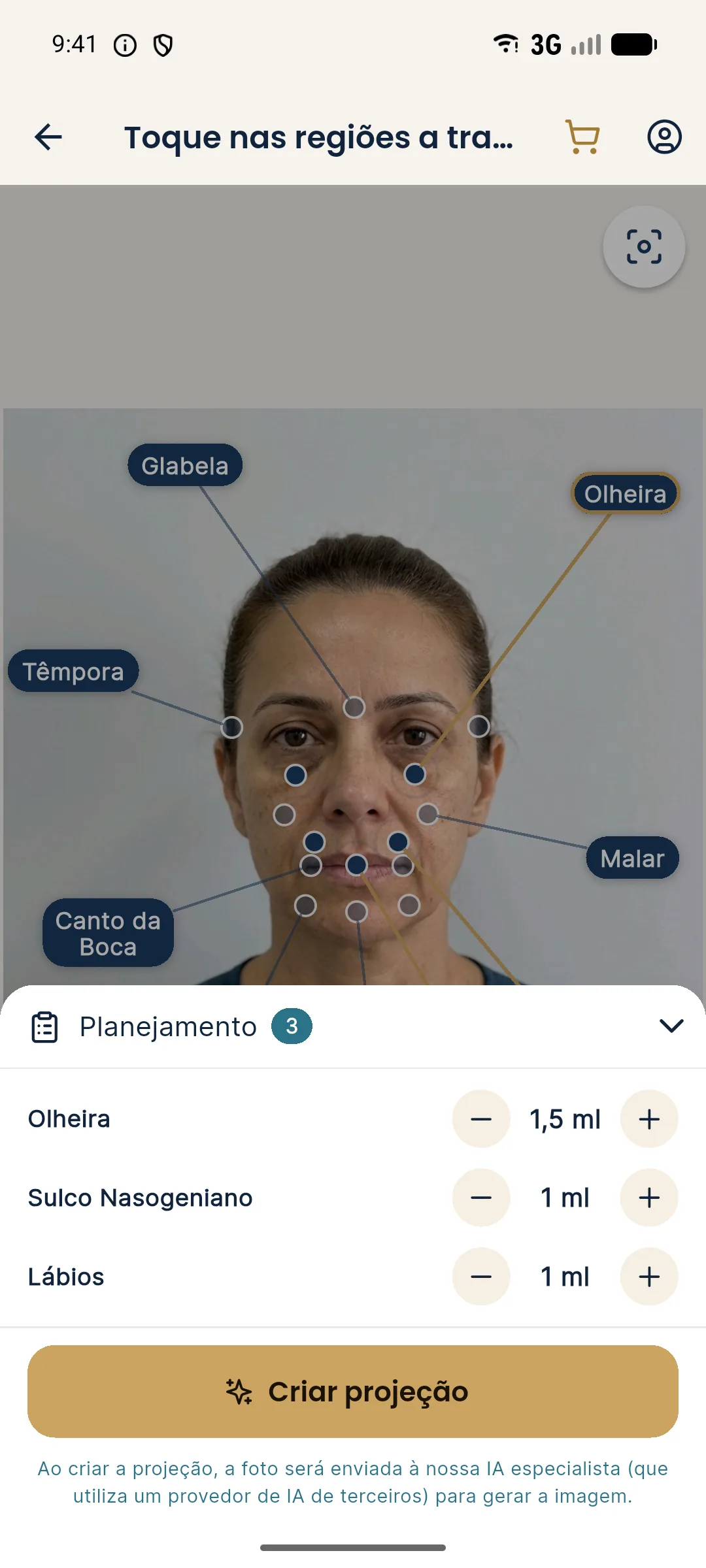
If the plan is staged, save one projection per stage: the first with the cheekbone only, the second with the fold. That way the patient follows the logic of the plan, and Harmy's history keeps the sessions per patient.
In short: filler solves volume, threads help with support, and a deep fold with laxity usually calls for both, in stages and with realistic expectations. Choose by the cause, not by fashion.
Frequently asked questions
Is a deep fold solved with filler or PDO threads?
It depends on what causes the depth. If there is volume loss and mild laxity, filler is usually enough. If there is moderate laxity, threads can help with support, often in combination.
Do PDO threads remove smile lines?
Threads can soften the crease by providing support and stimulating collagen, but they do not usually eliminate it. The result is individual and should be presented without promises.
Can I have filler and threads on the same day?
The combination is usually done in stages, and the order and interval are decided by the professional. The patient should know the plan may involve more than one session.
Which lasts longer, filler or threads?
Duration varies with the product, the type of thread and the patient's metabolism. Filler tends to give an immediate effect, while threads have a progressive one.
Harmy images are illustrative simulations generated by AI from the patient's photo to support the conversation between practitioner and patient. They are not a promise of results. Indication, technique, product and volume are solely the decision of the licensed practitioner. This content is for information only and does not replace a clinical assessment.