
Does Cheek Filler Hurt? Area and Anesthesia

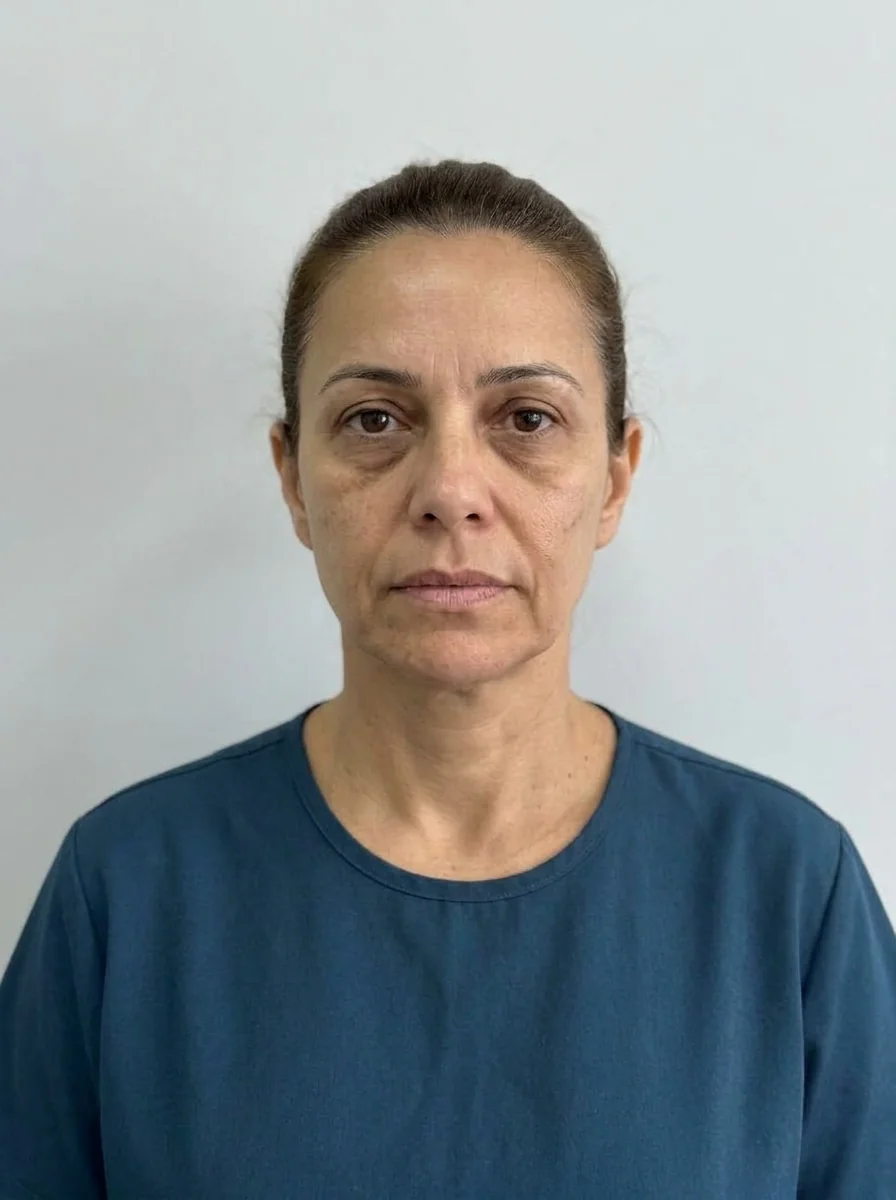 BeforeSimulation
- Highlighted area
Quick facts
- Question
- Does malar filler hurt
- Usual sensation
- Pressure and discomfort, usually tolerable
- Pain afterward
- Tenderness and heaviness for a few days
- Warning sign
- Intense, disproportionate pain, pallor or a patch on the skin
The short answer: malar filler is usually described as pressure and discomfort, not sharp pain, and it is done with topical anesthetic and, at the professional's discretion, other comfort measures. Pain is an individual experience and must not be promised away. What matters most for the professional is telling the expected discomfort apart from a warning sign.
What the patient usually feels
The malar area supports the projection of the midface, over the zygomatic bone. The skin there is thicker than the eyelids and less sensitive than the lips. Common reports:
- deep pressure when the product is deposited;
- localized discomfort, with pricking;
- a feeling of "heaviness" or tension right afterward;
- tenderness when touching the area or lying on that side.
Comparison with other areas is subjective. Many patients find the malar area more tolerable than the lips, but that is not a rule.
Anesthesia and comfort
Topical anesthetic is the most common measure and is usually applied a few minutes beforehand. Other measures depend on the professional, the product and the assessment. What is worth teaching the patient:
- Report allergies, especially to anesthetics (topical anesthetic allergy).
- Say if it hurts, so the professional can pause or adjust.
- Arrive rested: poor sleep and stress amplify pain.
- Do not take medication on your own beforehand, since some increase bleeding.
For very anxious patients, the conversation in anxiety before facial harmonization can help.
During and after: what to expect
| Moment | What usually happens | When to worry |
|---|---|---|
| During | Pressure and discomfort, tolerated with anesthesia | Sudden, intense pain that does not ease |
| First hours | Tenderness, heaviness and mild swelling | Pain that grows instead of easing |
| Days 1 to 3 | Tenderness to the touch and when lying on that side | Intense pain, pale or blotchy skin |
| Days 4 to 7 | Gradual improvement; bruising may appear | Growing asymmetry or local warmth |
| Week 2 | Result settling in | Persistent pain or a painful lump |
When pain is not common
The malar area has significant vascularization and nearby nerves, such as the infraorbital nerve. Serious complications are rare, but they exist, including vascular occlusion, an emergency that demands a fast response. Warning signs:
- intense, disproportionate pain that starts during or right after the injection;
- pallor, a purplish patch or a "lacy" look to the skin;
- pain or numbness that spreads, or a significant change in sensation;
- swelling that grows fast on one side only;
- visual changes.
Hyaluronidase must be available when hyaluronic acid is used, and the general approach is in emergency after facial harmonization.
What about bruising and swelling?
A bruise is possible and usually hurts little, but leaves the area tender. Swelling shows up in the first days and can look bigger than the final result. Supportive measures are in how to reduce swelling after filler and how to hide bruising.
Pain, medications and blood thinners
What to take for pain should be agreed with the professional and, when the patient takes medication regularly, with the responsible physician. Some painkillers and anti-inflammatories increase the risk of bruising. See aspirin and bruising with filler. The general rule is: ask before medicating, without stopping anything on your own.
Persistent or localized pain
If pain lasts beyond the first week, or comes with warmth, redness, hardening or discharge, the next step is an assessment. It could be inflammation, infection, a lump or compression of a neighboring structure. The general topic of "intense pain" is in intense pain after filler, and for the context of lumps, lumps months after filler.
How to use Harmy
Harmy helps explain what will be done, which reduces anxiety. The Cheekbone point accepts 0.5 to 5 ml in steps of 0.5 ml; in a bilateral area, the ml is the total, split between the two sides. The projection shows the change in midface projection in a subtle and realistic way.
Summary
For the care that follows, see malar filler and sleeping, malar filler and sun and the procedure in malar filler.
Frequently asked questions
Does malar filler hurt?
The sensation is usually pressure and discomfort, with an intensity that varies between patients. Topical anesthetic is generally used, and some professionals add other comfort measures. Pain is subjective and cannot be promised away.
Does it hurt more than lip filler?
It tends to be less uncomfortable, since the area is less sensitive than the lips, but it varies a lot between patients.
How long does the malar area stay sore?
Tenderness to the touch and a feeling of heaviness usually last a few days. Strong or worsening pain should be assessed by the professional.
How can I relieve pain after malar filler?
What to use is the professional's decision. In general, patients are advised to avoid pressure on the area, heat and exertion, and to ask before taking any medication.
Harmy images are illustrative simulations generated by AI from the patient's photo to support the conversation between practitioner and patient. They are not a promise of results. Indication, technique, product and volume are solely the decision of the licensed practitioner. This content is for information only and does not replace a clinical assessment.