
Facial harmonization: how many sessions it takes

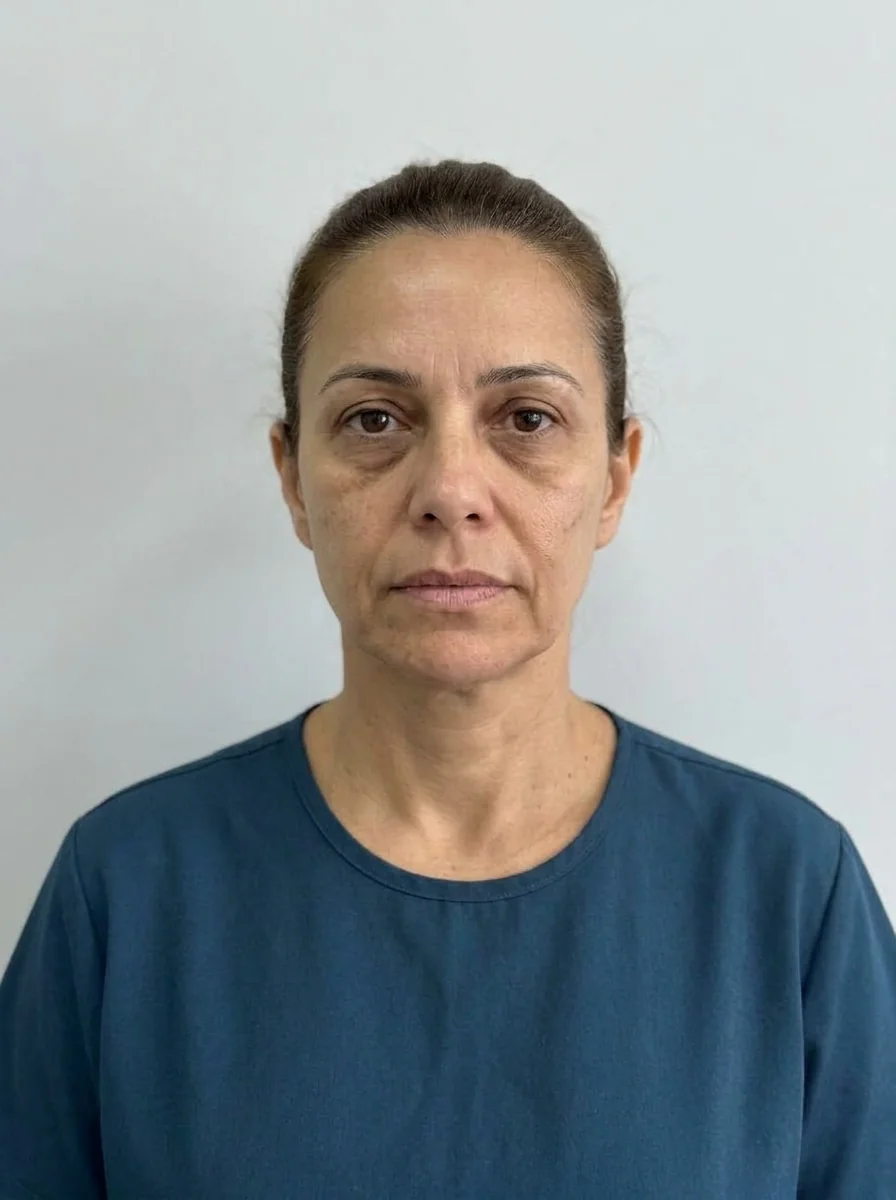 BeforeSimulation
Quick facts
- Question
- How many sessions does harmonization take
- Short answer
- It depends on the plan; one to three stages is common
- Factors
- Concern, resource, volume, response and patient preference
- Who decides
- The professional, after assessment
"How many sessions until I'm done?" is a question that mixes two requests: a timeline and a price. The honest answer avoids both as a promise: the number of sessions depends on the plan, and the plan depends on the concern, the patient's response and what they consider enough.
The guidance is general, at the discretion of the qualified professional after assessment.
What does the number of sessions depend on?
| Factor | How it influences |
|---|---|
| Concern and extent of the plan | A few areas may fit in one session; broad plans tend to be split |
| Resource chosen | Filler shows a quick effect; a biostimulator usually calls for more than one session, spaced out |
| Area and risk | Areas with more swelling or vascular risk call for caution and space between sessions |
| Patient's response | Someone who swelled a lot or settled quickly may need a different plan |
| Expectation and gradualness | Patients who prefer to go slowly tend to choose more stages |
| Logistics | Living far away, schedule and budget can play a role |
In short, there is no magic number. There is a plan that adapts.
Common patterns, without becoming a rule
What is seen in practice, not to be taken as a protocol:
- One session for small plans: one or two areas, or maintenance of something already known.
- Two sessions, with a follow-up between them, for medium plans: the first treats the priority, the second adjusts or adds.
- Three or more stages for broad plans, with several areas or more than one resource, at intervals that let the face settle.
For the biostimulator, it is common to hear about more than one session; see biostimulator: how many sessions. For the logic of choosing between concentrating and splitting, see all at once or in stages, and for designing the intervals, interval between sessions in the HOF plan.
Why the follow-up counts as part of the plan
Many patients understand "session" as "application day", but the follow-up is just as much part of the treatment. In it you:
- assess the result with the swelling resolved;
- compare with the before photos, in the same standard;
- decide on a touch-up;
- adjust the plan for the next stages.
If the follow-up is not considered part of the agreement, the patient may think they are being charged "per visit". Make clear in the quote what is included. See explaining what a touch-up is to the patient and explaining why more than one session is needed.
How to present the plan to the patient
Presenting the plan is where the number of sessions becomes expectation. A few guidelines:
- Show the logic, not just the number: "first the structure, then the details".
- Give time ranges, not exact dates.
- Present the estimated total investment and how it is spread across the stages, making clear it is an estimate. See how to explain the quote by area.
- Leave room for "no": the patient can stop at any stage.
Line of a staged plan
Harmy in session planning
Harmy lets you organize the plan in stages visually. You can create a projection with only the priority (for example, the cheekbone) and another with the priority plus the next areas, showing the patient how the plan evolves. In each projection, you choose the volume (from 0.5 to 5 ml per area) and the intensity. The app's PDF quote calculates the price per ml for each area, with informational installments and validity. The projection is illustrative and does not predict the real result.
Frequently asked questions
How many facial harmonization sessions are needed?
There is no fixed number. Many plans have one to three stages, but it depends on the concern, the resources used and the patient's response. The number is set after assessment.
Can facial harmonization be done in a single session?
For a small plan, yes. For larger plans, splitting into stages is usually safer and more natural. The decision is the professional's.
What is the interval between sessions?
It depends on the resource and the area. Generally, some time is left for the swelling to go down and to assess the result before continuing, and the professional sets the interval.
Do I need a follow-up after the session?
Generally, yes. The follow-up lets you assess the result, decide on a touch-up and adjust the plan.
Harmy images are illustrative simulations generated by AI from the patient's photo to support the conversation between practitioner and patient. They are not a promise of results. Indication, technique, product and volume are solely the decision of the licensed practitioner. This content is for information only and does not replace a clinical assessment.