
How many ml of filler does a full face need?

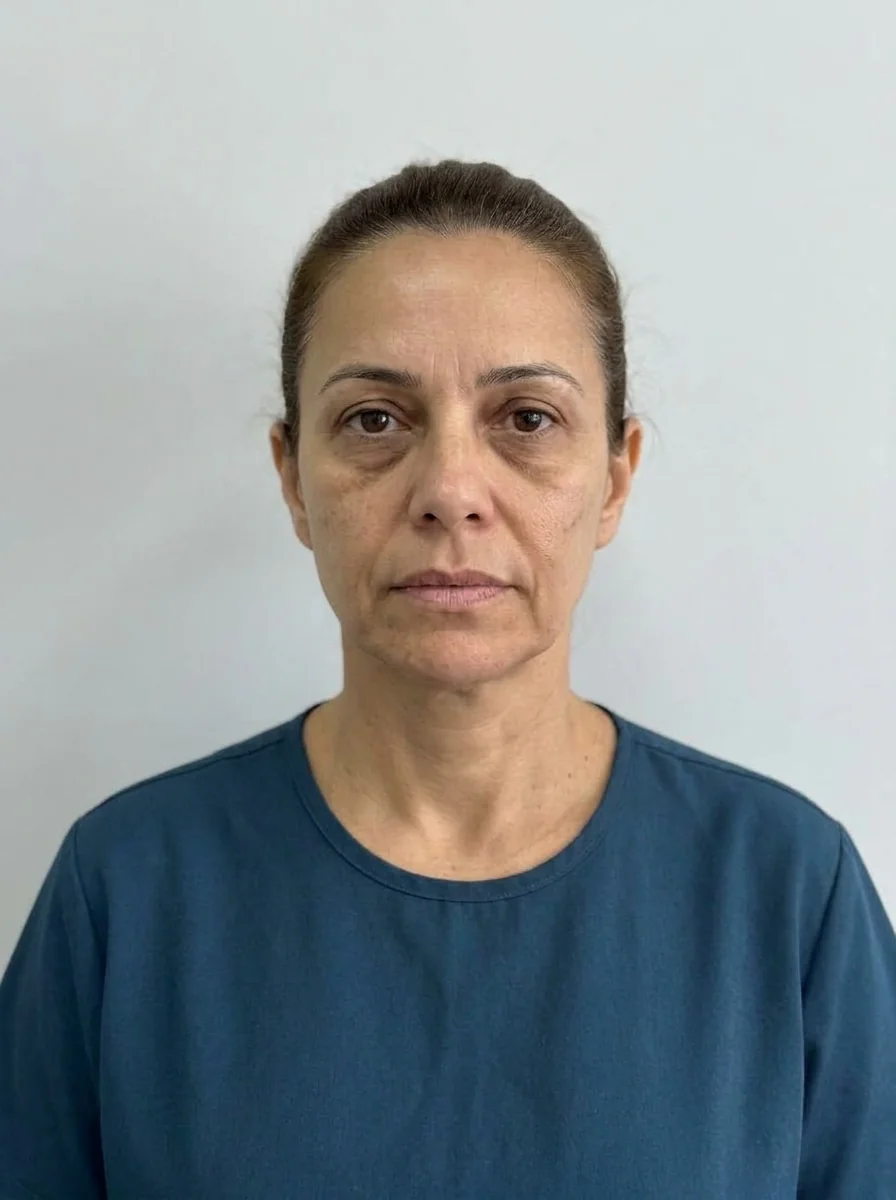 BeforeSimulation
Quick facts
- Question
- How many ml for the whole face
- Short answer
- There is no fixed number, the total is the sum of decisions per area
- Warning
- A high total in one session raises the risk of excess
- Who decides
- Qualified professional, after assessment
The short answer: there is no total number of ml for the whole face. What exists is the sum of what each area needs, and that total changes from person to person. People who ask "how many ml for the whole face?" usually expect a package answer, and the best approach is to turn the question into another one: "what do you want to change, in what order and with what priority?".
This page is for you to explain why the total is not an off-the-shelf number and how to build the plan area by area.
Why there is no number for the whole face
The face is not a set of equal parts. The midface may lose volume while the lower third calls for definition; a young patient may want only contour, and another, support. Adding up areas without criteria leads to a high total and a face that loses its natural look.
What decides the total:
- The main concern. Plans that start from a clear concern tend to be leaner.
- Age and loss of support. Faces with more bone and fat resorption call for more layers of reasoning, not necessarily more ml.
- Skin thickness and quality. Thin skin does not hide excess.
- The product. Gels with different profiles deliver different effects at different volumes.
- Expectation. Someone who wants to change everything at once calls for a conversation about limits.
Priority before volume
A full-face plan usually has one area that supports the others. In general, you start with what gives structure (cheekbone, chin, jaw) and leave what refines (lips, fold, under-eye area) for later. This order avoids filling the fold before supporting the cheek, for example.
| Role in the plan | Common areas | Reasoning |
|---|---|---|
| Structure | Cheekbone, chin, jaw | Define the contour and the support of the midface and lower face |
| Refinement | Fold, lips, under-eye area | Adjust what the structure does not solve |
| Maintenance | Any area already treated | Small touch-ups, when the effect fades |
To understand how the areas fit together, see total volume in full face and total volume per session: ranges.
One session or several?
Splitting the plan has practical advantages. The swelling hides the final result, so assessing everything on the same day is guesswork. Injecting in stages lets you adjust the second session to what the first one actually delivered, and reduces the risk of stacking volume the face cannot support.
On the other hand, a patient who lives far away or has a tight schedule may ask for everything at once. In that case, the honest conversation is that "faster" is not "better", and that the volume per session has to respect safety. The reasoning for splitting is in when to split the volume into sessions.
Simulating the whole set in Harmy
Harmy lets you mark several areas on the same photo, each with its own ml (from 0.5 to 5 ml, in steps of 0.5) and its own intensity (Subtle, Moderate or Pronounced). The "Full harmonization" shortcut brings a starting point: cheekbone 2 ml, jaw 2 ml, chin 1.5 ml, lips 1 ml and fold 1 ml, all in Moderate, and tear trough 1 ml in Subtle. It is a simulation set to start the conversation, not a clinical recommendation.
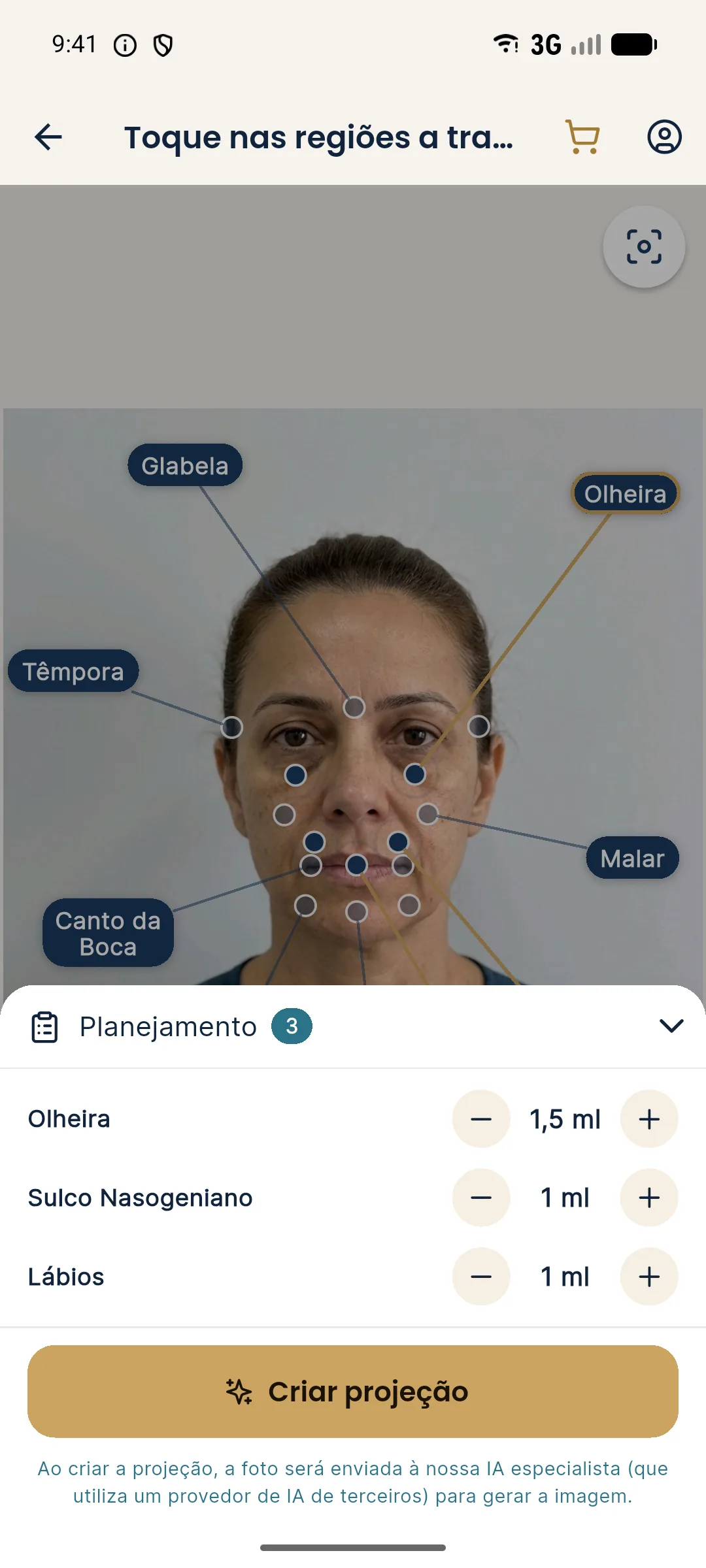
Marking few areas usually produces projections that are more faithful to what the patient sees: see mark few areas, get better projections.
Signs that the total got too big
A face that accumulates product from several sessions without reassessment can end up heavy or artificial, a topic covered in accumulated volume over the years.
Risks
Any hyaluronic acid injection can cause bruising, swelling, asymmetry, nodules and, rarely, vascular occlusion. The more areas and the more volume in the same session, the greater the cumulative exposure. Hyaluronidase must always be available.
Summary
- There is no fixed total: the total is the sum of decisions per area.
- Structure first, refinement after.
- Splitting into sessions usually gives a more natural and safer result.
- The simulation helps prioritize but does not prescribe volume.
- Amounts and technique are up to the qualified professional, according to the rules of their professional council in Brazil.
Frequently asked questions
How many ml of filler are needed for the whole face?
There is no fixed total. The volume is the sum of what each area needs, and it varies with age, anatomy, the product and what the patient wants to change, always at the professional's discretion.
Can the whole face be done in one session?
Some professionals do it, others prefer to split it. Splitting lets you assess the result after the swelling and avoids stacking more volume than the face can support.
Is there a limit of ml per session?
There is no single, universal rule. The practical limit is what the face, the skin and the patient's safety can handle, and that is assessed case by case.
Does Harmy add up the ml for the whole face?
The projection uses the areas you mark, each with its own ml and intensity, and the Full harmonization shortcut brings a starting set that you adjust. The app does not say how much to inject.
Harmy images are illustrative simulations generated by AI from the patient's photo to support the conversation between practitioner and patient. They are not a promise of results. Indication, technique, product and volume are solely the decision of the licensed practitioner. This content is for information only and does not replace a clinical assessment.