
E-cigarettes and facial harmonization

Quick facts
- Question
- Do e-cigarettes get in the way of facial harmonization
- Key point
- Nicotine narrows vessels and impairs healing, regardless of the format
- Usual approach
- Inform, advise cutting back or pausing, and record the use
- Who decides
- The professional, after an individual assessment
The e-cigarette has come into the HOF office as a new kind of patient: young, calling themselves a "non-smoker", and vaping every day. The question "does this get in the way?" is legitimate, and the short answer is: nicotine does, regardless of the format. This page explains why, what changes in risk, and how to talk about it without a lecture and without pretending it does not matter.
What does nicotine do to tissues?
Nicotine is a vasoconstrictor: it narrows small vessels and reduces blood flow in the skin. In people who use it frequently, tissue perfusion may be reduced, which affects oxygenation, healing, and the response to injury. There are also effects on collagen production and on cells such as fibroblasts, which support the skin, and on the overall quality of collagen.
Electronic devices vary: some deliver nicotine at high concentrations, others none; the composition of the liquids is diverse and not always known. The professional does not need to judge, but does need to ask: do you use nicotine? How often? For how long?
What changes in procedure risk?
| Aspect | How nicotine may interfere |
|---|---|
| Healing of entry points | Slower, with risk of scabs and marks |
| Bruising | The link is not direct, but tissue fragility may play a role |
| Skin perfusion | Reduced, which weighs in areas of vascular risk |
| Skin quality | Duller skin, more wrinkles, and less radiance over time |
| Response to biostimulators | The collagen stimulus may be less efficient |
| Infection | Local defenses may be reduced |
| Perceived result | "Tired" skin may limit the improvement in quality |
In procedures with vascular risk, such as the nasolabial fold and the lips, the professional may consider the patient's perfusion as one more factor in the decision. The topic of necrosis and vascular occlusion is addressed in risks of the nasolabial fold. It cannot be stated that vaping causes necrosis, but nicotine is a factor for poorer perfusion, and that enters the weighing.
How to advise without lecturing
The most effective approach is usually appealing to the patient's interest in the result, not to morality. A patient who comes to HOF wants a beautiful, lasting result; nicotine works against that.
This keeps the patient from hiding the use and gives them an achievable goal. If they cannot pause, record it and reconsider the plan.
Possible service approaches
Each service sets its own policy, at the discretion of the qualified professional, following the rules of their professional council in Brazil. Examples of approaches seen in practice:
- Recording the use in the medical history, with frequency and duration.
- Advising a reduction or pause before and after the procedure, without promising a magic interval.
- Adjusting the plan: smaller volumes, stages, and attention to areas of vascular risk.
- Explaining the limit of the result: the skin of people who use nicotine tends to be of lower quality.
- Postponing when other risk factors add up (for example, previous poor healing).
- Offering support: referring them to a quit program, if the patient wants.
For the classic smoking angle, the reasoning is parallel. The main message does not change: nicotine and good healing do not mix.
What if the patient is young and wants to "prevent"?
Some people seek preventive HOF and vape daily. The conversation can include that a skin routine and nicotine control have an effect on preventing aging, perhaps more than the procedure. That does not lessen the value of the treatment, but it aligns expectations and helps with prioritizing.
It is also worth remembering that vaping can come with other habits (alcohol, low hydration), and a complete medical history helps see the whole picture. For general care before injection, see alcohol after facial harmonization and aspirin before filler.
Harmy in the plan
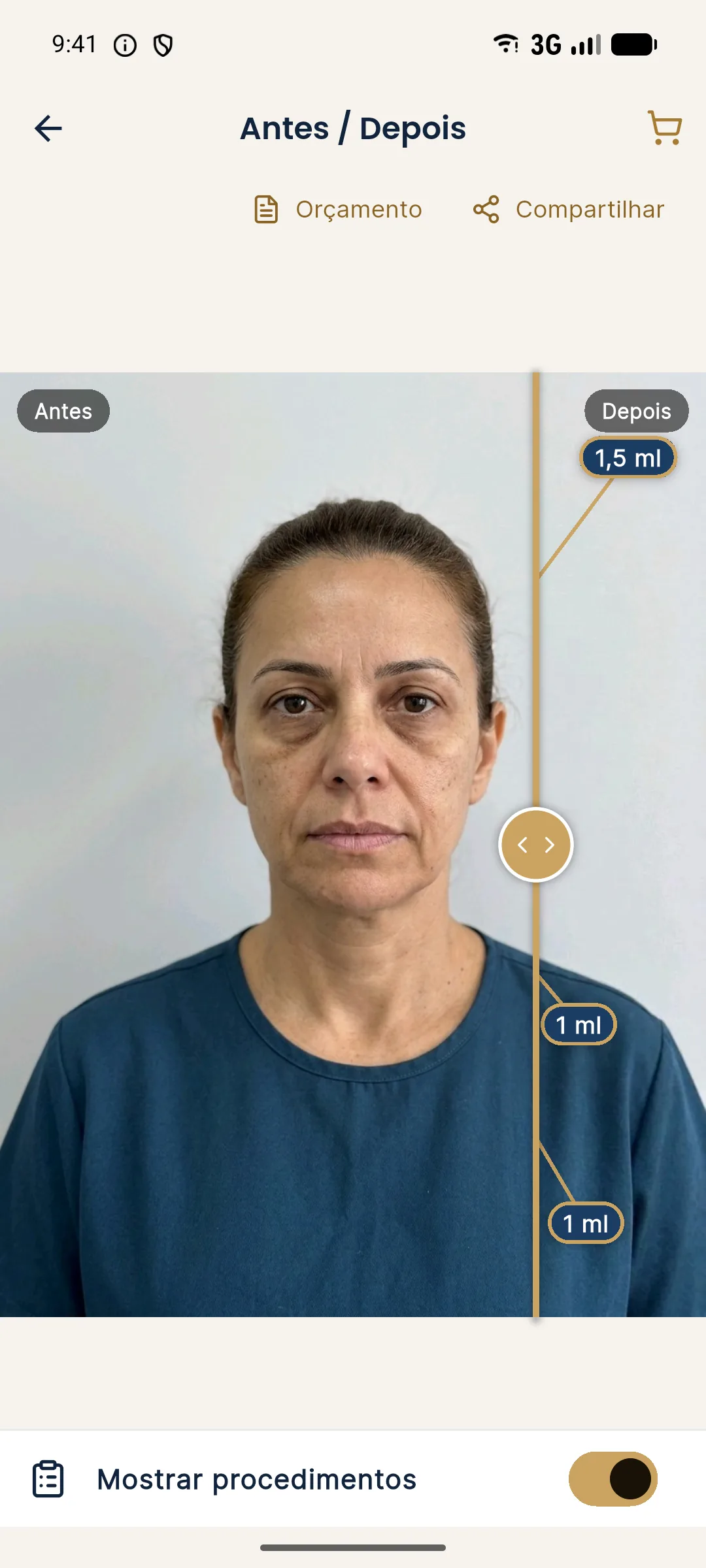
Harmy helps turn the conversation into something concrete: mark the area, set the volume in ml, and show the projection. For a patient who uses nicotine, the plan can be in smaller stages, and the projection helps explain why. Remember it is an illustrative simulation, not a promise of results, and that the real quality of the skin depends on habits the app does not measure.
Frequently asked questions
Can someone who vapes have facial harmonization?
In general yes, but nicotine narrows the vessels and worsens healing, so the professional needs to know about the use. Many advise cutting back or pausing before and after, at each service's discretion.
Is vaping less harmful than smoking for the procedure?
You cannot assume that. Nicotine is present in many vape products and acts on vessels in a similar way. Other components can also irritate tissues and airways.
Do e-cigarettes increase the risk of necrosis?
Nicotine is a known risk factor for poor perfusion and healing problems. In procedures with vascular risk, the professional takes this into account in the decision.
How long should I stop before the procedure?
There is no single interval that can be cited. Some services ask for days to weeks without nicotine before and after, and the final guidance comes from the professional.
Harmy images are illustrative simulations generated by AI from the patient's photo to support the conversation between practitioner and patient. They are not a promise of results. Indication, technique, product and volume are solely the decision of the licensed practitioner. This content is for information only and does not replace a clinical assessment.