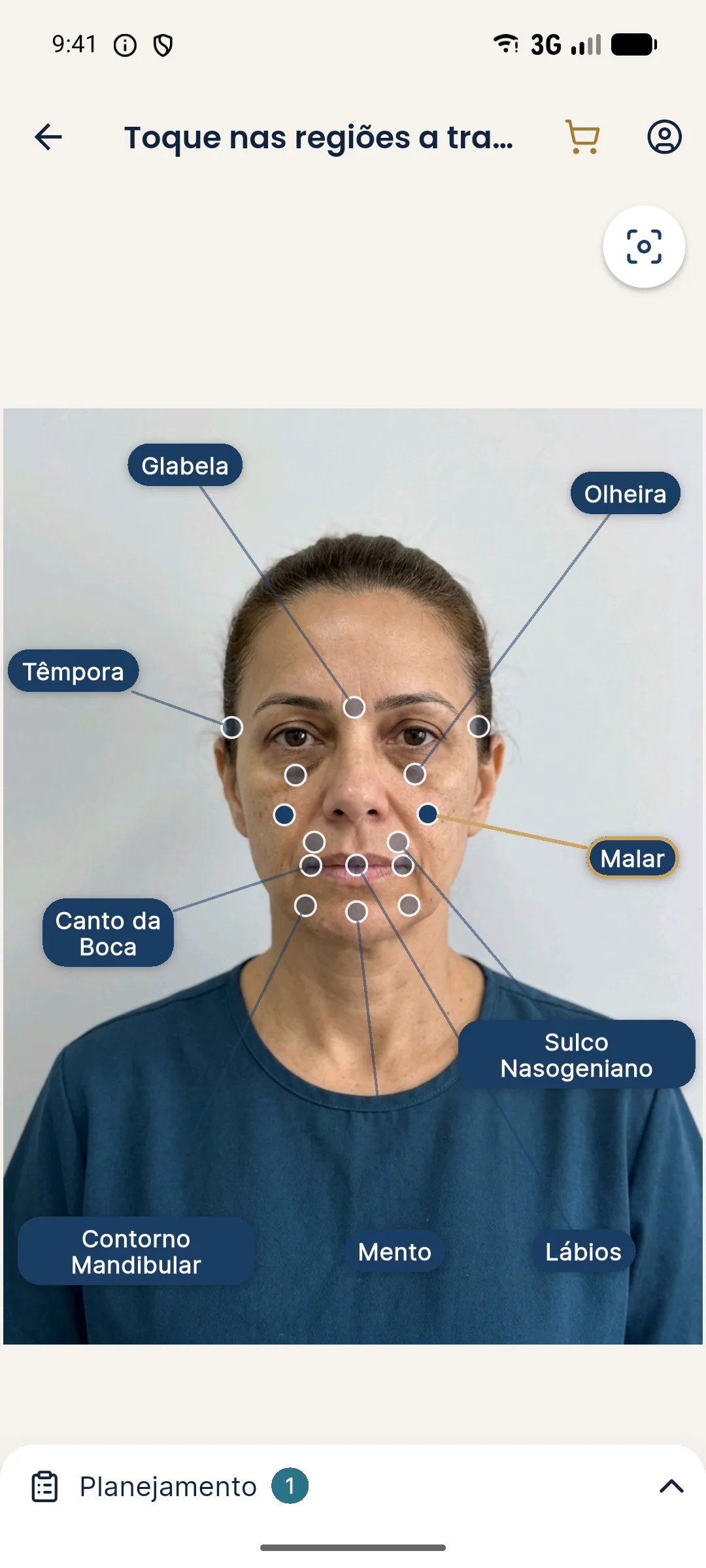
Cheek filler has immediate appeal: the cheekbone area defines light, projection and how old a face reads. That is why expectations are high. But the anatomy is complex, each patient's face has a different bone structure, and the area is close to risk zones such as the orbit. A specific consent form has to say this clearly.
The template below is generic for cheekbone filler with hyaluronic acid, with no technique, volume or brand. See the context in cheek filler and on the area page, cheekbone.
When should you use this template?
After the assessment by facial thirds and planning, before the injection. If the cheekbone is treated along with other areas, prefer the umbrella consent and record each area.
How do you adapt it?
Record the goal: support, projection, balance between sides, whatever was agreed.
State the area-specific risks in clear language.
Indicate whether hyaluronidase is available and describe the emergency plan.
Agree on follow-up and the touch-up policy.
Ask for a legal review and check your professional board's rules.
What must the form address?
Item
Reason
Area, material and goal
Defines what was consented to
Common risks
Swelling, bruising, asymmetry
Rare and serious risks
Vascular complication, necrosis, visual changes
Irregularities and lumps
May appear later
Temporary effect
Maintenance and costs
Limits of the anatomy
Filler does not replace bone
Alternatives
Free consent
Cheek filler informed consent form template
How do you reinforce the patient's understanding?
Ask them to repeat the warning signs in their own words and give them the emergency contact in writing. Record the date of the conversation in the patient chart. Vascular occlusion deserves an explanation without alarmism, and the post-procedure instructions close the loop.
Frequently asked questions
Should the cheek filler consent talk about the risk to vision?
Since the area has vessels that connect with the circulation of the orbit, it is prudent for the form to address the rare risk of vascular complication, including visual changes, and the warning signs.
Can I use this form for tear trough filler?
It is not ideal. The tear trough area has its own risks and characteristics. Use a specific form or a template that lists each area treated.
Do I need to record the volume in the form?
Volume and technique are better kept in the patient chart and lot record. In the form, record the area, the material and the goal, with no commitment to an amount.