
Large Mouth: What Facial Harmonization Can Balance
- Nerve
Quick facts
- Concern
- Mouth seen as too large or too wide for the face
- Reference measure
- Mouth width compared with the distance between the pupils and the facial fifths
- Distinction
- A wide mouth, full lips and a broad smile are different things
- Limit
- Mouth width is anatomical and cannot be reduced with injectables
"Doctor, my mouth is big." The sentence mixes at least three things: a wide mouth (corner to corner), full lips (thick) and a smile that opens too much. Harmonization works very differently on each one. So the first task is to separate what the patient calls "big."
This page brings together the assessment of mouth proportion and its limits, so you can lead the conversation without promising what the technique does not deliver. The mouth in other proportions is covered in small mouth and lip out of proportion with the face.
What does "large mouth" mean?
Reading a mouth depends on three independent measures:
| Measure | What it is | Example of a complaint |
|---|---|---|
| Width | Distance between the two corners (commissures) | "My mouth is too wide" |
| Volume | Thickness of the vermilion of the lips | "My lips are too thick" |
| Movement | How far the mouth opens when smiling and speaking | "When I smile, my mouth goes from ear to ear" |
A wide mouth with thin lips looks different from a narrow mouth with full lips. The same person can have a width in proportion to the face and a smile that shows a lot of gum and teeth, which gives the impression of a large mouth. Adjusting the smile is the subject of toxin for a gummy smile.
How to measure the width
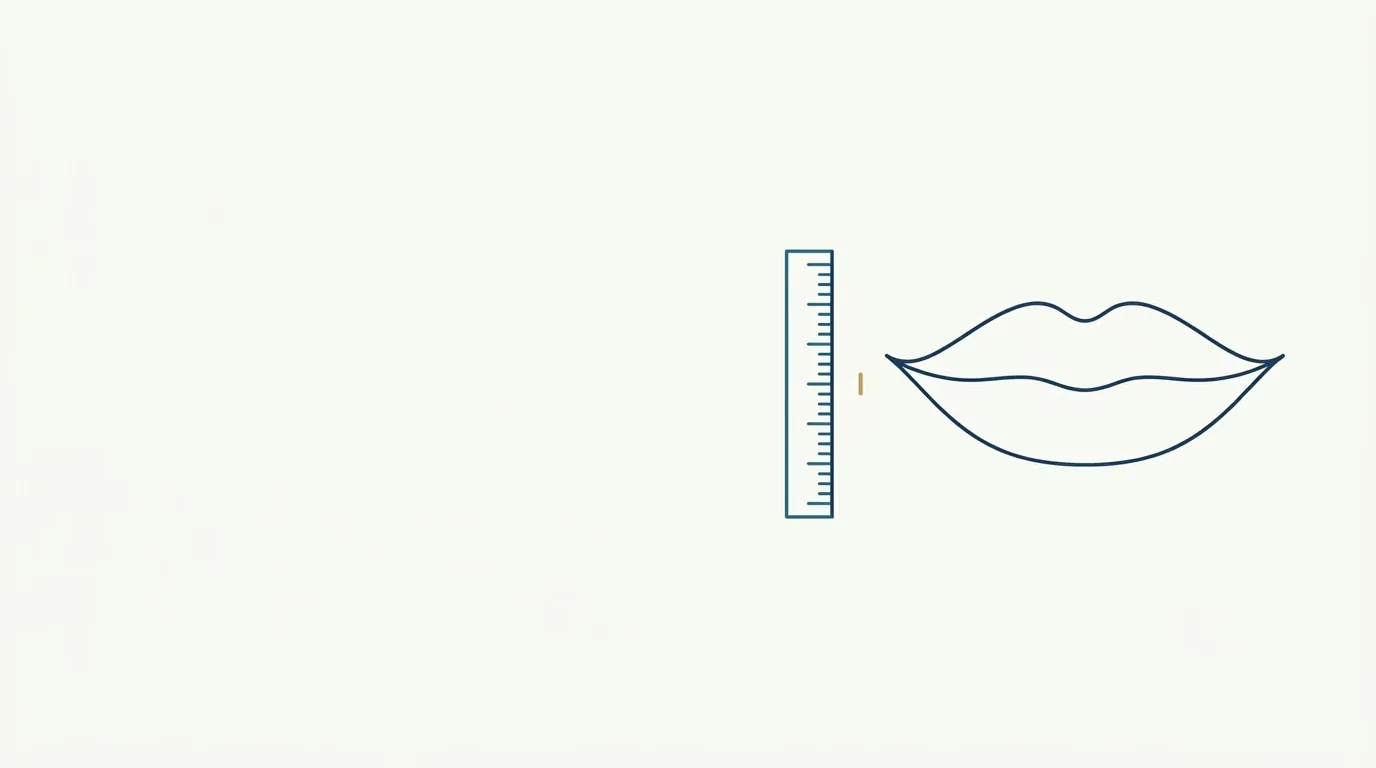
Mouth width is compared with reference points on the face. One of the most used is the distance between the pupils: in many faces, the resting mouth sits between the center of each pupil or a little narrower. Another reference is the rule of fifths, which divides the width of the face and lets you compare the mouth with the width of the nose and the eyes. These are assessment guides, never rigid goals.
The lip proportion between the upper and lower lip also enters the reasoning. A mouth of "normal" width with a large lower lip can be read as a large mouth.
What harmonization can and cannot do
It cannot: reduce the anatomical width of the mouth. There is no injectable that brings the corners closer. This point needs to be stated plainly.
It can, in selected cases:
- Change the perception of proportion: giving more projection and definition to the lower third (chin) visually balances a wide mouth. See chin filler and protruding mouth.
- Adjust smile movement: in smiles that open too much because of muscle action, a small amount of toxin can be discussed, with caution. See toxin for a gummy smile.
- Avoid making it worse: in a wide mouth, do not add unnecessary lip volume. Often the best plan for this concern is not to inject the lips.
- Soften shadow contrast: pronounced side grooves and marionette lines can make the mouth look wider and sadder. See mouth corner filler and deep marionette lines.
Factors that make the mouth look bigger
Some findings increase the perception without increasing the width:
- A full lower lip, which pushes the shape downward.
- A profile with little chin projection (retrogenia), which makes the mouth look prominent.
- Drooping mouth corners, which lengthen the side line.
- Skin around the mouth with strong shadows, such as marionette lines and the labiomental fold.
- A smile with strong action of the zygomaticus major and risorius, opening the mouth sideways.
- A narrow or small face, which reduces the comparison reference.
In general, more than one of these factors adds up. Profile assessment, for example, shows whether a recessed chin is part of the problem: see recessed chin and protruding mouth.
Risks and precautions
Any procedure around the mouth carries the general risks of filler: swelling, bruising, asymmetry, nodules and, less often, vascular complications. The area is supplied by branches of the facial artery, and hyaluronidase must be available when hyaluronic acid is used. Perioral toxin can affect the smile and speech. The informed consent should mention these risks.
How Harmy helps
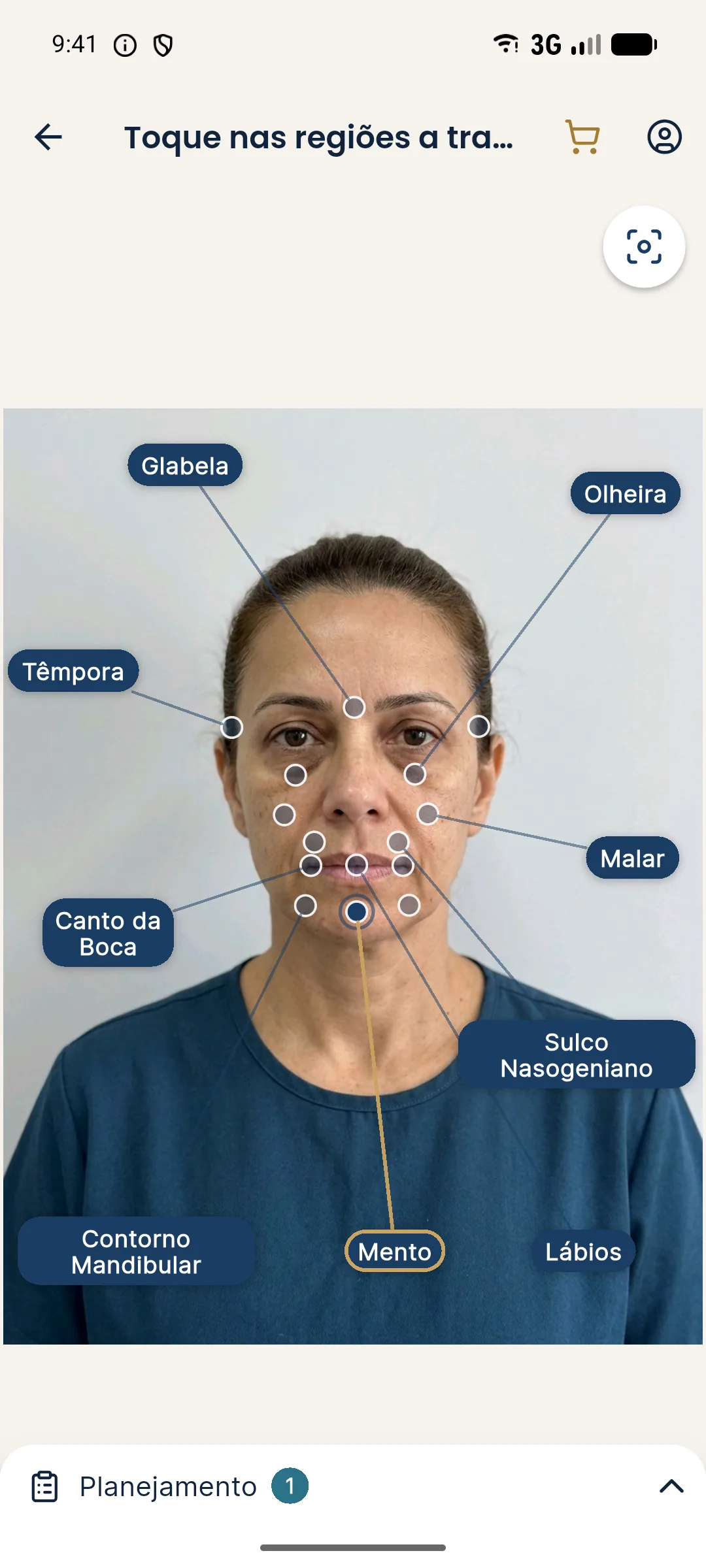
In Harmy, the Lips, Mouth Corner and Chin points let you show the patient how balancing the lower third changes how the mouth reads. The projection uses only the frontal photo and changes only what was marked, so the app does not shorten the width of the mouth. That is useful precisely to align expectations: the patient sees that the width stays and that the possible change is in proportion.
When the complaint is bigger than the finding
Some large-mouth complaints do not match a measurable disproportion. The patient has a width within the usual range, proportionate lips and still describes the mouth as huge. In these cases, it is worth investigating the context: comments received in childhood, constant comparison with social media references, a history of cosmetic surgery and diffuse dissatisfaction with several parts of the face.
When the complaint is persistent, out of proportion and accompanied by distress, referral for a mental health assessment is a careful approach, not a dismissal of the patient. A cosmetic procedure does not resolve a complaint that comes from self-image. The decision to treat or not should take that into account, and documenting the conversation protects both the patient and the professional. The patient with a real finding and a proportionate complaint follows the roadmap on this page.
Wrap-up
Record the measurements and what was explained: the width stays and the plan works on proportion. Do not promise reduction. If the patient has a strong underlying psychological request or a complaint out of proportion with the finding, consider body dysmorphic disorder in facial harmonization. Volumes and techniques are at the discretion of the licensed professional, in accordance with the rules of their professional council in Brazil.
Frequently asked questions
Can harmonization reduce mouth width?
Not directly. Width comes from the structure and the position of the muscles and mouth corners. The perception of a large mouth can change with adjustments to proportion, volume and movement, but the anatomical width stays.
Is a large mouth the same as thick lips?
No. A person can have a wide mouth with thin lips, or a narrow mouth with full lips. The concern has to be separated to choose the right approach.
Does lip filler make a mouth feel larger?
It can, when it adds volume to a mouth that is already wide and out of proportion with the face. That is why the proportion assessment comes before any addition.
How do I measure whether the mouth is wide for the face?
A common reference compares mouth width with the distance between the pupils and with the division of the face into fifths. It is an assessment guide, not a goal, and it varies with sex and body type.
Harmy images are illustrative simulations generated by AI from the patient's photo to support the conversation between practitioner and patient. They are not a promise of results. Indication, technique, product and volume are solely the decision of the licensed practitioner. This content is for information only and does not replace a clinical assessment.