
Man with hollow under-eyes: assessment and eye-area care

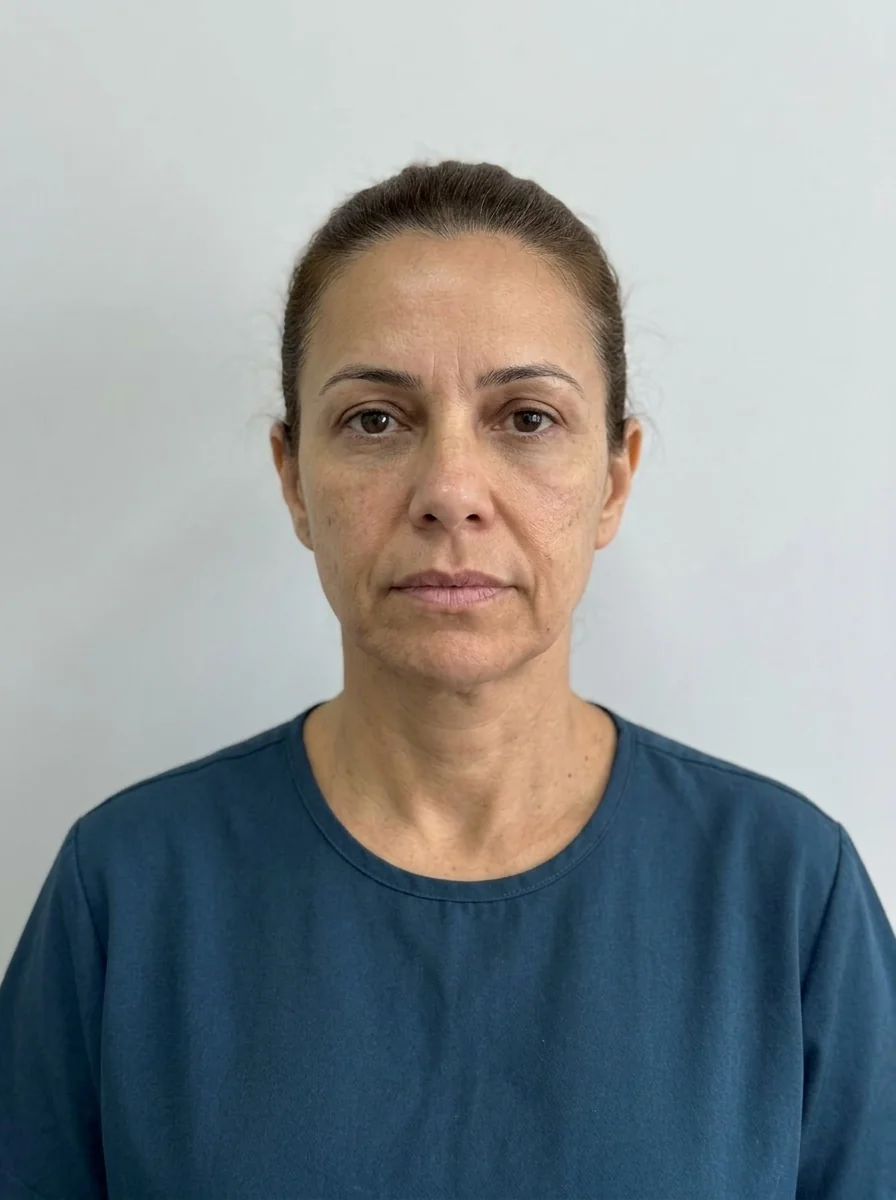 BeforeSimulation
- Highlighted area
Quick facts
- Concern
- Man with a deep shadow under the eyes that gives a tired look
- First step
- Separate shadow-type dark circles (structure) from color-type dark circles (pigment or vascular)
- Risk area
- Tear trough and infraorbital region, high vascular risk
- Male-specific care
- Avoid correcting all of the shadow and rounding the eye area
"I always look tired." The phrase comes from men of all ages and almost always points to the area under the eyes. In many cases, what bothers them is not the color but the shadow: a depression between the eyelid and the cheek that overhead light deepens. The question that guides the assessment is whether that depression is structural, skin-related, pigment-related or a mix.
This page is about the male eye area. The general picture of dark circles is in dark circles: types and assessment and the patient's most common question is in purple or hollow dark circles. For tiredness across the whole face, see man with a tired-looking face.
What makes the under-eye look hollow?
The infraorbital region is made of thin layers. Thin skin, the orbicularis oculi muscle, the eyelid fat pads, the orbicularis retaining ligament and the orbital rim form a set in which small changes greatly alter the shadow. With age, fat shifts, the cheek loses support and the tear trough (the groove that runs down from the inner corner of the eye) becomes more evident.
In men, this picture adds to traits of their own: somewhat thicker skin, an orbit that is often deeper and a lower brow, which increases the natural shadow of the eyes. Part of what the patient calls "hollow under-eyes" is a deep-set orbit, a characteristic of his face.
| Type | How it presents | General direction |
|---|---|---|
| Structural shadow | Visible depression, disappears with front lighting | Volume may be indicated, at the professional's discretion |
| Bag with groove | Bag above the groove, the contrast forms the shadow | Caution: volume can accentuate the bag |
| Pigmentary | Dark color, no depression | Another approach, not volume |
| Vascular | Purplish tone, thin skin | Assess the cause and the skin |
| Mixed | Shadow and color together | Treat what is structural and align expectations on the rest |
How to tell shadow from color
A simple test helps during the consultation: assess the patient with front light and with overhead light, and gently stretch the skin over the rim. If the darkness disappears when stretched, it tends to be shadow. If it persists, it tends to have a color component. This separation defines whether the conversation goes toward volume, skin, or the expectation that there are limits.
When the skin is very thin and photodamaged, other approaches may come before volume, such as skinbooster for the under-eyes or biostimulator for the under-eyes, always at the discretion of the qualified professional. The choice between options is in under-eyes: filler or biostimulator.
Caring for the male eye area
A man's eye area has its own design: a less smooth transition between eyelid and cheek, a flatter and lower brow, and a slight natural shadow. A plan that erases all of that shadow tends to produce a smooth, rounded look closer to a feminine one. Partial correction is usually more faithful to the patient's face.
Some guidance for the conversation and the plan:
- Correct what is structural, not all of the shadow. Reducing the depth without eliminating it preserves identity.
- Respect the brow and the orbit. The relationship between brow, eyelid and rim is part of the male eye area.
- Avoid rounding. The goal is to improve the transition, not to fill the area.
- Go in stages. Small volumes and a follow-up allow adjustments and give the initial swelling time to settle.
- Assess the midface. Often the cause is in the cheek, not the under-eye. See combining cheekbone and under-eye in the plan and sunken eyes and low cheekbones.
Simulating the under-eye before treating
The simulation helps the patient see a subtle improvement and understand that the correction doesn't have to be total. In Harmy, the Tear Trough point is marked on the front photo and generates an illustrative projection of the after, to compare on the slider.
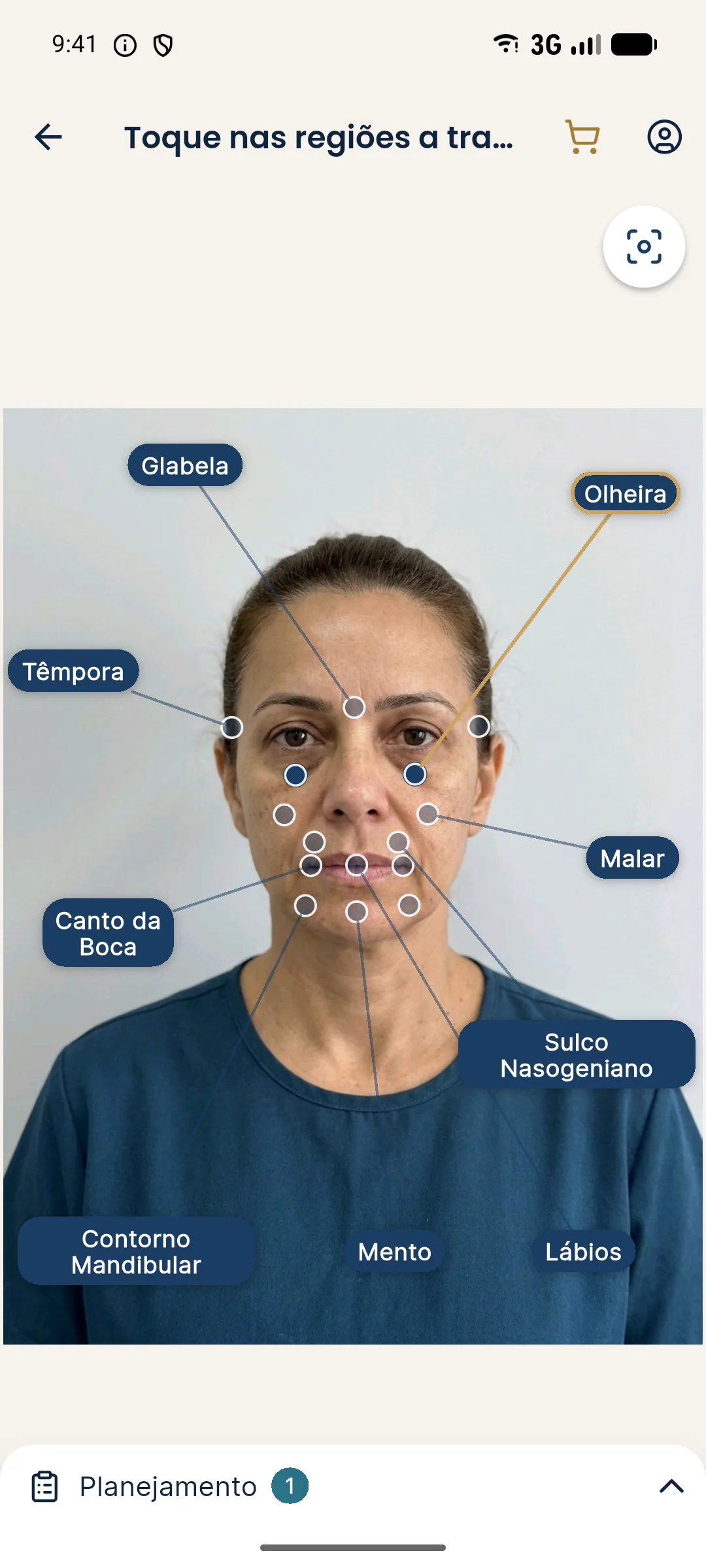
Showing the Subtle version next to the Moderate one helps agree on how far the patient wants to go. How to read the intensities is in explaining Subtle, Moderate and Pronounced intensity.
Risks and precautions that cannot be missing
The tear trough and the infraorbital region are high vascular risk. The proximity of vessels such as the infraorbital artery and the angular artery, with anastomoses that reach the circulation of the orbit, demands anatomical knowledge, proper technique and the emergency protocol at hand. Hyaluronidase must be within reach when hyaluronic acid is used.
Possible complications include persistent swelling, bruising, the Tyndall effect (bluish tone in thin skin), nodules, asymmetry and, rarely, vascular occlusion. The specific picture is in infraorbital vascular occlusion. The Tyndall effect in the under-eyes has its own question in Tyndall effect in the under-eyes.
When filler is not the answer
- Dominant pigmentation, with no structural shadow. Volume does not fix color.
- Obvious bag with a subtle groove, where volume tends to make things worse.
- Swelling from allergy, sleep or salt, which varies through the day.
- Very thin, photodamaged skin, with a higher risk of Tyndall. See thin skin under the eyes.
- Expectation of "erasing" everything. Here the conversation about limits comes before the injection.
Follow-up
Schedule the follow-up to assess the result once the initial swelling has resolved, with standardized photos in the same light. Ask the patient how he sees himself, and compare with the initial photo, not with memory. If he feels the character of his eyes has changed, discuss it before any addition. Images follow informed consent and the guidance on standardized clinical photography.
A good approach to hollow under-eyes in a man is usually less than the patient imagines: soften the structural part, preserve the design of the eyes and do not promise that the tired look will disappear. The result is individual and varies from person to person.
Frequently asked questions
Can a man treat hollow under-eyes with filler?
It can be assessed, at the discretion of the qualified professional, when the cause is structural. It is a delicate area with vascular risk, and the plan for men tends to be more conservative so the expression of the eyes isn't changed.
Are all hollow under-eyes a lack of volume?
No. It can be shadow from the orbital rim and the bags, thin skin, pigment or a vascular change. Only structural shadow usually has to do with volume.
Does filling a man's under-eyes make the eyes look feminine?
It can, if the plan softens the transition between the eyelid and the cheek too much or rounds the contour. That is why partial correction and reassessment are preferable.
Do hollow under-eyes have to do with tiredness and sleep?
Tiredness and lack of sleep can make the look worse, but the shape of the area depends on anatomy, age and skin. Not every hollow under-eye improves with more sleep.
Harmy images are illustrative simulations generated by AI from the patient's photo to support the conversation between practitioner and patient. They are not a promise of results. Indication, technique, product and volume are solely the decision of the licensed practitioner. This content is for information only and does not replace a clinical assessment.