
Patient who only says they want to look better: investigating

Quick facts
- Concern
- "I want to look better," "I want a little refresh," without pointing to an area
- Key reading
- A vague concern is an invitation to investigate, not permission to propose a package
- Supporting measure
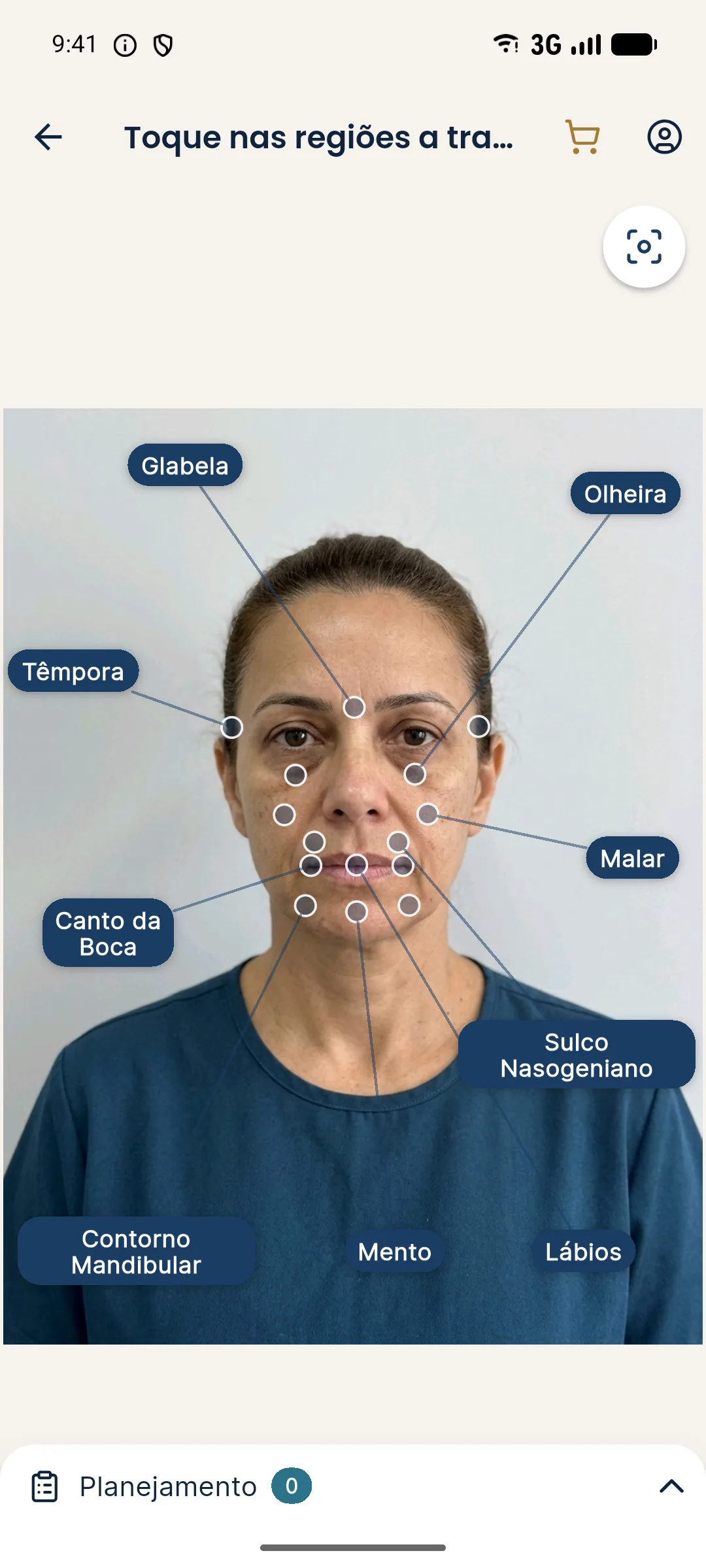
- Open questions, a guided mirror, and a front photo marked together with the patient
- Limit
- If nothing concrete emerges, the plan may be not to treat for now
"I want to improve a little." "I feel ugly in photos." "I want to look younger." Phrases like these are common at the first consultation, and the tempting answer is to offer a package. But a vague concern is not a request for a procedure: it is the start of an investigation, and your role is to turn it into something concrete or to recognize that there is nothing to treat yet.
Here are questions, mirror techniques, and a careful use of the photo to carry out that investigation respectfully. If the concern is whole-face, see whole-face concern in stages, and for the case of many areas, concern spanning several areas.
Why does a vague concern call for caution?
There are three situations behind the phrase "I want to look better." In the first, the patient has something specific but feels embarrassed or lacks the words to say it. In the second, they were influenced by social media, by other people's comments, or by a moment in life, and have no clear target. In the third, there is a broad dissatisfaction with their image that may have a psychological origin.
Telling these three situations apart takes listening. A hasty answer can lead to dissatisfaction later, because the patient will not be able to say whether the result "looks better." The page active listening in the HOF consultation details the stance, and open questions for the HOF consultation offers a repertoire.
Which questions open the conversation?
Prefer questions that do not point to an answer. Avoid "don't you think your chin is small?", which suggests the flaw. Use these, in order:
- "What made you book this consultation now?"
- "When you look in the mirror, what catches your attention first?"
- "Is there a photo of yourself you like? And one you don't?"
- "What do people say about your face?"
- "If you could change one thing, what would it be?"
- "How would you like to be seen a year from now?"
Question 1 reveals the trigger (an event, a life change, a comment). Question 3 shows the pattern of preference. Question 5 usually makes the patient choose a priority. Record the answers in their own words, as in recording concerns in the patient's own words.
How do you use the mirror and the photo without leading?
The mirror is an investigation tool. Ask the patient to look straight ahead, relaxed, and point with a finger to what bothers them. Then do the same with the front photo on screen. The two answers are often different: the photo removes movement and shows what the camera captures, while the mirror gives the self-image in motion. The difference between the two is a clinical finding in itself (see mirror, selfie, and photo: self-image differences).
Showing the standardized photo to the patient and asking "what do you see here?" usually works better than pointing out what you see. If the patient identifies nothing, you can mention a finding neutrally, without judgment, and ask whether it bothers them. For doing this without causing embarrassment, there is support in how to point out asymmetry without offending.
When the patient brings a reference?
Another way to investigate is to ask for a reference photo: "show me someone whose face you admire." This reveals what the patient sees as beautiful, and helps separate a possible adjustment from a request for a change of identity. The reference may be a celebrity, a filter, or an old photo of the patient. Each one calls for a different conversation, as in patient brings a reference photo and patient brings a filtered photo.
The patient's own old photo is the most honest reference. If they say they "want to go back to how I was," the earlier face gives a realistic target (see patient's old photo as a reference).
| Reference brought | What it reveals | Caution |
|---|---|---|
| Patient's own old photo | Wish to recover a feature | Consider what changed with age and structure |
| Celebrity | Ideal of beauty and shape | Different anatomy, unrealistic expectation |
| Filtered photo | Disconnect from the real face | Talk about the limit of what injection does |
| Photo of a friend or relative | Social influence | Understand whether the wish is the patient's |
What can and cannot the simulation do here?
The projection should not be the starting point of the investigation. Generating images of several areas before understanding the concern can confuse the patient and create needs they did not have. The best sequence is to investigate, choose one or two priorities, and only then simulate those areas to confirm that this is really what the patient wants.
What if nothing concrete emerges?
It is a legitimate answer. If the patient finds no clear complaint, the plan can be: observe, take reference photos, advise on skin care and habits, and schedule a follow-up. This avoids a procedure without a reason and builds trust. The stance is described in how to say the patient does not need a procedure and in how to close the consultation without selling.
Another possibility is to agree on a reflection interval. The patient returns in two or three weeks with the list ready, after observing themselves carefully. That pause often reveals what really matters. See also patient who doesn't know what bothers them.
Signs that it is time to refer
Some signs call for another professional, and noticing them is a clinical skill:
- The concern changes area at each visit, unrelated to what is observed.
- There is intense distress about their image, affecting work, relationships, or sleep.
- The patient has had many procedures and remains dissatisfied.
- The wish seems to come from pressure from others or a recent emotional event.
For these cases, see when to refer to psychology and HOF plan and the patient's mental health.
Frequently asked questions
What should I do when the patient does not know what they want to change?
Use open questions, the mirror, and photos to help the patient identify what bothers them. If nothing concrete emerges, it may be better to postpone the procedure and arrange another conversation.
Can I suggest areas to a patient who pointed to nothing?
You can point out what you observe, neutrally, but without inducing a need. The question is whether the patient is bothered by that finding, and the decision is theirs.
Can a vague concern indicate dysmorphia?
Sometimes. Diffuse, persistent concerns that are out of proportion to what is seen deserve attention and, when there is suspicion, referral for a mental health assessment.
Does the simulation help when the concern is vague?
It can help the conversation, as long as it is used to refine what the patient wants and not to create a need. Generating a projection of several areas without criteria tends to confuse.
Harmy images are illustrative simulations generated by AI from the patient's photo to support the conversation between practitioner and patient. They are not a promise of results. Indication, technique, product and volume are solely the decision of the licensed practitioner. This content is for information only and does not replace a clinical assessment.