
Whole-face concern: how to split it into stages

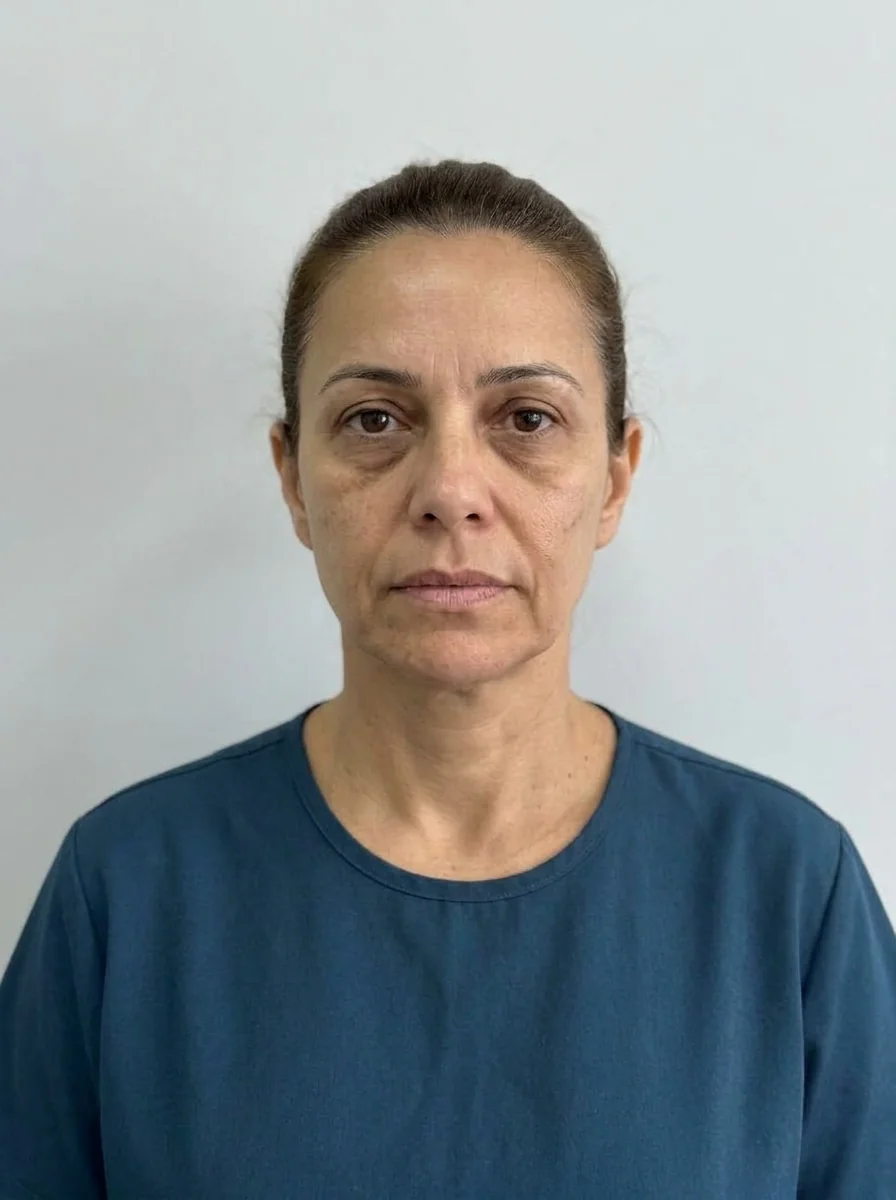 BeforeSimulation
Quick facts
- Concern
- Diffuse dissatisfaction: a tired, aged, sagging, or unharmonious face, with no single area
- Key reading
- Turn the general into observable goals and divide by thirds and by layers
- Supporting measure
- Standardized photo at each phase and comparison at the same angle and light
- Limit
- Stages exist to observe the response, not to sell more sessions
Some concerns have no address. "My face looks tired," "I see myself looking older," "I feel like everything is sagging." The patient does not point to an area, they describe a general impression. Whoever hears that sentence tends to fall into one of two traps: proposing a huge treatment all at once, or answering with a timid plan with no criteria.
The middle path is to divide. This text shows how to turn the whole-face concern into observable goals, order them into phases, and define, for each phase, what to do and when to stop. If the concern is even vaguer, start with patient who only says they want to look better. For areas that pile up, see concern spanning several areas.
How do you translate "tired face" into something measurable?
A concern only becomes a plan when it becomes an observation. The first job is to read the face by thirds and by layers, and ask the patient to choose what weighs most. Ask simple questions: "What do you see in the mirror in the morning? What bothers you most in a photo?" The answer usually points to two or three areas, and the rest is an overall impression.
For each complaint, turn the sentence into something you can photograph and compare. Instead of "tired face," think "shadow under the eye," "cheek with little support," "fold that marks the mouth." This exercise gives the patient and you an observable goal, and protects against the implicit promise of "looking rested," which is not measurable. See the logic in plan goal measured in observable results.
What phase structure works?
There is no single mold, but a simple structure covers most plans. Think in four movements:
- Support: what holds up the face. Usually the midface (malar) and, when the profile reading calls for it, the chin.
- Contour: the transition between the midface and the lower third, including the jawline.
- Detail: fold, under-eye hollow, mouth corners, lips, and other sign points.
- Maintenance: the calendar of follow-ups and touch-ups.
The order follows the idea of treating cause before sign, described in treating top-down or bottom-up and in structure before detail in the HOF plan.
| Phase | Focus | Criterion to advance | When to stop |
|---|---|---|---|
| 1. Support | Malar and chin | Stable response after reassessment | If the main concern has already been addressed |
| 2. Contour | Jaw and transition | Adequate lower third proportion | If the contour is already coherent |
| 3. Detail | Fold, under-eye hollow, mouth corners, lips | Signs that persist after phases 1 and 2 | If the patient is no longer bothered |
| 4. Maintenance | Touch-ups and follow-up | Agreed calendar | According to the patient's choice |
How long between phases?
The interval depends on the material, the area, and the response. Generally, waiting for the swelling to resolve and the result to stabilize is the minimum before assessing the next step. That usually takes a few weeks, and the decision is at the professional's discretion. The topic is detailed in interval between sessions in the HOF plan and in when to split the volume across sessions.
A practical rule: never schedule the next phase before seeing the previous one. Plans fully locked in on day one take away the professional's freedom to change course when the face responds differently than expected.
How do you avoid excess volume?
The biggest risk in whole-face plans is the sum. Each phase seems small, but the accumulated total volume can exceed what the face carries naturally. To keep it in check:
- Set a volume ceiling per session and per year, in ranges, before starting.
- Review the sum at each follow-up, comparing with the starting photo and not only with the last session's.
- Ask the patient, at each phase, whether they still recognize themselves in the mirror.
- Consider that part of the improvement comes from other resources, such as toxin, biostimulator, and skin care.
The limits and warning signs are in when total volume becomes excess and in total volume in full face.
How does Harmy help split the plan?
The projection per phase makes the division concrete. You mark only the phase 1 area, generate the image, and show the patient what that stage changes. Then, if it makes sense, you repeat with the phase 2 areas. The patient sees that the change is gradual and understands why it makes no sense to do everything on the first day.

What to do when the patient wants to skip phases?
Some people are in a hurry because of an event, impatience, or pressure from others. The professional can explain the clinical reason for the phases and propose an alternative within the safe limit. See patient who always wants more and declining a request for excessive volume. For a scheduled event, there is support in plan for an event with a set date.
Recording and reviewing the plan
Write the plan as a living document: translated concern, proposed phases, criteria to advance and to stop, planned volumes in ranges, and reassessment dates. Review it at each follow-up and record the changes. The planning sheet in what to include in the written treatment plan helps keep the format, and the 12-month HOF plan shows an example calendar.
Frequently asked questions
Why divide treatment into stages?
Because it lets you observe the tissue's response, adjust the volume, reduce the risk of excess, and give the patient time to adapt to the change. It also makes it easier to attribute any complication to a specific area.
How many stages does a whole-face plan usually have?
It depends on the case. Many plans run between two and four stages over a period of months, at the licensed professional's discretion and depending on the response to each phase.
What goes into the first stage?
Generally the area that supports the face and accounts for most of the concern, such as midface support or chin projection. Details come later.
What if the patient wants to do everything at once?
You can present the logic of the phases and show the simulation for each stage. If they still insist, the professional decides whether it is safe, and may refuse a volume or number of areas they consider excessive.
Harmy images are illustrative simulations generated by AI from the patient's photo to support the conversation between practitioner and patient. They are not a promise of results. Indication, technique, product and volume are solely the decision of the licensed practitioner. This content is for information only and does not replace a clinical assessment.