
How to explain facial planning to the patient

Quick facts
- Core message
- The plan is a map of priorities, not a list of flaws
- Structure
- Concern, areas, priority, stages and cost
- Tool
- Frontal photo, marking and illustrative simulation
- Caution
- Do not push procedures beyond the patient's concern
A poorly presented facial plan looks like a list of problems. "You have under-eye hollows, a nasolabial fold, volume loss in the cheekbone, a recessed chin..." The patient, who arrived with one concern, leaves with several. A well-presented plan looks like a map: here is where you are, here is what matters most, here is the path in stages. The difference lies in how you organize it and how you say it, and this page proposes a structure.
What is the central idea of the plan?
The sentence fixes three things: it starts from the concern, organizes in stages and gives the decision back to the patient. It avoids the logic of "treat everything that can be seen," which overwhelms and breeds distrust. See how to compliment without pushing a procedure.
How to structure the plan?
A five-part structure works well and fits on one sheet:
| Part | What it contains |
|---|---|
| Concern | The patient's own words, without technical translation |
| Areas | The areas related to the concern, by facial third |
| Priority | What to do first and what can wait |
| Volumes and stages | The planned ml per area and the order of sessions, as a range |
| Cost and time | The price per area, the quote's validity and the interval between stages |
The table is a guide, not a mandatory form. The upper, middle and lower thirds (upper third, middle third, lower third) help organize the conversation in blocks.
How to prioritize without pressuring?
Use clear criteria and share them with the patient:
- Main concern. What brought them here comes first.
- Effect on the whole. Areas that influence the others, such as the cheekbone over the middle third.
- Safety. Higher-risk areas wait until there is more experience with the patient and mutual trust.
- Cost and time. What fits the patient's budget and schedule.
How to use Harmy to present the plan?
Harmy was designed for this moment. You take a frontal photo, the app detects the face on the device, and you mark the areas to treat among the nine points. Then you set the ml and the intensity of each area in Plan and generate the projection.
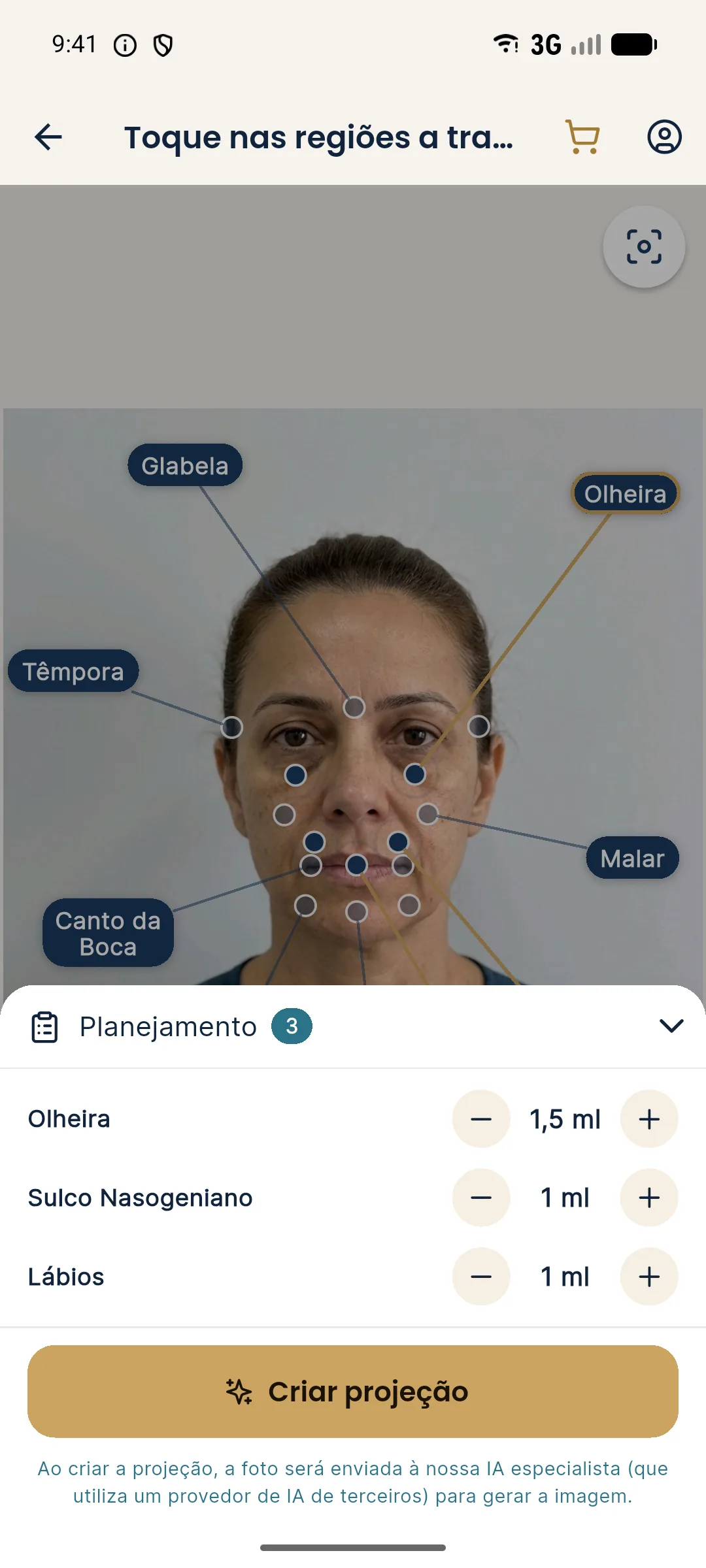
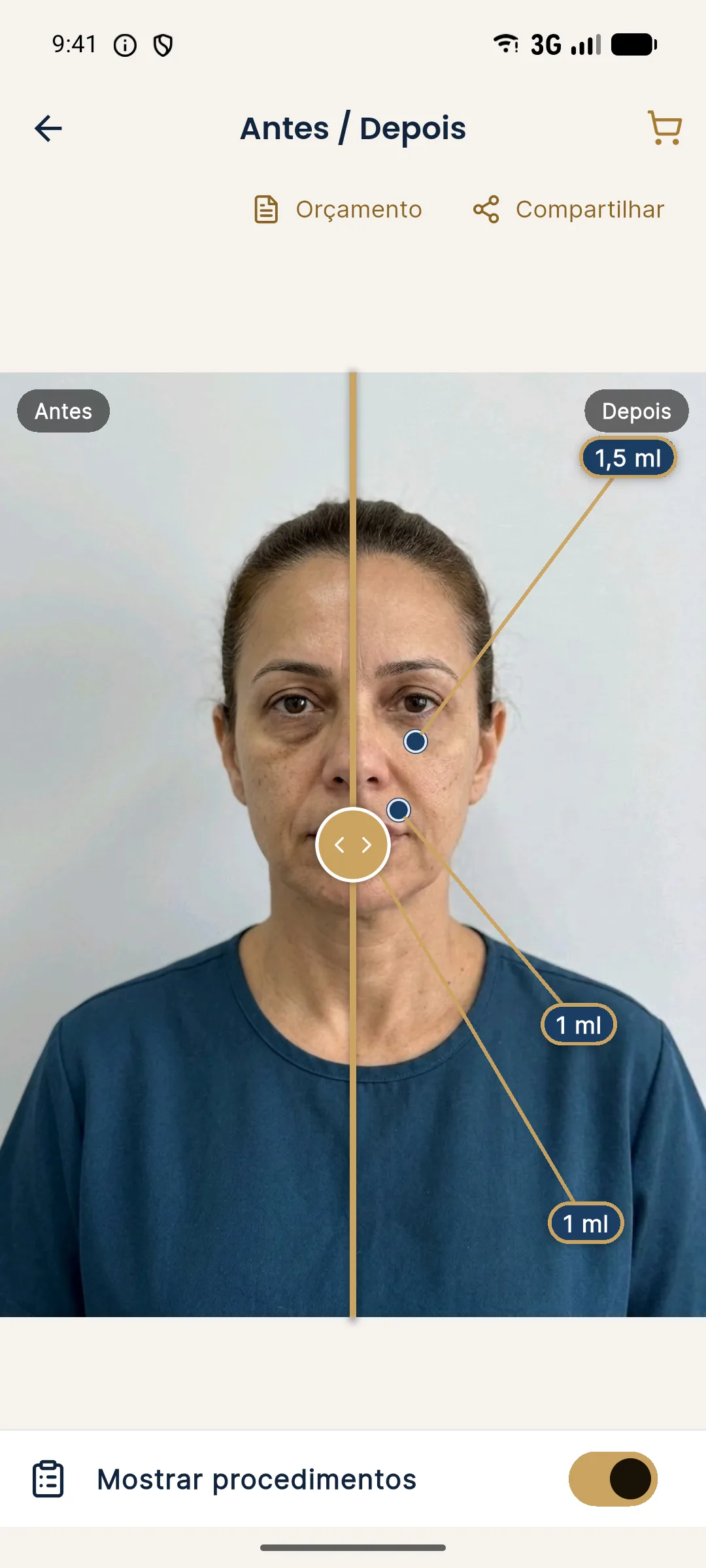
The "Show procedures" feature helps turn the image into a visual map: the patient sees where each volume goes. For guidance on running this step, see presenting the projection in the consultation.
How to handle the stages?
Splitting into stages is useful for three reasons: it lets you assess the response, lowers the risk of overdoing it and spreads out the cost. Present it as a timeline, which also shows the patient that the plan is flexible.
Dates and intervals depend on the procedure, the area and the response. The touch-up, when planned, is part of the plan. See explaining the touch-up.
How to talk about cost?
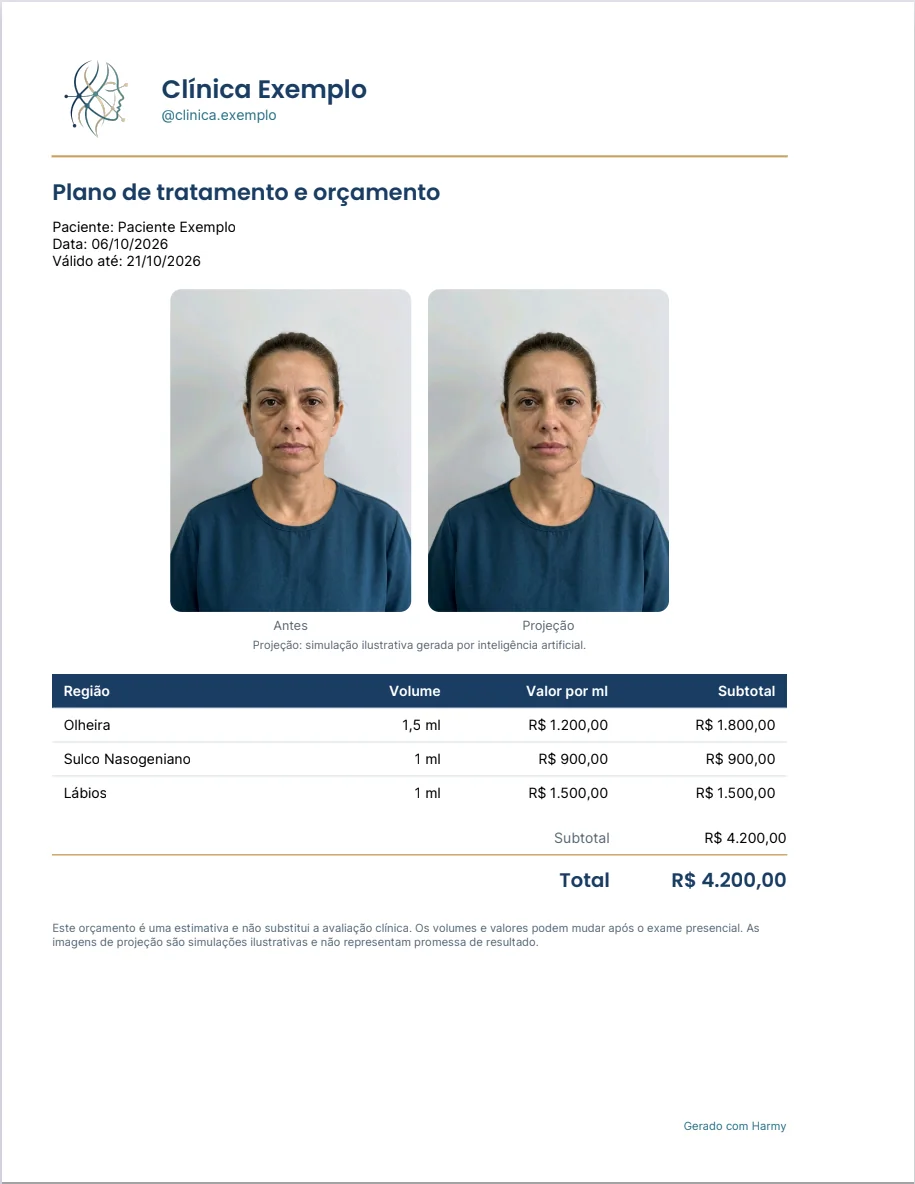
Present the cost per area, so the patient can decide what to include. The Harmy PDF quote comes out with the clinic's name and logo, price per ml, discount, validity and notes, and the price per ml is saved in My clinic. For the conversation about prices, see how to explain the quote by area and pricing per ml.
What not to do?
What questions to expect?
What to record?
Record the concern, the areas assessed, the agreed priority, the planned volumes as a range, the quote, the risks explained and the consent. If the patient postpones the plan, record that too. The quote sent as a PDF and the simulation image can be kept in the patient's history.
A clear plan, in stages and with the patient at the center, turns the consultation into a shared decision and not a sale.
Frequently asked questions
How do I explain facial planning to the patient?
Say it is a map of the areas to treat, in order of priority, with volumes and stages, starting from the patient's concern. It is not a list of flaws, and the patient decides what to do and when.
Should I present every area I identified?
Present the ones related to the concern and the ones that affect balance, without overwhelming. Areas the patient does not notice can be mentioned as information, without pressure.
Can the plan be done in stages?
Yes, and it is often advisable. Prioritizing what matters most, assessing the result and adjusting usually gives a more natural look and better cost control.
Does the plan need to be recorded?
Yes. Record the areas, the planned volumes, the order, the risks explained and the consent. If you use Harmy, the saved planning draft and the PDF quote help with documentation.
Harmy images are illustrative simulations generated by AI from the patient's photo to support the conversation between practitioner and patient. They are not a promise of results. Indication, technique, product and volume are solely the decision of the licensed practitioner. This content is for information only and does not replace a clinical assessment.