
Firmer or softer filler: how to explain it to the patient

Quick facts
- Core message
- Firmness is choosing the gel for the function of the area
- In simple language
- Softer follows movement, firmer provides support
- Caution
- Do not name brands or promise durability
- Decision maker
- The professional, after assessment
The patient who asks "which filler will you use?" almost never wants to know the brand. They want to know whether it will look natural, whether it will feel hard and whether it will last. The answer goes through the firmness of the gel, a technical concept that translates well into simple language. This page shows how to do that area by area, without naming products and without promising results.
What is gel firmness, in one sentence?
Technically, firmness relates to the G prime, the viscosity and the cohesivity of the hyaluronic acid gel, which depend on the degree of cross-linking and the concentration. For the patient, one sentence is enough.
Avoid numbers and acronyms. The patient does not need to memorize anything, only to understand that there is a choice and that it depends on the area.
How do you translate firmness by area?
Use the idea of function: where the area moves a lot, the gel tends to be softer; where it needs support, firmer. The table below is a conversation guide, not a protocol, and the choice always belongs to the professional after assessment.
| Area | How to explain firmness in patient language |
|---|---|
| Lips | Soft gel, which follows the smile and speech |
| Cheekbone | Firmer gel, with a role of support and projection |
| Chin | Firm gel, which supports the outline of the chin |
| Jawline | Firm gel, with a defining role |
| Tear troughs | Soft gel, for a thin area with delicate skin |
| Nasolabial fold | Intermediate gel, depending on depth and movement |
Note that the explanation revolves around function, not durability or brand. By area, care is warranted: high vascular risk areas, such as the nasolabial fold and the tear trough region, call for specific technique and preparation, and hyaluronidase must be available whenever hyaluronic acid is used.
How do you explain that firm is neither worse nor better?
The patient's most common mistake is to think that firmer means "stronger" or "longer-lasting," and that soft means "weak." Correct it with an everyday analogy: a firm mattress and a soft one suit different people and positions, and neither is "the best" in absolute terms.
What if the patient asks for a specific product?
It happens, because they researched online. Instead of getting into a brand dispute, go back to function: "I choose the gel for the function of the area and for what I see in your anatomy. The product's name matters less than the right choice." If they insist, explain that the clinical decision is yours. Record the request and the response. See the follow-up in how to say no to the patient in HOF.
How do you relate firmness to the result and to naturalness?
A gel that is too firm in a mobile area may be noticeable to the touch or in movement; a gel that is too soft where support is needed may not deliver the expected effect. Say this simply and without alarm: fine-tuning is part of planning. The topic connects with aligning expectations about naturalness.
How do you show this with Harmy?
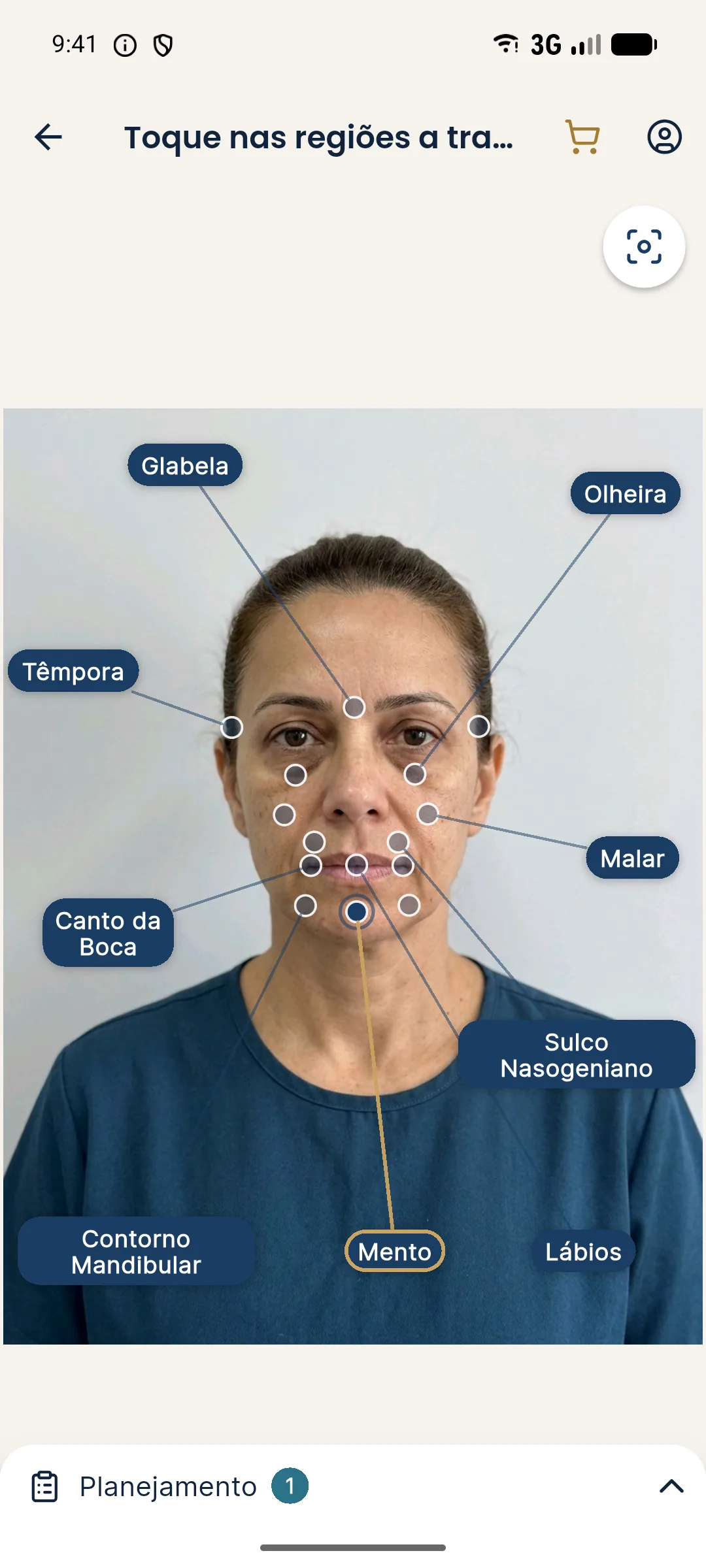
The app does not choose a product: it projects volume in ml and intensity by area, so the patient can visualize overall harmony. Use the slider to talk about function: "here the goal is to support, there it's to smooth." Do not use the image to promise a type of gel. It is an illustrative simulation, not a promise of results.
Which questions should you expect?
What should be recorded?
In the patient record, write down the product used, the lot and the expiration date as the office routine requires, and the explanation of function given to the patient. To check whether the product is registered, see how to check an injectable's registration with Anvisa. Anvisa is Brazil's health regulatory agency.
When the patient understands that firmness is a tool, not a ranking, they stop asking for "the best" and start asking "what makes sense for me."
Frequently asked questions
What does a firmer or softer filler mean?
Firmness refers to the gel's ability to resist deformation. In simple terms, the softer one follows the movement of the area and the firmer one gives more support.
Does a firmer filler last longer?
Not necessarily. Durability depends on the product, the area, the volume and the patient's metabolism. Avoid linking firmness directly to how long it lasts.
Can I talk about G prime with the patient?
It is not necessary. For a lay patient, the technical term gets in the way. Translate it into soft, intermediate and firm and explain the function in the area.
What firmness is used in the lips?
A softer gel is generally used, one that follows the lip's movement. The final choice is the professional's, after assessment, and depends on the goal and the anatomy.
Harmy images are illustrative simulations generated by AI from the patient's photo to support the conversation between practitioner and patient. They are not a promise of results. Indication, technique, product and volume are solely the decision of the licensed practitioner. This content is for information only and does not replace a clinical assessment.