
Patient says "I want more" after the simulation: how to respond

"I wanted more." After seeing the slider, the patient looks at their face and finds the change timid. The temptation to oblige is strong: it seems simple to raise the ml, generate another image and close the deal. But the request for "more" is one of the riskiest in orofacial harmonization (HOF), because it comes from the image and not from the anatomy. This page shows how to handle that moment without giving in to excess and without frustrating the patient.
Why does the patient ask for more?
A few reasons come up again and again:
- Comparing with a filter or an edited photo, where the change is much bigger.
- Expecting a transformation the product does not deliver. See patient with unrealistic expectations.
- Fearing they "paid for too little." They link value to quantity.
- Already used to procedures and feeling the result is not enough. See patient who always wants more.
- Wanting to be sure it shows, as protection against disappointment.
Knowing which reason weighs most changes your answer. "I want more" so that it does not go unnoticed is different from "I want more" because of a comparison with an influencer.
What questions to ask before any adjustment?
Listen to the end. Often the request for "more" is really a request for "more visible" or "more defined," not for greater volume. That changes the plan and may even reduce the volume.
How do you explain the clinical limit?
Volume has an anatomical and aesthetic ceiling. More product in one area can throw the face out of proportion, increase swelling, raise the risk of complications and lead to an artificial look. This reasoning, in plain language, tends to persuade more than "I can't."
- Talk about proportion. "Each area relates to the others; increasing one a lot unbalances the whole."
- Talk about naturalness. "What you want is to look like yourself, only more rested."
- Talk about safety. "More product in the same spot raises the risk, and I don't want to take that."
- Talk about time. "We can get there in stages, seeing how your face responds."
Is it worth showing a simulation with more ml?
It can be, with rules. Showing two or three versions side by side helps the patient see the real difference between them. Often they conclude on their own that the larger version is not what they wanted. But this takes care:
- Limit the number of versions. Two or three are enough.
- Make clear that more ml is not a recommendation.
- Remind them the image is illustrative. See illustrative simulation.
- Do not use the image as a sales argument. The most pronounced one is not the "best."
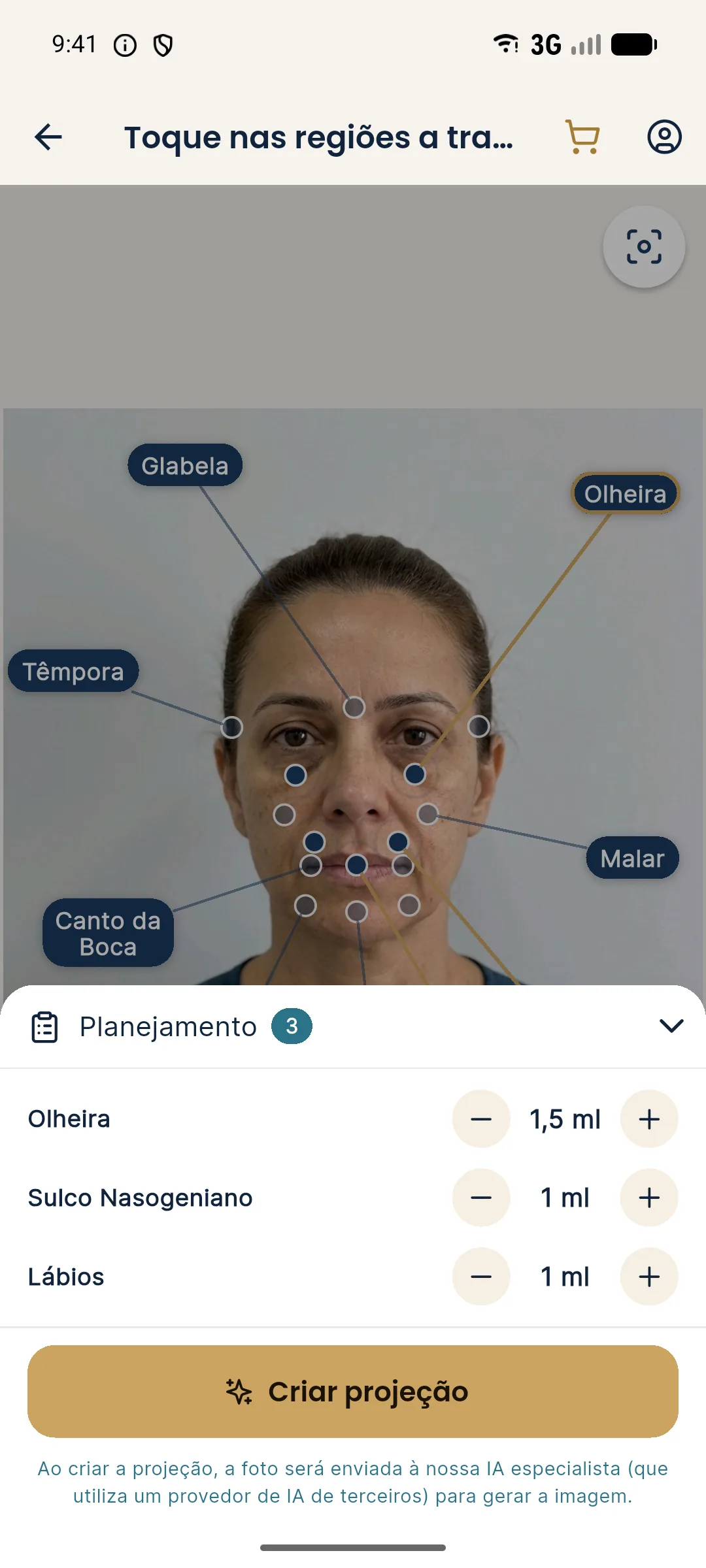
See comparing intensities in the simulation and patient asks how many ml.
What about a staged plan?
Stages are the antidote to "I want more." They let you deliver a real improvement, watch the response and decide the next step with information, not expectation.
This protects the patient from a decision made on the spot, under the influence of the image. See explaining why more than one session is needed and do I need to do everything at once.
What if the patient insists?
Keep your guidance calm. "I understand, and I still think it is safer to do it in stages. If you prefer another professional, the decision is yours, but I would not feel comfortable doing more now." Do not give in out of fatigue. Patient autonomy does not oblige the professional to do what they consider inappropriate. If the insistence repeats at every follow-up, see follow-up where the patient wants more.
What to record?
Note the request, what you explained about the limits, the versions shown (and that they were illustrative), the decision (stages, maintain or decline) and the agreed reassessment. Record the clinical reason for not increasing, if that applies. The record of the alignment is the best argument at follow-up if "I want more" comes back in a new disguise.
Frequently asked questions
The patient saw the simulation and asked for more. What do I say?
Ask what they want to see differently and why. Explain the clinical limit, suggest stages and avoid giving in just because the image showed little.
Can I generate a simulation with more ml to show?
You can, as a conversation exercise, as long as it is clear the image is neither a recommendation nor a prediction. Many patients realize on their own that more is not always better.
Does more ml always mean a better result?
No. Past a certain point, excess can throw the face out of proportion, raise the risk and worsen the look. The indication belongs to the professional, after assessment.
Can I work in stages with a patient who wants more?
Yes. Stages let you assess the response, adjust and stop when the result is right, which is usually safer than a large volume all at once.
Harmy images are illustrative simulations generated by AI from the patient's photo to support the conversation between practitioner and patient. They are not a promise of results. Indication, technique, product and volume are solely the decision of the licensed practitioner. This content is for information only and does not replace a clinical assessment.