
Projection for a male patient in Harmy

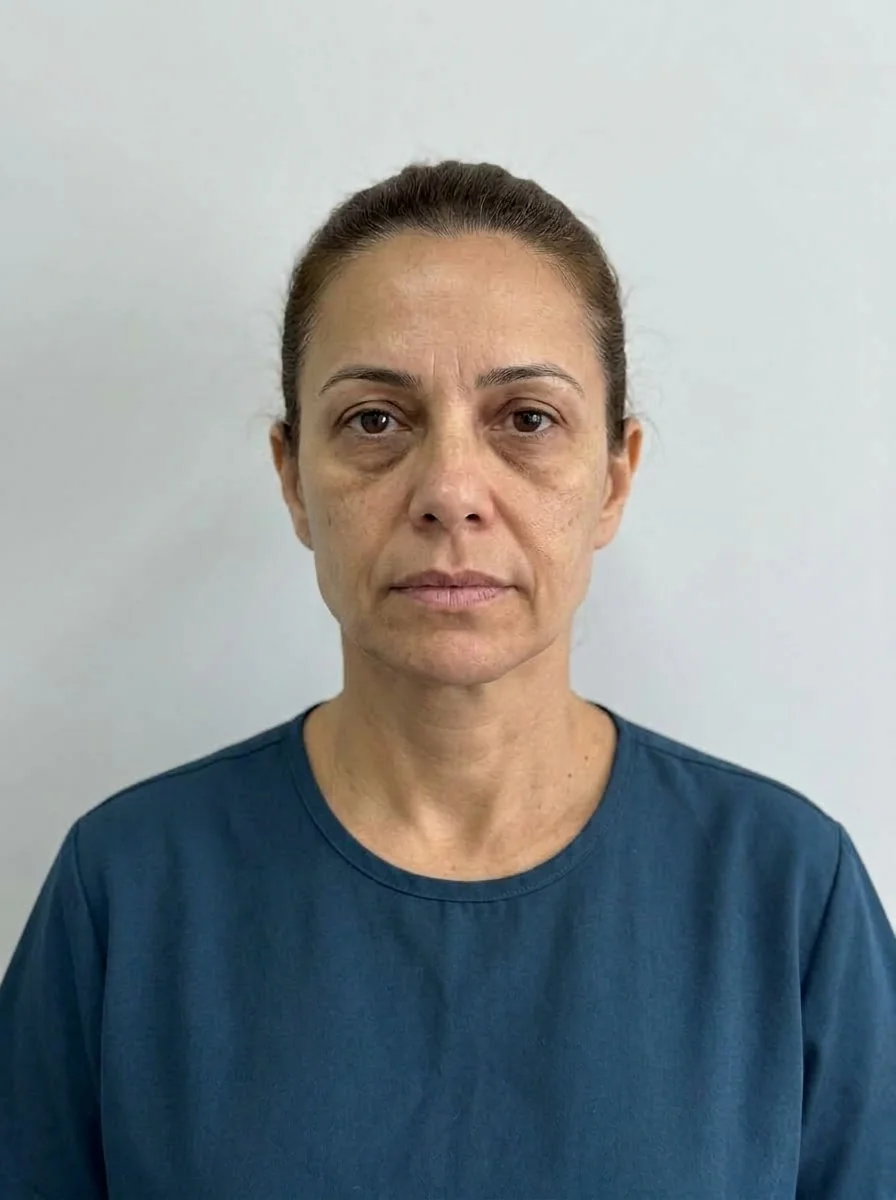 BeforeSimulation
Many male patients arrive at the clinic worried about ending up with a "done" face. Harmy's projection can help the conversation, but it calls for some specific care with the photo and the choice of volume. The app has no male or female mode: the coherence of the image depends on what you mark and how the photo was taken.
What changes in the photo?
A beard, short hair and a more defined jawline change how the AI reads the face. Two simple adjustments improve the projection:
For the full standardization, see standardized frontal photo.
Which areas to mark?
There is no fixed list by gender, and assuming the patient's concern from their sex is a communication mistake. What often comes up in the conversation is interest in contour definition, but the starting point is always the concern the patient brings. The areas that tend to come up are:
| Area in the app | Why it is often considered | Reading caution |
|---|---|---|
| Jawline | Definition of the base of the face | A beard can hide the edge |
| Chin | Balance of the lower third | The profile does not appear in the projection |
| Temple | Side of the forehead | Hair needs to be pushed aside |
| Tear Trough | Tired look | Risk area, Subtle intensity usually works |
See the markings in jawline, chin, temple and tear trough.
How to choose ml and intensity?
The rule is the same as for any patient: start with low volumes and go up in steps of 0.5 ml. Subtle intensity often helps when the patient wants something nobody notices. If the patient asks for a more evident change, show it and talk it through. The actual volume is the decision of the qualified professional, after assessment.
What the projection does not do
The app changes only the marked areas and preserves skin, beard, hair and expression. It does not rebuild a contour hidden by a beard, does not show the profile and does not predict the real result. The image is an illustrative simulation, and should be described as such.
Clinical cautions
The areas mentioned have their own risks (vascular and nerve-related, to different degrees), and complications such as swelling, bruising and asymmetry are part of the informed consent. Conduct the assessment according to your professional board's rules. For the face as a whole, facial assessment by thirds is a good starting point.
Cautions in the conversation
Avoid assuming what the patient wants. Ask what bothers him, what he does not want to change and what would be too much for him. Many male patients ask that the result not look like anything at all, and the Subtle projection is a concrete way to show that. If the image pleases him, the patient feels guided; if it looks like too much, you can still reduce the ml without any awkwardness.
Also keep in mind that the projection starts from the real face. There is no automatic adjustment toward a masculine version of the area: if the patient's contour is wide or angular, the image will respect that. What you control is where to mark, how much and at what intensity. That is why the decision about proportion remains clinical.
Finally, remember that consent and the LGPD (Brazil's data protection law) apply equally: ask for authorization for the photo, explain the use of the third-party AI and keep the record according to your professional board's rules. See patient consent for using Harmy.
Frequently asked questions
Does Harmy have a specific mode for male patients?
There is no mode or setting by gender. The projection depends on the photo, the marked areas, the ml and the intensity, so coherence with a masculine face comes from your choices.
Which areas do men tend to ask about most?
That varies a lot from patient to patient. Jawline, Chin, Temple and Tear Trough come up often in the conversation, but the decision starts with the assessment.
Does a beard get in the way of the projection?
It can interfere with reading the jawline and chin, because it hides the edge of the face. A closely trimmed beard and a well-lit photo help.
Can I use Subtle intensity on a male patient?
Yes, and it is often a good choice for someone who wants discretion. Intensity is independent of gender and follows the conversation with the patient.