
Treatment plan validity: expiry and re-evaluation
Quick facts
- Topic
- Validity period of the plan and the quote in facial harmonization
- Why it exists
- The face, the schedule and the price change over time
- What expires
- The quote (price) and the plan's premise (state of the face)
- When to re-evaluate
- Old plan, weight change, pregnancy, new therapy or another procedure
- Who decides
- Qualified professional, according to assessment and clinic policy
A written treatment plan looks like something stable, but it is a photograph: it shows today's face, today's price and today's schedule. Six months later, none of the three is the same. A patient who comes back with the paper in hand asking "let's do that plan" is asking you to carry out an old decision on a new face. The plan's validity exists so that this never happens without a new assessment. This page shows what expires, in what time frames, and how re-evaluation fits into the routine.
What actually expires in the plan?
There are two types of validity, and they are often confused:
- Commercial validity (of the quote). The period during which the price and payment terms are guaranteed. The clinic sets it, and it tends to be short.
- Clinical validity (of the plan). The period during which the assessment premises remain reasonable. It depends on the patient, the time and the events since the consultation.
Separating the two avoids arguments. An expired quote can be renewed with the same plan, if the reassessment confirms that nothing changed. An expired clinical plan, on the other hand, requires re-evaluation, not just a new price sheet.
| Type | What expires | Usual period | Who defines it |
|---|---|---|---|
| Commercial | Price and payment terms | A few weeks, depending on the clinic | The clinic |
| Clinical | Assumptions of the facial assessment | Depends on the case and on events | The professional |
| Documentary | Informed consent | According to clinic and professional council policy | The technical lead |
Why does the plan age?
Because almost everything that supports the plan changes with time. The patient's weight goes up or down, and the face follows. There is pregnancy, menopause, hormone therapy, orthodontics, procedures done elsewhere, diet, sleep, smoking and sun. Even with no event at all, natural aging continues. The list of review triggers is in when the plan needs to change and habits that change the plan: sun, smoking and sleep.
There is also the factor of tissue response time. A plan in stages, carried out over months, is not the same plan that was proposed at the first consultation: each stage changes the starting point of the next. That is why validity must come with reassessment at each follow-up.
When is re-evaluation mandatory in practice?
Some events call for a new assessment even within the period:
- Relevant weight change since the last consultation
- Pregnancy or breastfeeding
- Start or change of hormone therapy
- Aesthetic procedure done at another service
- Complication, at the clinic or elsewhere
- Orthodontics, surgery or dental treatment that alters the face
- Change in the patient's expectations or goals
- Change of the responsible professional
In these cases, the old plan is a reference, not an instruction. The reassessment approach appears in what to reassess at the plan follow-up and reassessment at 3, 6 and 12 months.
And the price: renew, update or keep?
Each clinic sets the policy, but three rules help avoid friction. First, define the period and write it on the quote. Second, notify the patient before it expires, if that makes sense for the clinic. Third, decide in advance whether an expired quote is renewed at the same price, updated to the current price list or redone after a new consultation. Record the policy and apply it equally to everyone.
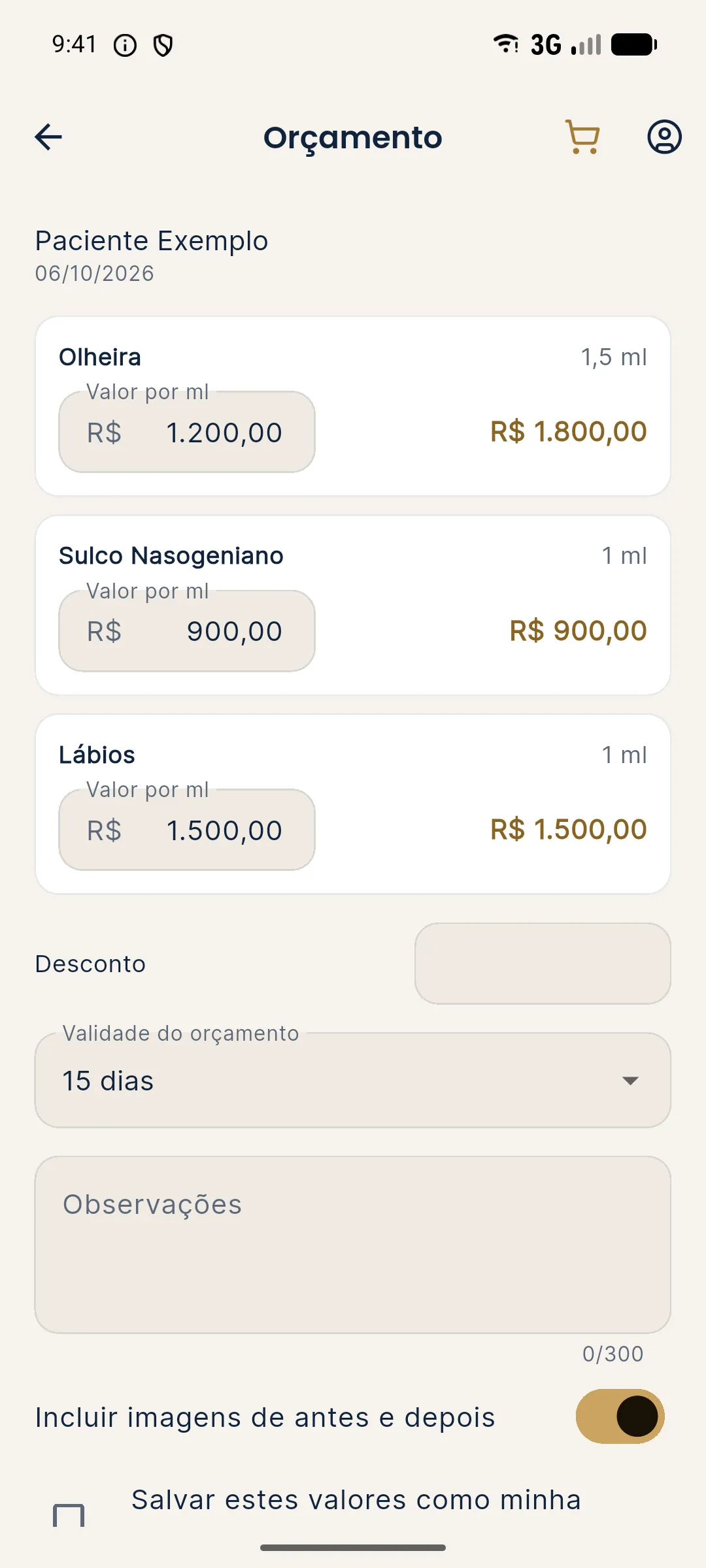
In Harmy, the PDF quote has a validity field in days, discount, notes and the option to include the images. The price per ml of each area is saved in My clinic, which makes it easier to update the price list and redo the document. See linking plan and quote in harmonization and the plan in the PDF quote: what to show.
How does the simulation age along with the plan?
Harmy's projection shows the face on the date of the photo. After months, an old image no longer represents the patient, especially if there was a weight change or other procedures. So, when reopening an old plan, retake the photo and generate a new projection. Reusing the old image creates expectation about a face that no longer exists. The projection is an illustrative simulation, not a promise of results, and its validity is the same as the clinical plan's: short, and reviewed at each consultation.
See also saving simulation versions by follow-up and limits of 2D simulation.
How do you word the validity for the patient?
Short, honest sentences work better than long clauses. The patient needs to understand that the deadline protects their result, not that it is pressure to close. Avoid artificial urgency ("only until Friday"); it is a dubious commercial practice and can violate your professional council's rules.
Check of the validity routine
Quick review
Summary
A treatment plan has two validities: the quote's, which is commercial, and the clinical plan's, which depends on the face and on events. Write both, reassess at the triggers, redo the simulation when the face changes and do not use the deadline as pressure. Harmy helps with the validity in days on the PDF, but the decision to renew or re-evaluate is yours.
Frequently asked questions
Does every facial harmonization plan need an expiry date?
It is good practice. The plan starts from the state of the face on one date, and that state changes. An expiry date keeps an old document from being carried out without a new assessment.
What is the usual validity of a quote?
Each clinic defines it. Short periods, of a few weeks, are common for the quote. The clinical validity of the plan can be different and depends on reassessment.
Can the patient use the plan after a year?
In general, it is prudent to reassess. Weight, age, procedures done elsewhere and tissue response may have changed the indication, and the price too.
Does Harmy have a validity field on the quote?
Yes. Harmy's PDF quote lets you enter the validity in days, plus discount, notes and the option to include the images.
Harmy images are illustrative simulations generated by AI from the patient's photo to support the conversation between practitioner and patient. They are not a promise of results. Indication, technique, product and volume are solely the decision of the licensed practitioner. This content is for information only and does not replace a clinical assessment.