
When the simulation hurts the facial harmonization plan
Quick facts
- Topic
- Situations where showing a simulation worsens the decision, the relationship or the perceived result
- Risks
- Inflated expectations, fixation on details, pressure to decide, false security and misuse of the image
- Warning sign
- Patient who asks for the image repeatedly, adjusts pixels or wants to compare with filters
- Decision
- Not showing, postponing or limiting the image may be the best clinical call
The simulation was made to help. In many cases, it does. In others, it produces exactly the opposite of what was intended: inflated expectations, dissatisfaction with a correct result, pressure on the person deciding and a sense of guarantee that nobody promised out loud. This is the text about those cases, so you can recognize them before opening the image.
The positive side is in when the simulation helps the plan. Here the lens is harm prevention.
Why can an image make the decision worse?
Because images are persuasive. They take the place of words, anchor expectations and are remembered longer than the spoken explanation. A patient who saw an idealized version of their own face takes that version home, even if you said it was only an illustration. The psychology behind this is in why the simulation should be subtle.
The effect is stronger when the image is attractive, personalized and comes from a technology the patient associates with precision. That is why the level of care must match the power of persuasion.
What are the four most common harms?
- Inflated expectations: the image suggests a bigger or more perfect change than the tissue delivers. The result, even if correct, looks insufficient. This is the topic of why the actual result differs from the simulation.
- Fixation on details: the patient starts analyzing pixels, minimal asymmetries and textures in the image, and carries that analysis over to the real face.
- Pressure to decide: the image, used as an argument, shortens deliberation. The patient decides in an emotional state and regrets it later.
- False security: the image reassures about the result, and the patient underestimates risks and limits that were explained before it.
Besides these, there is the harm of misusing the image: posting the simulation as if it were a result, or sending it without the illustrative simulation notice. The rule is in notice text for illustrative simulation.
In which patients is the image most dangerous?
Not every patient responds the same way. There are profiles in which the image is more likely to hurt, and in which assessing the overall picture comes first:
- Disproportionate distress about appearance: intense complaints about details an observer does not notice. There may be body dysmorphic disorder, and the image feeds the cycle.
- Filter references: the patient brings an edited face as the goal, impossible to reproduce, as in filter dysmorphia and in filter face: how to handle unrealistic references.
- Repeated requests for a new image: the patient asks for variations in sequence, each time wanting a little more, never satisfied.
- Decision under outside pressure: the patient wants the image to show to third parties, who decide for them.
- Wedding or upcoming event: haste distorts judgment, as in plan for an event with a set date.
- Prior facial surgery or an unsuccessful procedure: trust is shaken and the image becomes a promise. See aligning expectations after prior facial surgery.
In these cases, the first step is conversation and assessment. The reasoning on indication, including refusal, is in when to say no to the aesthetic plan and in saying no to a patient with dysmorphia. The patient's mental health as part of the plan is covered in facial harmonization plan and patient mental health.
What signs show that the image is causing harm?
During the consultation, some behaviors indicate that the image got out of hand:
How do you reduce the harm once it has started?
If the image was already shown and the patient reacted with expectations higher than is sustainable, the move is to take a step back. Restate that it is an illustration, return to the conservative scenario and explain what limits the result. If needed, postpone the decision and schedule a follow-up, instead of moving ahead on impulse.
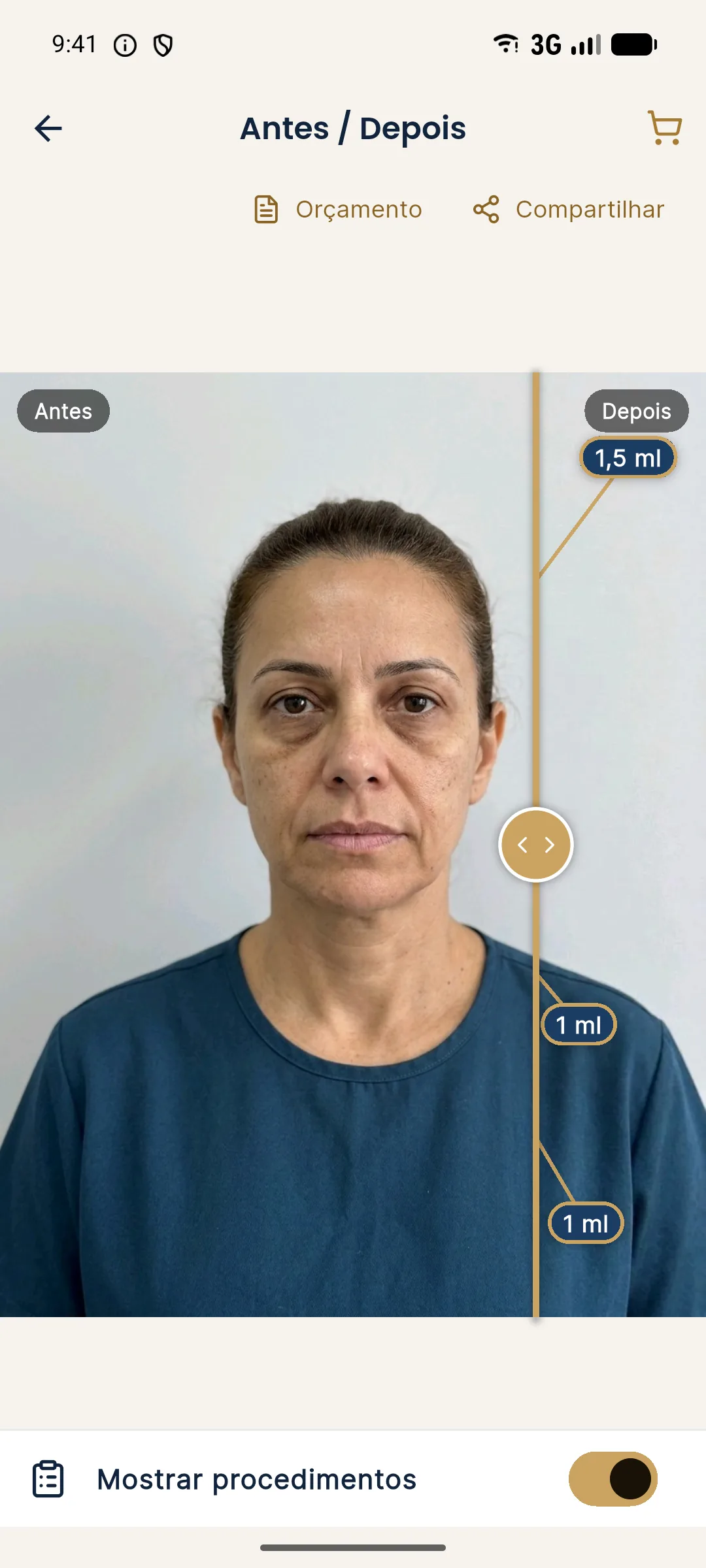
At the follow-up, the starting image can be compared with the actual result, which helps restore an honest conversation. The app stores the aligned "after" photo and compares Projection, Actual result and Projection vs Actual. The conversation about a result below expectations is in communicating a result below expectations.
When is it better not to show the simulation?
There are situations where the best call is not to open the image. The decision belongs to the professional, and the list below helps you decide:
| Situation | Suggested action |
|---|---|
| Signs of dysmorphia or disproportionate distress | Prioritize assessing the overall picture, postpone the image |
| Clearly unrealistic expectations | Talk about what is possible first, and only then show |
| Patient pressured by others | Talk privately and show only if the patient wants to |
| Decision driven by an upcoming date | Postpone the decision, with no image inflating urgency |
| Plan with no clinical indication | Do not show, and explain the refusal |
| Minor | Follow the specific rules and talk with the guardian, as in saying no to a minor patient |
Even where the image is allowed, show the minimum: one area at a time, with the ml and the intensity in words, without inflating.
How do you protect the clinic from misuse?
The harm does not end at the office. The image circulates in message groups, is compared with the result and sometimes is shown as "proof" of a promise. To reduce that risk:
- Send it with the simulation notice, never the bare image.
- Use the patient link, which keeps the slider with the clinic's logo and contact, instead of sending files.
- Document the conversation about limits, along with the image, in the patient record.
- Include the topic in the informed consent, as in simulation and informed consent.
- Never publish the projection as if it were a result, following what you can advertise in Brazil: CFO and CONAR.
Care with image data, including the face photo, follows the LGPD (Brazil's data protection law), and the rules are in consent and LGPD for photos.
Frequently asked questions
Can the simulation make a facial harmonization consultation worse?
Yes. When it inflates expectations, encourages fixation on details, creates pressure to decide fast or conveys false security, the image harms the decision instead of supporting it.
In which patients should I avoid showing the simulation?
When there are signs of disproportionate distress about appearance, fixation on minimal flaws or unrealistic expectations. In those cases, assessing the overall picture comes before the image.
Can I refuse the simulation to a patient who asks for it?
Yes, with a respectful explanation. The simulation is a tool, not a right, and the professional judges whether it helps or hurts in that case.
How do I reduce the harm of a simulation that was already shown?
Restate that it is an illustration, document the conversation and, if expectations are inflated, go back to the conservative scenario and to the explanation of limits before any decision.
Harmy images are illustrative simulations generated by AI from the patient's photo to support the conversation between practitioner and patient. They are not a promise of results. Indication, technique, product and volume are solely the decision of the licensed practitioner. This content is for information only and does not replace a clinical assessment.