
Men's facial harmonization: what is different

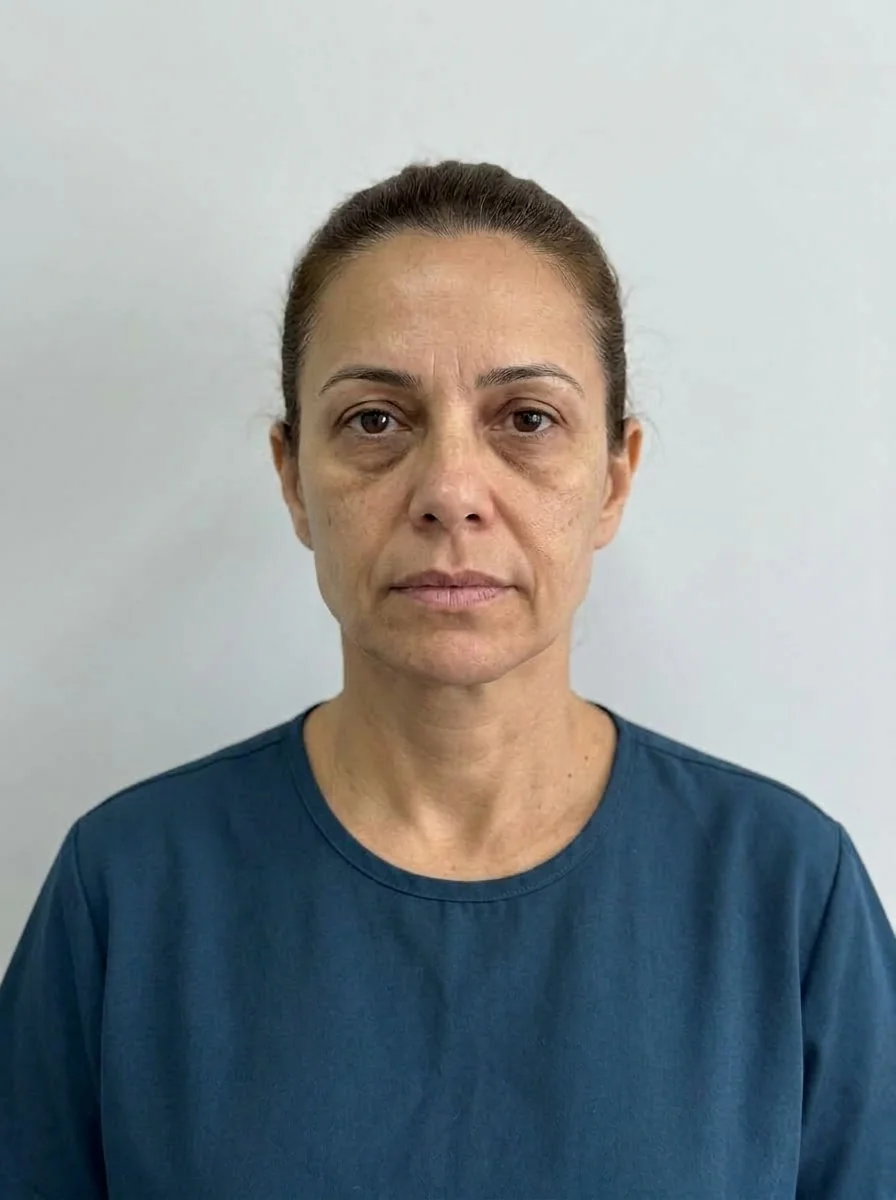 BeforeSimulation
Quick facts
- Question
- What changes in men's harmonization
- Usual focus
- Jaw, chin, expression and a natural look
- Central care
- Preserve the masculinity of the face
- Who decides
- The professional, after assessment
A man who seeks harmonization usually arrives afraid of one thing: ending up with a face that looks "done". He asks for a natural look, but often cannot name what he wants. Planning for men calls for an eye that recognizes the proportions specific to a man's face and understands that the ideal is not the same as a woman's.
The guidance is general, at the discretion of the qualified professional after assessment. See also men's orofacial harmonization for the technical deep dive.
What is usually different in a man's face
On average (and individual variation is large), a man's face tends to have:
- a wider, more angular jaw, with a more defined mandibular angle;
- a more projected, squarer chin;
- a lower, straighter brow;
- thicker, oilier skin, with more hair and often more sebum;
- bulkier musculature, which influences the toxin dose.
This means the same techniques and volumes used in women can have a different effect. See differences between female and male faces.
| Area | Female tendency | Male tendency |
|---|---|---|
| Jaw | Soft contour | Defined, angular contour |
| Chin | Rounder | Squarer and more projected |
| Brow | Arched | Straighter |
| Lips | More volume and curve | More discreet, subtle proportion |
| Cheekbone | Soft projection | More lateral, discreet projection |
The table shows tendencies, not rules. The goal is to ask the patient what he wants, not to impose an ideal.
Most common concerns in men
- Poorly defined jaw and chin. The typical request is "more defined". See defined jawline.
- Expression lines on the forehead and between the brows, with toxin in doses adjusted to keep the expression natural.
- Dark circles and a tired look, often tied to sleep and anatomy.
- Skin care, such as pores, acne scars and texture.
- Profile: a recessed chin, which changes the relationship with the nose and neck.
Beard, skin and technique
A beard hides the contour and changes the assessment; thicker skin may require technique adjustments; stronger musculature may call for different toxin doses. All of this is the professional's decision. See facial harmonization and beards.
Resistance and stigma
Many men avoid procedures out of fear of judgment or because they associate them with the feminine world. The consultation can be a welcoming space: normalize the choice, explain that the goal is to preserve identity, and respect the wish for discretion. See a man who has never had harmonization and I don't want anyone to know.
A natural look: what it means for men
For most male patients, "natural" means nobody notices there was a procedure, but people notice he looks well. This calls for conservative volumes, attention to proportions and follow-up. See aligning expectations about a natural look.
Harmy in men's care
Harmy shows the illustrative projection from the front-facing photo, with the jaw and chin among the areas you can mark. For a male patient, it is useful to compare the Subtle intensity with the Moderate, to decide how much definition is enough without losing a natural look. The projection is never a promise of results and does not replace the in-person assessment. See projection for a male patient in Harmy.
Frequently asked questions
Can a man get facial harmonization?
Yes. Planning takes male proportions into account, which usually call for a more defined jaw and chin and less rounding, at the professional's discretion after assessment.
What do men usually look for in harmonization?
Generally, jaw and chin definition, softening expression lines, and correcting dark circles or a tired look, without altering masculine features.
Is men's harmonization different from women's?
The reasoning is the same, but the proportions and the aesthetic ideal are usually different. Generally, the aim is to avoid rounding the face and feminizing features when the patient does not want it.
Do men face more risk in procedures?
The general risks are the same. Thicker skin, a beard and stronger musculature can change the technique and the dose, and the professional adjusts for them.
Harmy images are illustrative simulations generated by AI from the patient's photo to support the conversation between practitioner and patient. They are not a promise of results. Indication, technique, product and volume are solely the decision of the licensed practitioner. This content is for information only and does not replace a clinical assessment.